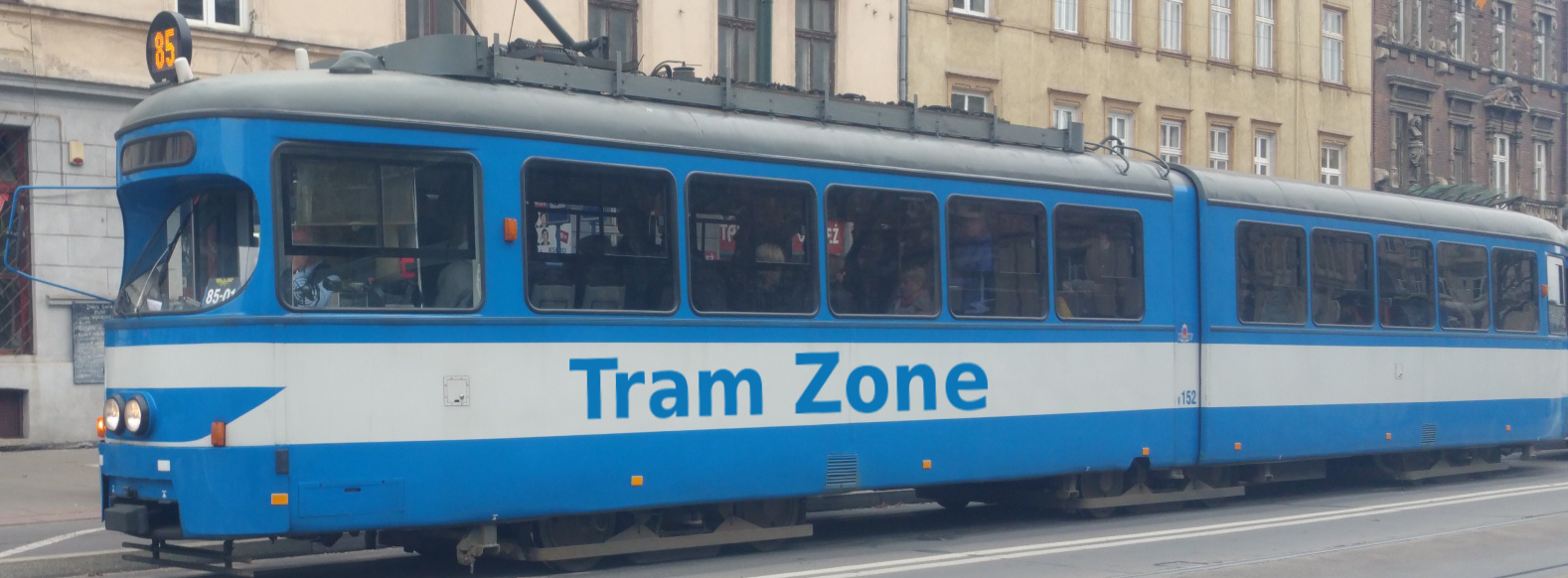
Tram systems in Zürich
Zürich is Switzerland's largest city and the capital of the Canton of Zürich. It is situated at the north-western end of Lake Zürich in north-central Switzerland. The municipality has a population of approximately 452,000 and is a major hub for road, rail and air travel. Zürich Hauptbahnhof, commonly abbreviated to Zürich HB, is Switzerland's busiest railway station, while Zürich Airport is the country's largest international airport.
Public transport in and around Zürich is coordinated by the Zürcher Verkehrsverbund (ZVV), which plans, finances and coordinates services throughout the Canton of Zürich. The city has a frequent and well-developed integrated network used extensively by residents, commuters and visitors.
Alongside the trams covered by this site, the network includes S-Bahn trains, buses, trolleybuses and scheduled boat services on Lake Zürich and the River Limmat. Other distinctive modes include the Polybahn and Rigiblick funiculars, the Dolderbahn rack railway and the Luftseilbahn Adliswil–Felsenegg cable car.
ZVV's integrated fare system allows passengers to use different forms of public transport with the same ticket, provided that the journey remains within the selected fare zones and period of validity.
Most tram services within Zürich are operated by Verkehrsbetriebe Zürich (VBZ), which is wholly owned by the city and manages the municipal tram infrastructure.
The wider network also uses infrastructure belonging to Verkehrsbetriebe Glattal (VBG), which owns and manages the Glattalbahn serving the northern suburbs. Glattalbahn services are operated by VBZ on behalf of VBG. The independent Forchbahn operates S18 services from Zürich Stadelhofen to Forch and Esslingen, sharing the city tram tracks between Bahnhof Stadelhofen and Rehalp before continuing over its own infrastructure.
Zürich is also connected with Killwangen in the neighbouring Canton of Aargau by the Limmattalbahn. Its full route opened in December 2022 and Line 20 services are operated by Aargau Verkehr AG. Between Farbhof and Schlieren, Geissweid, the Limmattalbahn shares tracks with tram line 2, which terminates at Schlieren, Geissweid.
Zürich currently has 19 tram lines, details of which can be found on the Lines tab. This count excludes temporary line 16, which operates between Milchbuck and Laubegg as part of short-term rail-replacement arrangements from 27 April until 18 October 2026. Because of its limited period of operation, line 16 is not covered by Tram Zone.
Proposals for trams in Zürich date back to the 1860s, but the first services did not begin operating until 1882. Over the following decades, numerous municipal, private and interurban operators built lines in and around the city. Most tramways within Zürich were eventually absorbed into the municipal network, while several outlying lines either developed into modern railways or closed. This section provides a chronological summary of the operators that formed part of, or were historically connected with, Zürich's tram network.
- Zürcher Strassenbahn Gesellschaft (ZStG) – The private ZStG opened Zürich's first tramway in 1882, using horse-drawn standard-gauge trams running on tracks with a gauge of 1,435 mm (4 ft 8½ in). It was acquired by the StStZ in 1897.
- Elektrische Strassenbahn Zürich (EStZ) – The EStZ began operating in 1894 as Zürich's first electric tram operator and the first in the city to use metre-gauge track, measuring 1,000 mm (3 ft 3⅜ in). It was acquired by the City of Zürich in 1896 and became the StStZ.
- Zentrale Zürichbergbahn (ZZB) – The ZZB began operating in 1895 and built two lines from near the present Kunsthaus stop to Kirche Fluntern and the lower terminus of the Rigiblick funicular. Its trams also continued over StStZ tracks to Paradeplatz. The company was acquired by the StStZ in 1905.
- Dolderbahn (Db) – The Dolderbahn opened in 1895 as a funicular between Römerhof and the Dolder Waldhaus. In 1899, an isolated electric tramway was added between the upper funicular station and the Dolder Grand Hotel. Its single tramcar was replaced by a bus in 1930. In 1973, the funicular was converted into a rack railway and extended to the Dolder Grand, replacing the connecting bus service.
- Städtische Strassenbahn Zürich (StStZ) – The City of Zürich established the StStZ in 1896 through its acquisition of the EStZ. It subsequently absorbed the ZStG and most of the other operators within the city, completing this process in 1931. The StStZ was renamed Verkehrsbetriebe Zürich in 1950.
- Elektrische Strassenbahn Zürich–Oerlikon–Seebach (ZOS) – The ZOS began operating in 1897 between Leonhardsplatz, now Central, and Oerlikon and Seebach via Stampfenbachstrasse and Schaffhauserstrasse. It later extended from Seebach to Glattbrugg and opened a branch from Oerlikon to Schwamendingen. The company was acquired by the StStZ in 1931, when the Seebach–Glattbrugg and Oerlikon–Schwamendingen sections were closed.
- Industriequartier-Strassenbahn Zürich (IStB) – The IStB opened a route from Bahnhofquai to Escher-Wyss-Platz in 1898, connecting there with the StZH line to Höngg. Trams initially ran through between Bahnhofquai and Höngg, but this arrangement ended in 1901 and passengers had to change at Escher-Wyss-Platz. The StStZ acquired the IStB in 1903 and through services to Höngg resumed.
- Strassenbahn Zürich–Höngg (StZH) – From 1898, the StZH operated from Escher-Wyss-Platz through Wipkingen to Höngg. The StStZ acquired the route in three stages: from Escher-Wyss-Platz to Wipkingen in 1907, onward to Grenzstein Höngg in 1913 and finally to the Wartau depot in 1923.
- Limmattal-Strassenbahn (LSB) – The LSB opened in 1900 and operated an interurban route from the former Zürich city boundary at Letzigraben through Altstetten and Schlieren to Dietikon, together with a branch from Schlieren to Weiningen. The Schlieren–Dietikon section closed in 1928, followed by the Weiningen branch in 1931. The remaining Letzigraben–Schlieren section was then acquired by the StStZ.
- Bremgarten-Dietikon-Bahn (BD) – The BD opened in 1902 as a rural tramway between Dietikon and Bremgarten in the Canton of Aargau. Although outside Zürich, it was indirectly connected with the city's tramways through the LSB at Dietikon. In 2000, the BD merged with the Wohlen–Meisterschwanden-Bahn to form BDWM Transport AG.
- Wetzikon-Meilen-Bahn (WMB) – Opened in 1903, the WMB was a rural electric tramway connecting Kempten and Wetzikon with Meilen on Lake Zürich. From 1909, it connected with the UOeB at Langholz; after the Forchbahn opened in 1912, this provided an indirect link to Zürich's tram network. The WMB closed in 1950.
- Albisgütlibahn (AGB) – Opened in 1907, the AGB was the last privately owned tramway built within Zürich. It connected the municipal network at Giesshübelstrasse with Albisgüetli, the site of that year's federal shooting festival. Traffic declined after the festival, and the company sold three of its five trams to the StStZ in 1913. By 1915, it operated only on Sundays, before being acquired by the StStZ in 1925.
- Uster-Oetwil-Bahn (UOeB) – The UOeB opened in 1909 as a rural tramway from Uster through Esslingen and Oetwil am See to Langholz. It connected with the WMB at Langholz and, following the opening of the Forchbahn, with the FB at Esslingen. The UOeB closed in 1949.
- Forchbahn (FB) – Scheduled services between Zürich Stadelhofen and Esslingen via Forch began in 1912. Originally built with the character of a rural tramway, the route beyond Rehalp was progressively rebuilt with more railway-like infrastructure from the 1950s. Today, S18 services share Zürich's tram tracks between Bahnhof Stadelhofen and Rehalp before continuing over the Forchbahn's own railway infrastructure.
- Verkehrsbetriebe Zürich (VBZ) – The municipal operator adopted its present name in 1950, when the StStZ was renamed VBZ. It remains the principal operator of Zürich's tram services and manages the city's tram infrastructure.
- Verkehrsbetriebe Glattal (VBG) – The organisation that became VBG was established in 1993 to coordinate public transport in the Glattal. VBG developed the Glattalbahn, which opened in three stages in 2006, 2008 and 2010. VBG owns and manages the infrastructure, while its tram services are operated by VBZ on its behalf.
- BDWM Transport AG (BDWM) – BDWM was formed in 2000 through the merger of the Bremgarten-Dietikon-Bahn and Wohlen–Meisterschwanden-Bahn. It operated the Bremgarten–Dietikon railway until 2018, when it merged with the Wynental- und Suhrentalbahn to form Aargau Verkehr AG.
- Aargau Verkehr AG (AVA) – AVA was created in 2018 through the merger of BDWM Transport AG and the Wynental- und Suhrentalbahn. It now operates the Bremgarten–Dietikon railway and passenger services over the Limmattalbahn. The complete Limmattalbahn opened in December 2022 between Bahnhof Altstetten and Killwangen, restoring light rail through the Limmat Valley. Between Farbhof and Schlieren, Geissweid, its services share tracks with Zürich's municipal tram network.
Zürich currently has 19 tram lines, which are listed below. To see more information about a particular line, click on the link in the table below.
| Line | Descrption |
|---|---|
| 2 | Line 2 runs from Schlieren, Geissweid in the north west of Zürich to Klusplatz in the east of the city, via Stauffacher, Paradeplatz, Bellevue and Bahnhof Stadelhofen. |
| 3 | Line 3 runs from Albisrieden in the west of Zürich to Klusplatz in the east of the city, passing through Albisriederplatz, Stauffacher, Zürich HB, Central and Kunsthaus. |
| 4 | Line 4 runs from Rehalp in the south east of Zürich to Bahnhofstrasse/HB in the city centre, via Bahnhof Stadelhofen, Bellevue and Central. |
| 5 | Line 5 runs from Laubegg in the south of Zürich to Bahnhof Stadelhofen, travelling via Bahnhof Enge, Paradeplatz, Bürkliplatz and Bellevue. The line does not operate on Sundays or public holidays. |
| 6 | Line 6 runs from Bahnhofplatz/HB in central Zürich to Zoo on the Zürichberg, via Central and ETH/Universitätsspital. |
| 7 | Line 7 runs from Bahnhof Stettbach in the east of Zürich to Wollishoferplatz in the south of the city, via Schwamendingen, Central, Bahnhofstrasse/HB, Paradeplatz and Bahnhof Enge. |
| 8 | Line 8 runs from Hardturm in the west of Zürich to Kirche Fluntern via Bahnhof Hardbrücke, Bahnhof Selnau, Bahnhof Enge, Bellevue and Kunsthaus. On Sundays and public holidays, the line continues to Zoo. |
| 9 | Line 9 runs from Hirzenbach in the east of Zürich to Heuried in the west, via Milchbuck, ETH/Universitätsspital, Bellevue, Paradeplatz and Stauffacher. During peak periods, services continue to Triemli. |
| 10 | Line 10 links central Zürich with Zürich Airport. Airport-bound services start at Bahnhofstrasse/HB and run via Central, Universität Irchel and Bahnhof Oerlikon to Zürich Flughafen, Fracht. In the opposite direction, services terminate at Bahnhofplatz/HB before the tram moves out of service ready for its next airport-bound journey. |
| 11 | Line 11 runs from Central in central Zürich to Bahnhof Tiefenbrunnen, via Bahnhofstrasse/HB, Paradeplatz, Bürkliplatz and Bellevue. In the opposite direction, Line 11 services from Bahnhof Tiefenbrunnen terminate at Bahnhofstrasse/HB. |
| 12 | Line 12 runs from Zürich Airport to Bahnhof Stettbach via Glattbrugg, Glattpark and Wallisellen. It is the only Zürich tram line that does not pass through the city centre. |
| 13 | Line 13 runs from Bahnhofstrasse/HB in central Zürich to Albisgütli on the southern edge of the city, via Paradeplatz, Bahnhof Enge and Laubegg. At Bahnhofstrasse/HB, services continue as Line 4 towards Rehalp. |
| 14 | Line 14 runs from Triemli in the west of Zürich to Bahnhofplatz/HB in the city centre, via Bahnhof Wiedikon, Stauffacher and Sihlpost/HB. At Bahnhofplatz/HB, services continue as Line 6 towards Zoo. |
| 15 | Line 15 runs from Bahnhofstrasse/HB in central Zürich to Bahnhof Tiefenbrunnen, via Central, the Limmatquai and Bellevue. In the opposite direction, Line 15 services from Bahnhof Tiefenbrunnen terminate at Central. |
| 17 | Line 17 runs from Werdhölzli in north-west Zürich to Bucheggplatz, via Escher-Wyss-Platz, Limmatplatz, Sihlquai/HB and Schaffhauserplatz. |
| 20 | Line 20 runs between Bahnhof Altstetten in Zürich and Killwangen, Bahnhof in the Canton of Aargau, serving Schlieren, Urdorf, Dietikon and Spreitenbach along the Limmattalbahn. |
| 21 | Museum Line 21 is a heritage tram service running between Burgwies/Tram Museum and Zürich Hauptbahnhof on the last weekend of each month except December, with some journeys continuing to Rehalp. |
| 50 | Temporary Line 50 runs between Frankental and Auzelg via Wipkingerplatz, Sihlquai/HB, Stampfenbachplatz, Bucheggplatz and Bahnhof Oerlikon during the Bahnhofquai/HB closure. |
| 51 | Temporary Line 51 runs between Bahnhof Altstetten Nord and Seebach via Sihlquai/HB, Stampfenbachplatz, Milchbuck and Bahnhof Oerlikon Ost during the Bahnhofquai/HB closure. |
Zürich's tram network continues to be developed in response to population growth and changing travel patterns. Several extensions are progressing through planning, approval or construction preparation, while the VBZ Netzentwicklungsstrategie 2040–2050 sets out possible longer-term additions to the network. Dates and detailed proposals may change as projects pass through their respective approval processes.
On 13 December 2026, the reopening of Bahnhofquai/HB will allow the final stage of Tramnetz Süd to be implemented. Temporary lines 50 and 51 will be withdrawn, while lines 4, 11, 13, 14 and 17 will again operate through Bahnhofquai/HB.
During peak periods, line 5 will operate between Albisgütli and Rehalp, providing additional capacity along Forchstrasse. Line 17 will be extended during peak periods from Zürich Hauptbahnhof via Paradeplatz, Bahnhof Selnau and Stauffacher to Bahnhof Wiedikon.
Further information is available in the official VBZ announcement (in German).
Two further tram extensions are scheduled to take effect on 10 May 2027. During the daytime, line 6 will be extended from Central via Bahnhofplatz/HB, Stauffacher and Albisriederplatz to Letzigrund. Line 10 will be extended to Bahnhof Enge during the daytime from Monday to Saturday.
These extensions were originally planned for December 2026 but were postponed because VBZ requires additional operating staff to provide the expanded services reliably.
Further information is available in the official VBZ announcement (in German).
The Glattalbahn is planned to be extended from its existing terminus at Zürich Flughafen, Fracht through central Kloten and the developing Steinacker district. The extension will add five stops before reaching a new turning loop at Grubenstrasse.
The Canton of Zürich approved the project credit in June 2026. Construction is planned to begin in 2028 and is expected to take approximately five years, with opening currently anticipated in 2033. The project is being coordinated with flood-protection work and new walking and cycling infrastructure through Kloten.
Further information is available on the official Glattalbahn extension project website (in German).
The VBZ Netzentwicklungsstrategie 2040–2050 sets out a staged long-term plan intended to create more direct orbital connections between Zürich's outer districts and reduce the need to travel through the city centre.
The principal proposals include:
- A northern tram corridor connecting Affoltern, Oerlikon and Schwamendingen.
- A possible tram extension from Altried towards Wallisellen or Dübendorf.
- Additional connections across Zürich-West and around Bahnhof Altstetten.
- A new inner-ring connection between Albisriederplatz and Milchbuck or Universität Irchel, potentially running through the Hardbrücke and Rosengarten corridors or through a new tunnel.
- Longer-term completion of an outer ring through the Hönggerberg area towards Oerlikon.
- A possible extension from Seebach towards Kloten.
These schemes are strategic proposals rather than committed construction projects, and their routes and implementation dates remain subject to further planning and approval.
Further information is available from VBZ's network development programme (in German).