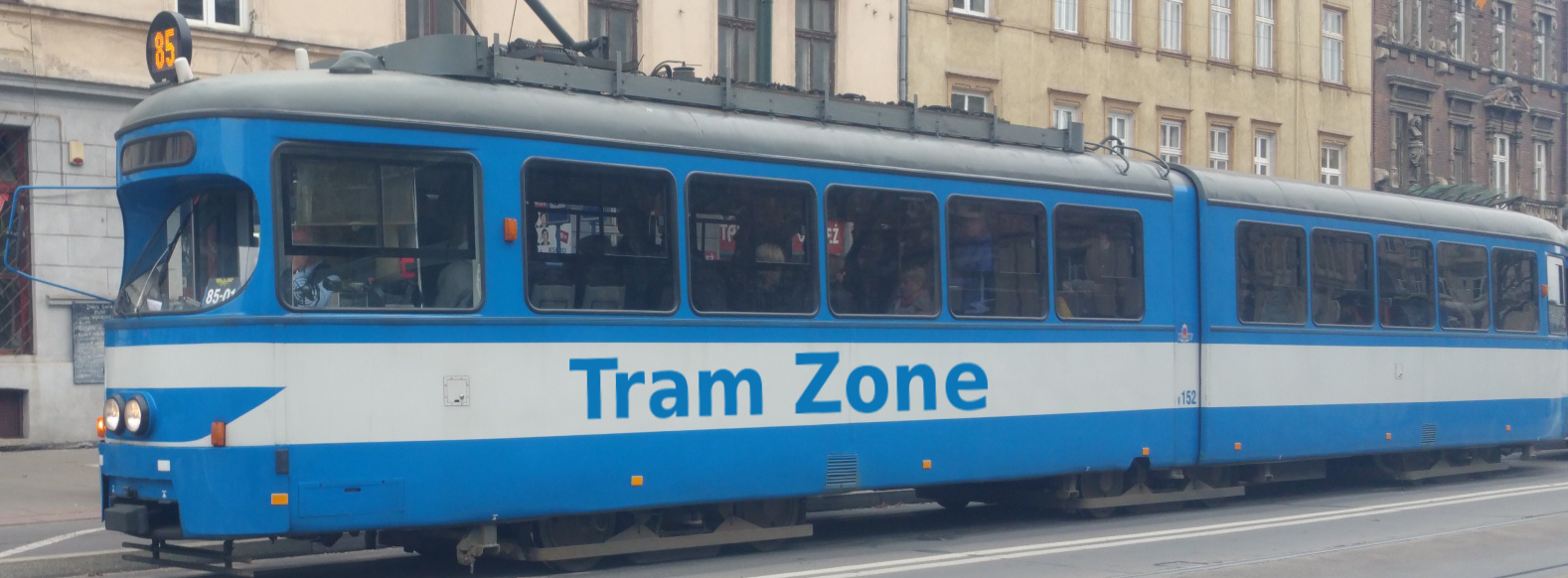
Tram systems in Sarajevo
Sarajevo is the capital and largest city of Bosnia and Herzegovina. It lies in a narrow valley along the River Miljacka, surrounded by mountains belonging to the Dinaric Alps.
The city developed as an important Ottoman administrative and trading centre from the fifteenth century. Following occupation by Austria-Hungary in 1878, Sarajevo expanded westwards beyond its older Ottoman centre and acquired new civic buildings, industries and transport infrastructure.
Sarajevo's architecture reflects its Ottoman, Austro-Hungarian and Yugoslav history. Baščaršija forms the historic commercial centre, while prominent landmarks include the Gazi Husrev-beg Mosque, the Latin Bridge, Sarajevo City Hall and the buildings constructed for the 1984 Winter Olympics.
Sarajevo's principal railway and bus stations stand close together to the west of the city centre. Passenger trains provide domestic services to destinations including Mostar, Čapljina and Zenica, although the rail network is considerably less extensive than it was during the Yugoslav period.
Most urban public transport is operated by KJKP GRAS, whose network includes trams, trolleybuses, conventional buses and minibuses. Centrotrans also operates a number of bus services within Sarajevo Canton.
The city's geography strongly influences its transport network. Trams provide the principal east-west connection along the floor of the Miljacka valley, while trolleybuses, buses and minibuses serve districts away from the main corridor. A cable car connects the area near the old city with Mount Trebević.
Sarajevo has a standard-gauge electric tramway operated by KJKP GRAS. The network consists principally of an east-west corridor between Baščaršija and Ilidža, with a continuation southwards to Hrasnica and a short branch serving Sarajevo railway station.
Through services connect the historic city centre with Ilidža and Hrasnica, while other routes cover shorter sections of the main corridor or serve the railway-station branch. The extension to Hrasnica serves Butmir and Sokolović Kolonija, bringing tram services to districts previously connected to the network by bus.
The fleet has undergone substantial renewal since 2024. Sarajevo Canton ordered 25 Stadler Tango NF3 low-floor trams, the first newly built trams supplied to the city in approximately four decades. They operate alongside older vehicles including Tatra-derived cars and second-hand Duewag trams.
Sarajevo currently has 7 tram lines, details of which can be found on the Lines tab.
Sarajevo's tram network is operated by KJKP GRAS, which also operates trolleybus, bus and minibus services in the city.
Sarajevo's first tramway opened on 1 January 1885, during the period of Austro-Hungarian administration. The original single-track route was approximately 3.1 kilometres long and connected Ferhadija with the narrow-gauge railway station at Marijin Dvor.
The line was built to the 760-millimetre gauge widely used by railways in Bosnia and Herzegovina and was initially worked by horses. Four passenger cars were available when the service began, and passing places allowed vehicles travelling in opposite directions to use the otherwise single-track route.
The tramway formed part of the wider modernisation of Sarajevo under Austro-Hungarian administration. It connected the traditional commercial centre with the railway and helped establish the east-west transport corridor that continues to define the city's tram network.
The route was extended eastwards towards the Latin Bridge in 1892. Construction of an electricity-generating station subsequently allowed both street lighting and electric tram operation to be introduced.
Sarajevo's first electric tram entered service in May 1895. The initial electric route connected the railway station with the Latin Bridge, while another service followed along the principal city-centre streets during June.
Further expansion brought the tramway to the area around the City Hall in 1897. The horse cars were withdrawn as electrification progressed, leaving Sarajevo with one of the earliest electric urban tramways in this part of Europe.
The tramway continued operating following the end of Austro-Hungarian rule and the creation of the Kingdom of Serbs, Croats and Slovenes, later Yugoslavia. Routes and facilities were adapted as Sarajevo expanded westwards along the valley.
Increasing passenger numbers placed pressure on the narrow-gauge system, whose small vehicles and largely street-running infrastructure offered limited capacity. The network nevertheless remained one of Sarajevo's principal forms of public transport through both world wars and the early post-war period.
A more fundamental reconstruction became necessary as new residential and industrial districts developed beyond the older urban area after the Second World War.
Sarajevo acquired 50 second-hand PCC trams from Washington, DC in 1958, followed by another 21 vehicles in 1962. The American cars were larger than the existing narrow-gauge trams and required the network to be rebuilt to standard gauge.
Conversion was completed in 1960 as the modern tram corridor was developed between the city centre and Ilidža. The rebuilt route included substantial sections of reserved track along the broad avenues serving Sarajevo's expanding western districts.
Twenty of the Washington cars were later rebuilt as ten articulated trams. The PCC fleet remained an important part of the system until it was replaced by vehicles supplied from Czechoslovakia.
Articulated Tatra K2 trams began arriving during the 1970s and became the characteristic vehicles of the Sarajevo network. Further cars were acquired as passenger numbers grew and the older PCC fleet was withdrawn.
The city's public transport system was improved in preparation for the 1984 Winter Olympics. Additional vehicles and infrastructure were provided to carry spectators and workers between the city, accommodation areas and Olympic facilities.
Trolleybuses were introduced as part of this programme, complementing the tramway by serving districts away from the main east-west corridor. Plans were also developed for a tram branch from Nedžarići towards Dobrinja, although the extension was not completed.
Tram operation stopped on 15 April 1992, shortly after the siege of Sarajevo began. Tracks, power supplies, buildings and vehicles were damaged during the conflict, while sections of the route were exposed to sniper fire and shelling.
Despite the danger, limited tram services resumed on 15 April 1994, a year before the siege ended. The trams provided an important means of movement through the city when fuel and other forms of transport were severely restricted.
The network required extensive repairs after the war. Donated and second-hand vehicles were obtained from several European cities to supplement the surviving Tatra fleet, including trams from Vienna, Amsterdam and later Konya.
For many years, limited investment meant that both the tram infrastructure and fleet continued to deteriorate. A major modernisation programme finally began during the early 2020s with financial support from the European Bank for Reconstruction and Development, the European Investment Bank and other international partners.
The principal route between Ilidža and Marijin Dvor was comprehensively reconstructed between 2021 and 2023. Tracks, overhead equipment, stops and associated infrastructure were renewed, allowing smoother and more reliable operation by the new generation of trams.
The first Stadler Tango NF3 tram arrived in December 2023 and entered passenger service during 2024. The initial order covered 15 vehicles, after which Sarajevo Canton exercised an option for ten more. The 31-metre trams provide low-floor entrances, air conditioning and modern passenger-information equipment. Further information about the renewal programme is available from the European Investment Bank.
On 12 February 2026, an older tram derailed near the Muzeji stop, killing one person and injuring four others. The accident led to an official investigation and the temporary withdrawal of older Czech-built trams for additional safety checks. The cause remains a matter for the investigating authorities.
Construction of the long-planned extension from Ilidža to Hrasnica began in October 2023. The project created approximately 6.5 kilometres of double-track tramway through Butmir and Sokolović Kolonija, together with new stops, two electrical substations and a turning loop at Hrasnica. The existing tram terminus at Ilidža was also reconstructed.
The first test tram reached Hrasnica on 20 August 2026. Following testing and technical acceptance, passenger services began on 27 September 2026, providing a direct connection between Hrasnica and Baščaršija. The opening marked the first extension of Sarajevo’s tram network since 1962.
Sarajevo currently has 7 tram lines, which are listed below. To see more information about a particular line, click on the link in the table below.
| Line | Description |
|---|---|
| 1 | Line 1 runs between Baščaršija and Željeznička stanica (the main railway station). |
| 2 | Line 2 runs between Baščaršija in Sarajevo’s historic centre and Čengić Vila, serving the museums, university campus and inner western districts. |
| 3 | Line3 runs between Baščaršija in Sarajevo’s historic centre and Ilidža, following the main tram corridor through the city’s western districts. |
| 4 | Line 4 runs between Sarajevo’s main railway station and Ilidža, following the main tram corridor through the western districts. |
| 5 | Line 5 runs between Baščaršija in Sarajevo’s historic centre and Nedžarići, following the main tram corridor through the city’s western residential districts. |
| 6 | Line 6 runs between Skenderija and Ilidža, following Sarajevo’s main tram corridor through Marijin Dvor and the western districts. |
| 11 | Line 11 runs between Baščaršija in Sarajevo’s historic centre and Hrasnica, following the main tram corridor to Ilidža before continuing through Butmir and Sokolović Kolonija. |
Sarajevo’s tramway uses standard-gauge track of 1,435 mm and is electrified at 600 V DC through overhead wires. Trams collect power using pantographs.
The network is built around a predominantly double-track corridor between Ilidža and the city centre, with a branch to the railway station and a continuation from Ilidža to Hrasnica. Much of the western corridor runs on reserved track along broad roads, while the central section follows city streets. In the historic centre, the tracks form a one-way circuit, with eastbound trams following the Miljacka river and westbound trams returning along the streets to the north.
Turning loops at outer and intermediate termini allow services to cover different sections of the network. The Hrasnica extension includes a new terminal loop and reconstructed turning arrangements at Ilidža.
The principal corridor between Ilidža and Marijin Dvor was extensively renewed between 2021 and 2023. The Hrasnica extension added new track, overhead equipment, stops and two traction substations. Maintenance and storage facilities are provided at the GRAS tram depot, for which further modernisation is planned.
Sarajevo’s modern fleet consists of 25 Stadler Tango NF3 articulated trams, delivered between 2023 and 2025. The first entered passenger service in April 2024, and delivery of the final vehicle was completed in October 2025.
These three-section trams are approximately 31.1 metres long and 2.4 metres wide. Each can carry up to 180 passengers, including 79 seated, and has a maximum design speed of 70 km/h. They are single-ended vehicles with passenger doors on one side, suited to the network’s turning loops.
The Stadler trams provide low-floor access, spaces for passengers with reduced mobility, air conditioning and electronic passenger information. Their introduction represents a substantial improvement in accessibility and passenger comfort compared with the older fleet.
Older vehicle types include articulated Tatra K2-family trams, modernised Tatra-derived SATRA vehicles and second-hand Duewag GT8 trams. These reflect the successive purchases, rebuilding programmes and transfers from other networks that sustained Sarajevo’s tramway before the arrival of the Stadler fleet.
Sarajevo Canton is developing a project to reconstruct and modernise the GRAS tram depot. Much of the existing depot infrastructure is old and was designed for earlier generations of vehicles rather than the new Stadler fleet.
The project is intended to renew workshops, maintenance equipment, tracks, storage areas and supporting infrastructure. It will also reorganise the site as a dedicated tram depot, improving the facilities available for maintaining and accommodating the modern fleet.
Procurement for the preliminary design was undertaken during 2026. A construction programme and completion date have not yet been confirmed. Project information is available through the European Bank for Reconstruction and Development.
A tramway from Nedžarići towards Dobrinja was first developed during the final years of Yugoslavia. Initial work began around the start of the 1990s, but construction stopped following the outbreak of war in 1992. Remnants of the incomplete junction remain visible near Nedžarići.
The proposal has been revived as part of Sarajevo Canton's longer-term transport planning. A new route would serve Dobrinja and could improve public transport connections with districts around Sarajevo International Airport.
The alignment, funding and delivery programme have not yet been finalised. Political plans have referred to completion by approximately 2030, but this should not presently be treated as a confirmed opening date.
A possible tram route northwards from the railway-station area towards Šip has also been discussed. This would extend rail-based public transport into densely developed districts on the northern side of the valley.
The proposal remains at an early stage. No final alignment, funding agreement or construction timetable is currently available.