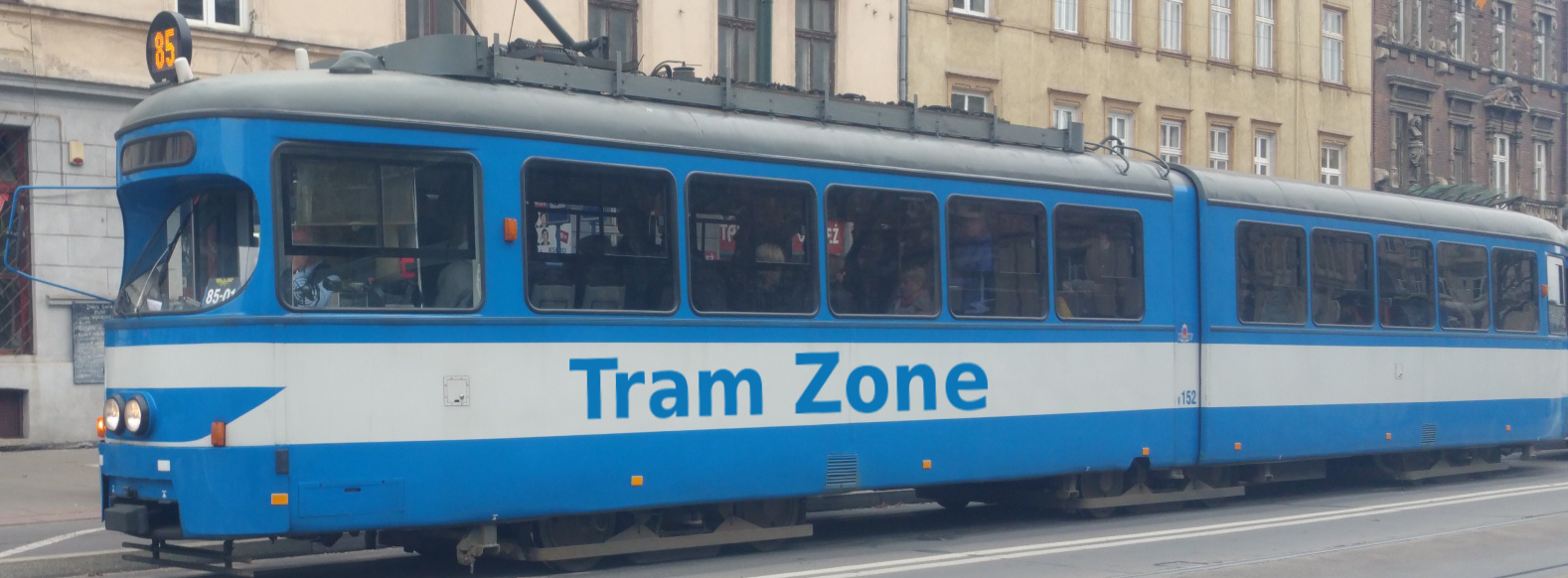
Tram systems in Graz
Graz is situated on the River Mur in southeastern Austria. It is the capital of the federal state of Styria and, after Vienna, the second-most populous city in Austria.
The city developed around the Schlossberg, a prominent hill overlooking the historic centre. Its surviving medieval, Renaissance and Baroque buildings reflect Graz's long role as an administrative and cultural centre of Inner Austria. The historic centre and Schloss Eggenberg together form a UNESCO World Heritage Site.
Graz is also an important university city and regional economic centre. Major industries include engineering, automotive manufacturing, technology and environmental services.
Urban public transport is operated by Graz Linien, part of Holding Graz, and comprises trams and conventional buses. Services are integrated with regional buses, the Styrian S-Bahn and other rail services through Verkehrsverbund Steiermark.
Graz Hauptbahnhof is the city's principal railway station and one of its most important public transport interchanges. A partly underground tram station beneath the station forecourt provides connections between the railway and several cross-city tram routes.
The tramway forms the backbone of public transport through central Graz. Jakominiplatz is the network's principal interchange, while Hauptplatz and the streets through the historic centre are served by most routes. Travel within the central Altstadtbim area is free.
Graz has a standard-gauge electric tram network operated by Graz Linien. Approximately 70 kilometres of infrastructure connect the historic centre with residential, educational, hospital, commercial and industrial districts across the city.
The current network uses nine route numbers: 1, 3, 4, 5, 6, 7, 16, 17 and 23. Lines 1, 4, 5, 6 and 7 form the principal cross-city services, while Line 3 connects Andritz with Krenngasse. Line 23 provides a shorter service between Jakominiplatz and Krenngasse during evenings and throughout Sundays and public holidays.
Lines 16 and 17 use the Neutorlinie through Neutorgasse and Andreas-Hofer-Platz, providing an alternative to the traditional central route through Hauptplatz and Herrengasse. Line 16 replaces line 6 during evenings and at weekends, while line 17 supplements line 7 on weekdays.
The network extends west to Eggenberg, Wetzelsdorf and the new districts at Reininghaus and Smart City. Northern branches serve Andritz and the university hospital, while eastern and southern routes reach St. Peter, Krenngasse, Liebenau/Murpark and Puntigam.
The usual route of line 1 connects Eggenberg/UKH with Mariatrost. The Mariatrost section follows the alignment of a former local railway and includes roadside and reserved track through wooded suburban surroundings.
During the major reconstruction of the Mariatrost route, line 1 is operating between Eggenberg/UKH and LKH Med Uni/Klinikum Nord. Trams leave their usual route at Reiterkaserne and continue over the line 7 corridor, while replacement bus E1 serves the closed section towards Mariatrost. This extended arrangement is expected to remain in place while the reconstruction continues through 2027 and into 2028.
Graz currently has 9 tram lines, details of which can be found on the Lines tab.
Graz's first tramway opened on 8 July 1878. The horse-drawn route connected the Südbahnhof, now Graz Hauptbahnhof, with Jakominiplatz and was subsequently extended through the growing city.
The system was initially built to standard gauge. New routes connected the railway station and city centre with surrounding residential districts at a time when Graz was experiencing substantial industrial and population growth.
Graz began converting its urban tramway to electric operation during the closing years of the nineteenth century. Regular electric tram services began in 1899, bringing horse traction to an end.
A separate electric local railway between Graz and Mariatrost had opened in 1898. It was constructed to metre gauge and connected the city with the pilgrimage district surrounding the Mariatrost Basilica.
The Mariatrost railway remained operationally separate from the urban tramway until the 1940s. It was subsequently converted to standard gauge and incorporated into the municipal network, becoming the outer section of what is now line 1. Its former depot at Mariatrost later became the home of the Graz Tramway Museum.
The city assumed control of the tramway in 1939. The previously separate routes were consolidated into a municipal system, and wartime demand placed considerable pressure on the available vehicles and infrastructure.
The network reached its greatest extent around the middle of the twentieth century. Tramways connected the centre with numerous surrounding districts, while locally manufactured and second-hand vehicles supplemented the older fleet.
After the Second World War, damaged infrastructure was repaired and services were restored. New rolling stock progressively replaced the surviving pre-war cars, but changing transport policy increasingly favoured buses and private motor vehicles.
Several tram routes were withdrawn between the 1950s and early 1970s. Tracks were removed from some streets as road traffic increased, and approximately 12 kilometres of the network were abandoned.
The final major closure occurred in January 1971, when line 2 was withdrawn. Proposals were considered for further replacement of the tramway, but the remaining system survived and continued to carry substantial numbers of passengers through the central city.
Modernisation gradually replaced closure as the principal policy. Tracks were renewed, sections were doubled and newer vehicles increased capacity and improved operating performance.
Successive generations of articulated trams entered service from the 1960s onwards. These included vehicles constructed specifically for Graz as well as trams acquired second-hand from other Austrian and German systems.
The first Cityrunner low-floor trams entered service around the beginning of the twenty-first century. They were followed by 45 Stadler Variobahn vehicles delivered between 2009 and 2015, allowing low-floor operation to become standard across much of the network.
Infrastructure was also progressively adapted with accessible platforms, renewed track and modernised interchanges. These improvements prepared the system for a return to physical expansion.
Three important extensions opened during 2006 and 2007. Line 5 was extended to a new interchange at Puntigam in December 2006, providing connections with railway and bus services.
Line 4 reached the Murpark shopping centre in March 2007. The extension included a major park-and-ride and public transport interchange at Liebenau/Murpark.
The following December, line 6 was extended into St. Peter. Together, these projects represented the first substantial enlargement of the Graz network for several decades and reaffirmed the tramway's role in the city's transport strategy.
The tram interchange at Graz Hauptbahnhof was comprehensively rebuilt as part of the redevelopment of the railway station area. Tram tracks were placed below the station forecourt, allowing services to call closer to the railway platforms while avoiding road traffic at the principal junction.
The new station opened in November 2012. Its covered platforms and direct pedestrian connections improved interchange between trams, trains and buses.
In September 2016, line 7 was extended from St. Leonhard/LKH to LKH Med Uni/Klinikum Nord. The short addition provided improved access to the expanding university hospital and medical campus.
Two new western branches opened on 26 November 2021. Line 4 was extended into the developing Reininghaus district, while line 6 reached the Smart City development around Peter-Tunner-Gasse.
Together, the extensions added approximately 3.1 kilometres to the network. Both routes were constructed as integral parts of major redevelopment areas, allowing tram access to be provided as new homes, workplaces and public facilities were built. Further information is available from Holding Graz.
The southern section of line 5 was also upgraded. Double-track operation between Zentralfriedhof and Brauquartier began in November 2024, replacing a bottleneck that had limited service frequency and reliability.
The Neutorlinie opened on 29 November 2025 after approximately two and a half years of construction. The new central route connects Jakominiplatz with Annenstraße through Radetzkystraße, Neutorgasse, Andreas-Hofer-Platz, the Tegetthoff Bridge, Belgiergasse and Vorbeckgasse.
It created a second tram corridor across the western side of the city centre and reduced the network's dependence on the heavily used route through Herrengasse and Hauptplatz.
The opening introduced lines 16 and 17. These follow the outer sections of lines 6 and 7 but use the new route through Neutorgasse, allowing services to be distributed between the two central corridors. Further information is available from Verbund Linie.
Graz selected Alstom Flexity vehicles to provide additional capacity and begin replacing the oldest trams in its fleet. The first new vehicles entered passenger service in June 2026.
The approximately 34-metre trams are longer than the Cityrunner and Variobahn vehicles and can carry around 200 passengers. Their introduction represents the first completely new tram type to enter service in Graz since the Variobahn.
Graz currently has 9 tram lines, which are listed below. To see more information about a particular line, click on the link in the table below.
| Line | Description |
|---|---|
| 1 | Line 1 currently runs between Eggenberg/UKH and LKH Med Uni/Klinikum Nord. Its usual route to Mariatrost is closed for major reconstruction. |
| 3 | Line 3 connects Andritz in northern Graz with Krenngasse in the St. Leonhard district, running via Keplerbrücke, Hauptplatz/Congress and Jakominiplatz. |
| 4 | Line 4 runs from Reininghaus in western Graz to Liebenau Murpark via Hauptbahnhof, the historic city centre and Jakominiplatz. |
| 5 | Line 5 connects Andritz in northern Graz with Puntigam Bahnhof via the historic city centre, Jakominiplatz and Zentralfriedhof. |
| 6 | Line 6 runs from Smart City in northwestern Graz to St. Peter via Hauptbahnhof, the historic city centre and Jakominiplatz. |
| 7 | Line 7 runs from Wetzelsdorf to LKH Med Uni/Klinikum Nord, serving FH Joanneum, the main railway station, historic city centre and St Leonhard. |
| 16 | Line 16 is a replacement for Line 6, which runs from Smart City in northwestern Graz to St. Peter during weekday evenings and throughout weekends and public holidays, using the Neutorlinie through central Graz. |
| 17 | Line 17 is a supplementary service to Line 7 during weekdays, running from Wetzelsdorf to LKH Med Uni/Klinikum Nord, using the Neutorlinie through central Graz. |
| 23 | Line 23 is a short evening and Sunday service that runs from Jakominiplatz to Krenngasse via Herz-Jesu-Kirche and Schillerplatz. |
A major reconstruction of line 1 towards Mariatrost began in May 2026. The project includes further conversion of the formerly single-track corridor to double track, renewal of bridges and track, reconstruction of stops and improvements to the electrical supply.
Work initially affects the route between Hilmteich and Mariatrost, including the section between St. Johann and Wagnesweg. The additional track will remove operational bottlenecks and is intended to allow line 1 to operate as frequently as every six minutes.
Construction requires extended temporary closures. Since July 2026, trams on line 1 have been diverted from Reiterkaserne to LKH Med Uni/Klinikum Nord, with replacement buses operating towards Mariatrost. Work is being undertaken in phases and is expected to continue through 2027 and into 2028. Further information is available from the City of Graz.
Graz has ordered 31 Alstom Flexity trams through an initial order for 15 vehicles and an option for a further 16.
Following the introduction of the first vehicles during 2026, deliveries of the additional trams are expected to begin in 2027. The complete fleet is planned to be available by the middle of 2028.
The new vehicles will increase passenger capacity, support the withdrawal of older trams and provide additional rolling stock for future network expansion.
Graz is planning a major new north–southwest tram corridor between Gösting and Straßgang. The complete line would be approximately 12.6 kilometres long, including around 11 kilometres of new infrastructure.
The route would run from Gösting through Fröbelpark and Lendplatz to the existing city-centre network. South of the centre, it would continue through the Gries district, Citypark and the Don Bosco railway interchange before serving Reininghaus and continuing towards Straßgang.
The project is intended to become line 8 and would connect several densely populated districts that currently depend heavily on buses. It would also provide interchange with Styrian S-Bahn services at Don Bosco and a future station serving Gösting.
Planning is initially concentrating on two sections. The northwest section would connect Roseggerhaus with Fröbelpark, while the southwest section would run from Karlauer Gürtel through Citypark and Don Bosco to Reininghaus.
Detailed planning is expected to continue until approximately 2028. Construction of the first sections is currently envisaged from 2030, with passenger operation targeted for 2033. These dates remain dependent upon completion of the design and approval processes, funding and construction procurement. Further details are available from Urban Transport Magazine.
Later sections would extend the northwest route from Fröbelpark to Gösting and continue the southwest corridor beyond Reininghaus towards Straßgang. These remain part of the overall line 8 programme, but their detailed alignments and construction timetables are less firmly established.