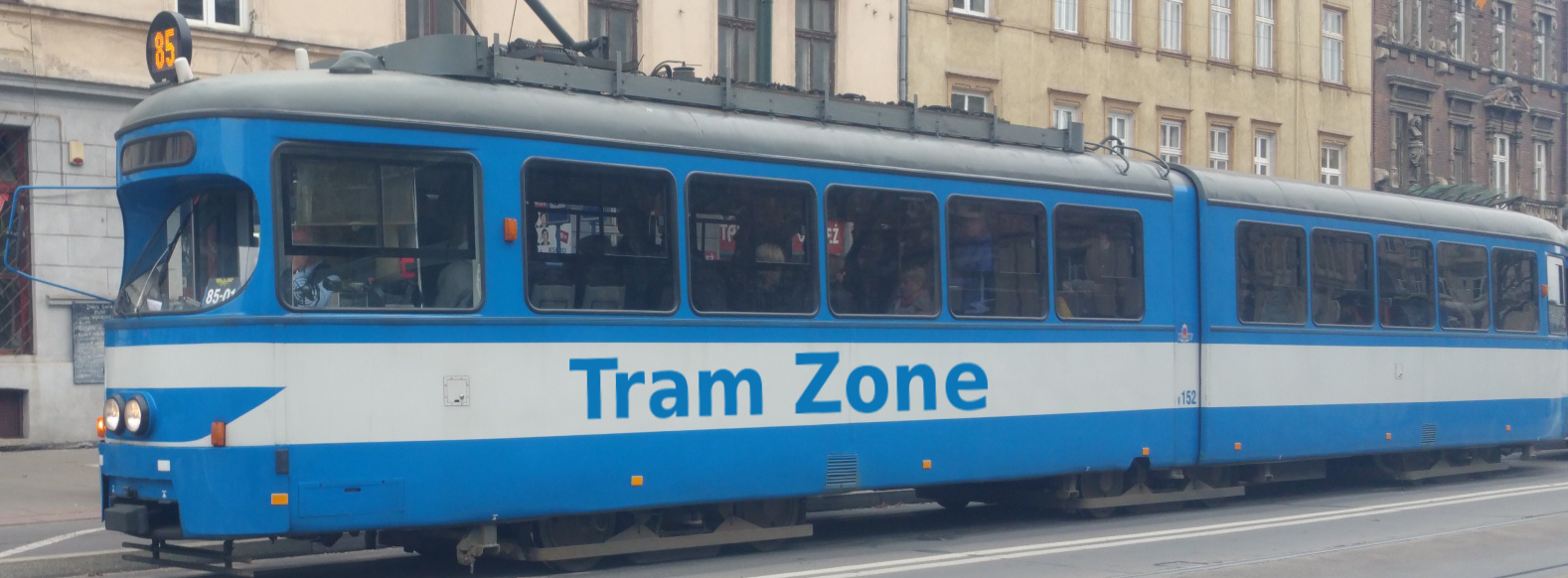
Tram systems in Florence
Florence is the capital of Tuscany in central Italy. The city lies on the River Arno, surrounded by hills, and grew into a major centre of trade, art and learning during the Middle Ages and Renaissance. Its historic centre is a UNESCO World Heritage Site.
The Cathedral of Santa Maria del Fiore, Ponte Vecchio, Palazzo Vecchio and the Uffizi Gallery are among Florence's best-known landmarks. Much of the historic centre can be explored on foot, while districts beyond it extend along the Arno and into the surrounding hills.
Firenze Santa Maria Novella is the city's principal railway station, served by long-distance and regional trains. Florence's wider public transport network combines the railway with two tram lines and urban and suburban buses. The buses are operated by Autolinee Toscane and reach districts and neighbouring communities beyond the tram routes.
Both tram lines serve the Santa Maria Novella station area. T2 also provides a direct connection between Florence Airport and the city centre, while T1 links the centre with Scandicci and the Careggi hospital and university district.
Florence's modern tram system consists of two lines. T1 Leonardo runs from Villa Costanza in Scandicci through Santa Maria Novella to Careggi Ospedale. T2 Vespucci runs from Peretola Airport through Novoli and Santa Maria Novella to Piazza San Marco. The lines share a section of track between the station area and Fortezza.
The first part of today's network opened between Scandicci and Santa Maria Novella in 2010. T1 was extended to Careggi in 2018, T2 opened in 2019, and its extension to Piazza San Marco entered service in January 2025. The modern tramway runs mainly on reserved track, with a short one-way loop through streets near San Marco.
Florence currently has 2 tram lines, details of which can be found on the Lines tab.
GEST S.p.A. operates Florence's T1 and T2 tram lines. The company is part of RATP Dev. Urban and suburban buses are operated separately by Autolinee Toscane.
The GEST website provides tram line information and timetables. The Autolinee Toscane website provides bus routes and timetables.
Florence's first horse-drawn tramway opened on 5 April 1879, connecting the city with Peretola. It was extended towards Prato and Poggio a Caiano the following year. Other routes developed during the 1880s, linking Florence with nearby communities, and the suburban network was largely in place by 1895.
The Società dei Tramways Fiorentini, widely known as la Belga because of its Belgian connections, became a major operator. Florentines adapted the company's name for the new form of transport, calling it the tramvai.
The steep route from Florence to Fiesole presented particular difficulties for horse traction. After earlier attempts to improve the service, an electric tramway from the Cure area to Fiesole was inaugurated on 19 September 1890. The Fiesole Municipal Archive identifies it as Italy's first electric tram line.
Just four days after its inauguration, a tram descending from Fiesole derailed near Doccia. Five people died and twelve were injured. The route reopened in stages after modifications, and subsequently became an established connection. It later carried the number 7, which survives on the bus service between Florence and Fiesole.
Electric traction spread across the wider Florence network at the end of the nineteenth century. In 1898, la Belga acquired the Chianti tramway company and converted seven horse-drawn lines to electric operation. Steam tramways and electric urban services continued to operate alongside one another.
In 1906, the city agreed to replace remaining omnibus routes with tram lines, giving trams a greater role in travel within Florence. The system served both the historic centre and developing districts, while suburban routes reached settlements beyond the city.
Financial difficulties affected the private tram operator after the First World War. Buses began to supplement and replace some routes during the 1920s. Following the operator's bankruptcy in 1934, the city acquired its transport concessions, and subsequent management changes brought plans to reduce and modernise the tram network. The steam tramway into the Chianti area was withdrawn.
The network suffered extensive damage during the Second World War and was not fully restored until 1951. By then, Florence had established the municipal operator ATAF and was gradually replacing trams with buses and trolleybuses. The route through Via Cerretani, Piazza del Duomo and Via Martelli closed in 1955; the last tram service ran on 20 January 1958.
Discussion of rail-based urban transport resumed during the 1970s as Florence reconsidered how to meet growing travel demand. Studies in the following decade compared possible solutions, and the Progetto Tramvia per Firenze programme began in 1984.
The definitive project for a new line between Florence and Scandicci was approved in 1996. Preliminary plans for routes towards the airport and Careggi followed in 2000, and construction of the Scandicci line began in 2005.
The first section of the new tramway opened between Scandicci and Firenze Santa Maria Novella on 14 February 2010, restoring trams to Florence after an absence of more than fifty years. It formed the western part of the route now known as T1 Leonardo.
Construction then continued on the line towards the Careggi hospital and university district. That extension opened on 16 July 2018, creating a through service from Villa Costanza in Scandicci to Careggi Ospedale.
T2 Vespucci opened on 11 February 2019 between Peretola Airport and Piazza dell'Unità d'Italia, bringing a direct tram connection to Florence Airport. Work later extended the route from the Santa Maria Novella area along Viale Lavagnini towards Piazza della Libertà and San Marco.
The extension opened on 25 January 2025. T2 now shares tracks with T1 near Santa Maria Novella and continues to Piazza San Marco, using separate streets for its two directions close to the terminus.
Florence currently has 2 tram lines, which are listed below. To see more information about a particular line, click on the link in the table below.
| Line | Description |
|---|---|
| T1 | Line T1 runs between Villa Costanza in Scandicci and Careggi University Hospital via the Cascine, Santa Maria Novella station and Statuto. |
| T2 | Line T2 runs between Florence Airport and Piazza San Marco via Novoli and Santa Maria Novella. |
Florence's modern tramway is built to standard gauge (1,435 mm). Its trams normally draw 750 V direct current from overhead wires through roof-mounted pantographs. Most of the track is reserved for trams and separated from ordinary road traffic, with road and pedestrian crossings controlled by signals.
T1 and T2 share tracks near Santa Maria Novella and Fortezza. Most of the network has separate tracks for each direction, but the approach to T2's San Marco terminus forms a one-way circuit: trams travel towards the square along Via Cavour and return via Via La Pira and Via La Marmora. The network's depot and maintenance facilities are at Vingone in Scandicci, close to the Villa Costanza end of T1.
Stops have raised platforms, shelters and electronic passenger information. The track design uses measures to reduce noise and vibration, including rail insulation and resilient material beneath parts of the track.
The established fleet comprises 46 Sirio trams, supplied by AnsaldoBreda, now part of Hitachi Rail. The vehicles are bidirectional, articulated and fully low-floor, allowing them to be used across both lines without turning at their termini. Each is approximately 32 metres long and consists of five body sections.
The Sirio trams have air conditioning, large windows and space for approximately 270 passengers, depending on how capacity is calculated. Their low floors provide level access from the tram platforms. Further vehicle specifications are published by Hitachi Rail.
Additional battery-equipped Sirio trams have been ordered for the planned extensions. They are designed to run for sections without overhead wires, while using the overhead supply elsewhere. Their introduction and any proposed conversion of the existing fleet can be covered when the vehicles enter regular service.
Construction of the new tramway from Piazza della Libertà to Bagno a Ripoli began in January 2025. The approximately 7.2-kilometre route is planned to have 17 stops. It will follow Florence's eastern ring roads and the Arno before crossing the Ponte da Verrazzano and continuing through Gavinana towards Bagno a Ripoli.
The Ponte da Verrazzano requires strengthening and maintenance before trams can use it. In August 2026, the City of Florence said it was aiming to begin passenger service in summer 2027. This remains a target dependent on completion of the bridge works, the line and the necessary testing.
A second eastern route is planned from Piazza della Libertà to Rovezzano. It would pass Firenze Campo Marte railway station, cross beneath the railway near Le Cure and continue through the eastern districts to a terminus near Rovezzano railway station. The planned route is approximately 6.1 kilometres long with 15 stops.
The definitive project was approved in 2025, and detailed design is under way. The city envisages operating the Rovezzano and Bagno a Ripoli branches together as line T3 once both have been completed. An opening date for the Rovezzano section has not been confirmed. Further details are available from the City of Florence.
The first stage of T4 is planned to run from the Porta al Prato–Leopolda area, where it would connect with T1, to Le Piagge. Approximately half of its 6.3-kilometre route would use the corridor of a former railway, while the remainder would run on new reserved tram tracks. Thirteen stops are planned.
The definitive project has been approved and the contract for detailed design and construction was signed in December 2025. Detailed design is under way; construction of the line has not yet begun. The route and current project status are described on the Florence Tramway project page.
A second stage would extend T4 from Le Piagge through San Donnino to the centre of Campi Bisenzio. It is planned as an approximately 5.4-kilometre route with 11 stops, creating a rail connection for communities to the northwest of Florence.
The project has received funding and its design has advanced, but the definitive project remains in the approval process. Construction and an opening date have not been confirmed. Further information is available from the City of Florence.
A proposed extension would take T2 beyond Peretola Airport towards Castello railway station, Sesto Fiorentino and its university area. The route is planned to be approximately six kilometres long, with 11 stops and a new tram depot.
Florence and Sesto Fiorentino approved the technical feasibility project in 2024. The definitive project is being prepared, so the extension does not yet have a confirmed construction or opening timetable. The City of Florence project page provides further details.