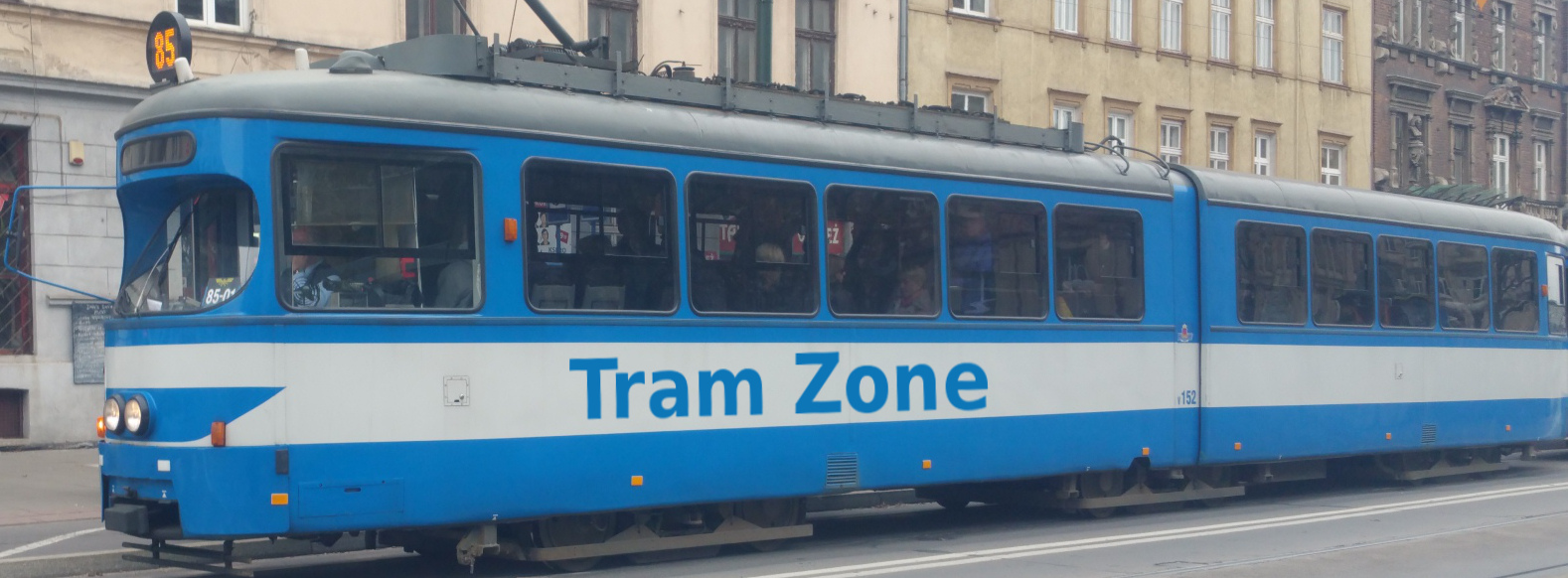
Tram systems in Valencia
Valencia, known as València in Valencian, is the capital of the Valencian Community on Spain’s Mediterranean coast. It is a major port, commercial and university city, with an urban area extending into neighbouring municipalities. Its historic centre, the Turia Gardens, the City of Arts and Sciences and the coastal neighbourhoods form distinct parts of the city, linked by its public transport network.
Valencia’s public transport network combines metro and tram services, urban and metropolitan buses, and suburban railways. Metrovalencia serves the city and surrounding municipalities, with six metro lines and four tram lines forming a shared network. EMT València operates the city’s urban buses, while MetroBus services connect the wider metropolitan area. Renfe’s Cercanías trains provide suburban and regional connections.
The tram routes complement the metro by serving northern residential districts, university campuses, coastal neighbourhoods and parts of the southeast of the city. Interchanges allow passengers to continue towards the city centre, airport and surrounding towns.
Valencia’s tram system comprises four lines within the Metrovalencia network. Lines 4, 6 and 8 form a connected network across the northern and eastern parts of the urban area, extending into Burjassot and Paterna. Line 10 operates separately between the edge of the city centre and Natzaret, combining an underground central section with surface running farther southeast.
The current tram lines are:
- Line 4: Links Doctor Lluch in the coastal district with the northwestern suburbs, serving the university area, Benimaclet, Pont de Fusta and Empalme. Its western branches serve Mas del Rosari, Lloma Llarga-Terramelar and Fira València.
- Line 6: Runs from Tossal del Rei to Marítim through the northern districts, Benimaclet, the university area and the coastal neighbourhoods, sharing part of its route with Line 4.
- Line 8: Provides a short connection between Marítim and Neptú, serving the Grau district and the marina.
- Line 10: Runs from Alacant to Natzaret through Russafa, Amado Granell-Montolivet and the City of Arts and Sciences area.
Key connections with the metro are available at Empalme, Benimaclet and Marítim. Line 10’s Alacant terminus has pedestrian links to Bailén and Xàtiva stations, providing access to the wider Metrovalencia network. Further information about each tram route is available in the Lines tab.
All four tram lines are operated by Ferrocarrils de la Generalitat Valenciana (FGV) under the Metrovalencia brand, alongside the city’s metro services.
Useful official links:
Valencia’s first horse-drawn tramways opened in 1876, serving the city and its maritime districts. The network expanded during the following decades, and electrification began in 1900. Electric trams became an established part of everyday transport, linking central Valencia with residential neighbourhoods, the waterfront and nearby settlements.
During the twentieth century, buses and trolleybuses gradually replaced the traditional tram routes. The last services on the original network ran on 20 June 1970, beginning a period of almost 24 years without trams in the city.
Modern tram services began on 21 May 1994, when Line 4 opened between Empalme and Doctor Lluch via Pont de Fusta. Valencia became the first Spanish city to reintroduce trams as a modern public transport system after closing its traditional network. The initial route was approximately 9.8 kilometres long and had 21 stops.
Much of the route reused former narrow-gauge railway corridors belonging to the local trenet network. Their conversion created a tramway integrated into the urban environment, connecting northern neighbourhoods, university campuses and the coastal district. This gave the new system a different role and alignment from much of the former street tram network.
Line 4 expanded westwards in 1999, reaching the area around the Valencian television headquarters and gaining a branch to the exhibition grounds at Fira València. Further extensions followed in 2005 to Mas del Rosari and Lloma Llarga-Terramelar, extending tram coverage into growing residential areas in Paterna.
Two important additions followed in 2007. A short tram connection opened between Marítim-Serrería, now Marítim, and Neptuno, now Neptú, linking the metro with the waterfront. Initially operated as the tram section of Line 5, it became Line 8 in the network reorganisation of 2015.
Line 6 also opened in 2007, connecting Tossal del Rei with Marítim-Serrería. It combined new infrastructure with shared running over part of Line 4, establishing the connected northern and eastern tram network.
The next major expansion followed a lengthy interruption. Construction of the route originally known as T2 began in 2007 but stopped in 2011 because of funding difficulties. Work resumed in 2019, and the completed southern section opened as Line 10 on 17 May 2022.
Running between Alacant and Natzaret, the new line brought tram services to Russafa, Montolivet and the City of Arts and Sciences area. Its combination of underground stations and surface stops introduced a separate southeastern corridor to the tram network. Connections with the wider rail system subsequently improved with the opening of the pedestrian tunnel between Alacant and Xàtiva in December 2025.
Valencia currently has 4 tram lines, which are listed below.
| Line | Description |
|---|---|
| 4 | Line 4 runs between Doctor Lluch and the 3 branch termini at Mas del Rosari , Lloma Llarga-Terramelar and Fira València via the university area, Benimaclet, Pont de Fusta and Empalme. |
| 6 | Line 6 runs between Tossal del Rei and Marítim via Orriols, Benimaclet, the university area and Cabanyal. |
| 8 | Line 8 runs between Marítim and Neptú via Francesc Cubells and Grau-La Marina. |
| 10 | Line 10 runs between Alacant and Natzaret via Russafa, Amado Granell-Montolivet, the City of Arts and Sciences and Moreres. |
Valencia’s tramways use metre-gauge track, with a rail spacing of 1,000 mm, and are electrified at 750 V DC through overhead wires. Trams collect power using roof-mounted pantographs. Much of the surface network runs on reserved track alongside streets and through landscaped corridors, with road crossings at junctions.
Lines 4, 6 and 8 form a connected network, with shared sections and junctions allowing services to follow different routes through the northern and eastern districts. Line 10 is physically separate and combines three underground stations at Alacant, Russafa and Amado Granell-Montolivet with five surface stops towards Natzaret. It has its own depot and maintenance facilities at Natzaret, while the established network is supported by the Tarongers workshops.
The signalling and communications systems on Lines 4, 6 and 8 were modernised in June 2026. The upgrade introduced automatic train protection, which supervises tram speeds against track and signalling conditions, together with improved operational control systems. This brought these lines closer to the technical standard already used on Line 10.
The established fleet comprises two principal generations of articulated electric tram: the Siemens-led 3800 series and the Bombardier 4200 series.
The 3800 series entered service with the modern tramway in 1994. These three-section, single-ended vehicles are approximately 23.8 metres long and have a maximum speed of 65 km/h. Their low-floor passenger areas provide access from the stop platforms, and the vehicles are equipped with air conditioning and passenger information systems. A refurbishment programme introduced mechanical improvements and updated their interiors and information equipment.
The 4200 series introduced a longer design, approximately 32.4 metres in length, with a maximum speed of 70 km/h. These trams provide low-floor accommodation throughout, improving movement within the vehicle and access for passengers with reduced mobility. They also form the operating fleet for Line 10.
A further generation, the Stadler 4500 series, is being built for FGV, with sixteen vehicles allocated to Metrovalencia. Their introduction is planned to begin in 2027, progressively replacing older 3800-series trams and increasing capacity. The new vehicles will be more than 45 metres long and accommodate approximately 285 passengers. Preparations include adapting the Tarongers workshops to their larger dimensions.
The Generalitat Valenciana is developing a new tram route linking the existing Line 10 corridor with Valencia’s waterfront. Planned as Line 11, it would share infrastructure with Line 10 from Alacant before branching towards the Assut de l’Or bridge near the City of Arts and Sciences.
The proposed new section would continue through the Menorca and Avinguda de les Balears area towards the Grau district, connecting with the existing waterfront tram network at Grau-La Marina. This would provide a more direct tram connection between the central Alacant terminus and the maritime districts.
A second planned route, Line 12, would share the central section of Line 10 before branching towards Hospital Universitari i Politècnic La Fe. The proposed alignment would follow the Avinguda dels Germans Maristes corridor, cross Avinguda d’Ausiàs March and serve Malilla on its approach to the hospital.
The project would extend tram coverage into southeastern residential districts and provide a rail connection to one of the city’s principal hospitals. Lines 11 and 12 are included in FGV’s 2026–2030 investment programme, although their delivery remains subject to completion of project development and construction. No confirmed passenger opening dates have been identified.
A further tram corridor is being studied between Pont de Fusta and Empalme, serving northern neighbourhoods around the Ronda Nord. The study contract was awarded in March 2026 and covers a route intended to combine sections of existing tram infrastructure with new track serving areas such as Benicalap, Torrefiel, Orriols and Ciutat Fallera.
Although described as part of the longer-term development of Line 10, this northern corridor would require a separate central connection to link directly with the existing Alacant–Natzaret route. An extension through the city centre towards Pont de Fusta remains under study. These proposals are at an earlier stage than Lines 11 and 12, with no confirmed construction or opening timetable.