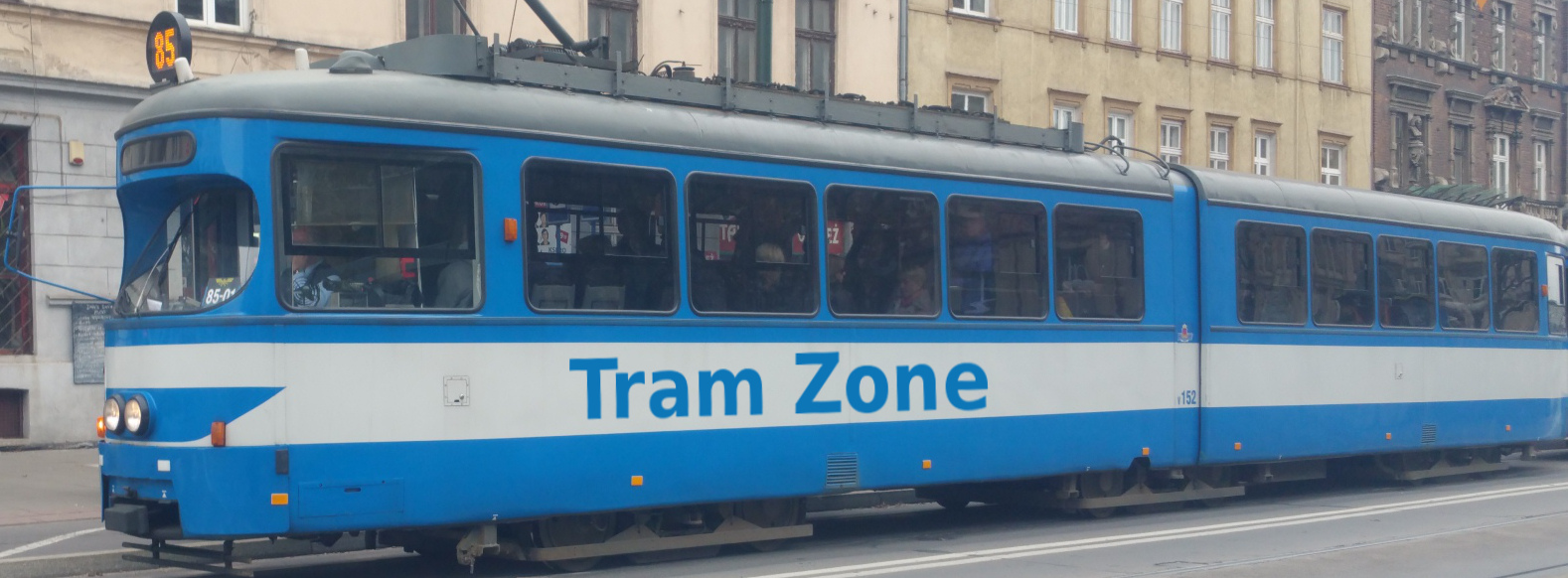
Tram systems in Bratislava
Bratislava is the capital of Slovakia, situated on the River Danube in the south-west of the country, close to the Austrian and Hungarian borders. Its historic centre lies beneath Bratislava Castle, with the wooded slopes of the Little Carpathians to the north and extensive residential districts on both banks of the river. The city is an important administrative, commercial and cultural centre.
Bratislava’s public transport network combines trams, trolleybuses and buses, supported by regional rail and bus services. Trams serve several of the city’s busiest corridors, while trolleybuses and buses provide connections across the wider urban area and to districts beyond the tram network.
Urban services form part of the Integrated Transport System in the Bratislava Region, known as IDS BK. This brings city transport, regional buses and participating rail services together under a common fare system, allowing passengers to transfer between modes using tickets valid for the appropriate zones and journey duration.
Bratislava’s tram network links the city centre with Karlova Ves and Dúbravka to the west, Rača to the north-east, Zlaté piesky and Ružinov to the east, and Petržalka south of the Danube. Central tracks connect these corridors with the main railway station, shopping streets and major interchange points.
The network serves both established urban neighbourhoods and large residential estates. Its cross-river route continues through Petržalka to Južné mesto, providing a direct tram connection between the southern districts and the city centre. This corridor is served by Line 3, which continues north to Rača.
Bratislava currently has 4 tram lines, details of which can be found on the Lines tab.
Dopravný podnik Bratislava (DPB) operates the city’s trams, trolleybuses and urban buses. Bratislavská integrovaná doprava (BID) coordinates the wider IDS BK integrated transport system, including common fares and passenger information.
Useful official links:
Electric tram services began in Bratislava on 27 August 1895, when the city was part of the Austro-Hungarian Empire and was also known as Pressburg and Pozsony. The system was electrically operated from the outset. Its first route linked the Danube-side area with the northern part of the city centre, reaching the main railway station later that year. Further lines connected other railway stations and growing urban districts.
A separate international connection opened in 1914, when the electric railway commonly known as the Vienna tram began operating between Bratislava and Vienna. This used standard-gauge tracks, unlike Bratislava’s metre-gauge city network, and crossed the Danube through Petržalka. The Bratislava end was subsequently converted to metre gauge in 1935–1936 and incorporated into the urban tram system. Cross-river services were interrupted by the annexation of Petržalka to Nazi Germany in 1938 and by wartime destruction. A local tram connection to Petržalka was restored in 1946, but closed in 1961.
After the Second World War, tram development accompanied Bratislava’s growth and the construction of large residential districts. Fleet modernisation brought Tatra T2 trams in the late 1950s and T3 vehicles from 1964, gradually replacing the older two-axle cars. The last of these traditional trams left regular service in 1974.
The network expanded to serve new housing areas, with the Ružinov line opening in 1971 and an extension from Karlova Ves into Dúbravka following in 1983. Central routes also changed: the original approach to the main railway station along Štefánikova closed in 1979, with services restored over an alternative alignment in 1980. In September 1983, the former road tunnel beneath Bratislava Castle opened to trams, creating another connection between the city centre and the western districts.
A new phase of fleet renewal began in 2015, when Škoda 29T and 30T low-floor trams entered passenger service. These introduced improved accessibility and passenger comfort, while the double-ended 30T vehicles also supported the development of routes without traditional turning loops.
Trams returned to Petržalka in July 2016, ending a 55-year absence. The new line crossed the rebuilt Starý most and continued to Jungmannova, connecting the district directly with the city centre and the existing network north of the Danube.
Investment also renewed established routes. The reconstructed Karlova Ves–Dúbravka corridor reopened throughout in October 2020, following extensive track and stop improvements. The next major expansion opened on 27 July 2025, when Line 3 was extended through Petržalka to Južné mesto, bringing tram services deeper into the district’s residential areas.
Bratislava currently has 4 tram lines, which are listed below.
| Line | Description |
|---|---|
| 1 | Line 1 runs between Hlavná stanica and Námestie Ľudovíta Štúra via STU, Poštová, Centrum. |
| 3 | Line 3 runs between Komisárky and Južné mesto via ŽST Vinohrady, Račianske mýto, Blumentál, Šafárikovo námestie, Farského. |
| 4 | Line 4 runs between Pri kríži and the branch termini Zlaté piesky and ŽST Nové Mesto via Karlova Ves, Most SNP, Centrum, Trnavské mýto. |
| 9 | Line 9 runs between Kútiky and Astronomická via Riviéra, Kapucínska, Blumentál, Trnavské mýto, Tomášikova. |
Bratislava’s tram network uses 1,000 mm metre-gauge track and overhead electrical supply. Much of the network runs on reserved tracks separated from general traffic, particularly along the main suburban corridors, while central sections include tracks embedded in streets and pedestrian areas.
Distinctive features include the tram tunnel beneath Bratislava Castle and the crossing of the Danube on Starý most, which connects the central network with Petržalka. The tunnel provides an alternative route between the city centre and the western waterfront, while the Petržalka corridor continues on a dedicated alignment through the district’s residential areas.
The principal tram maintenance facilities are at Jurajov dvor and Krasňany. Krasňany underwent a comprehensive reconstruction and returned to service in 2025, with renewed tracks, extended depot halls and equipment adapted to maintaining modern low-floor trams.
The modern fleet is based on Škoda ForCity Plus 29T and 30T articulated trams, introduced from 2015. Both are five-section vehicles approximately 32.5 metres long and 2.48 metres wide, with low-floor access across most of the passenger area. They have air-conditioned interiors, electronic passenger information and space for passengers using wheelchairs or travelling with pushchairs.
The 29T is single-ended, with one driving cab and passenger doors on one side. The 30T is double-ended, with driving cabs at both ends and doors on both sides, allowing greater flexibility at temporary termini and during engineering works. Further deliveries have expanded the low-floor fleet, including an updated batch of 29T vehicles introduced in 2026.
Older high-floor vehicles include modernised Tatra T3 cars, Tatra T6A5 cars and articulated K2S trams. These represent earlier generations of Bratislava’s rolling stock and supplement the modern Škoda fleet. Continued fleet renewal has progressively increased the proportion of services operated by accessible low-floor vehicles.
Bratislava is preparing a major modernisation of the Ružinov tram corridor. A construction contract was signed in September 2026 for the renewal of approximately 3.4 km of existing track, together with stops, junctions and surrounding streets. The project includes tram priority at junctions, improved passenger facilities and sections of planted track, helping to reduce journey times and improve the environment along the route.
Preparatory work is expected to begin in late 2026, with main construction between Záhradnícka and Chlumeckého provisionally starting in early 2027. This section is expected to be completed around the end of 2027 or beginning of 2028. Work will then move to the inner section from Americké námestie along Krížna towards the Museum of Horse-drawn Railways, with that phase expected to take a further year. Detailed construction schedules and arrangements for tram services remain subject to confirmation.
A separate project would extend the Ružinov tram corridor by approximately 1 km beyond the existing Astronomická terminus to the planned Stanica Ružinov transport interchange, also known as TIOP Ružinov. This would provide connections between trams, regional trains and buses. The extension has passed environmental screening and is progressing through design preparation, but a confirmed construction timetable and opening date have not yet been announced.