Tram systems in Strasbourg
Strasbourg is the principal city of Alsace, in the Grand Est region of northeastern France, close to the German border. Its historic centre developed around the River Ill, while the Rhine separates the city from neighbouring Kehl in Germany. Strasbourg combines its role as a regional commercial and cultural centre with an international identity as the seat of the European Parliament and the Council of Europe. Its cathedral, historic neighbourhoods and European institutions are among its best-known landmarks.
Public transport in Strasbourg and the surrounding Eurométropole is centred on the CTS network, combining six tram lines with bus rapid transit, frequent urban bus routes and local services. Regional and mainline trains complement the urban network, with Strasbourg’s main railway station providing an important interchange. The tram network also extends across the Rhine to Kehl, linking the French and German sides of the urban area.
Strasbourg’s modern tramway opened in 1994 and has developed into an interconnected network of six lines, identified by the letters A to F. Lines share several sections of track and meet at multiple interchange points, allowing journeys across the city and its suburbs. Homme de Fer is the principal interchange in the city centre, with further connections at locations including République, Observatoire and Landsberg.
The network serves the main railway station, central shopping streets, university campuses, European institutions and residential districts across the metropolitan area. It reaches surrounding communes including Illkirch-Graffenstaden, Lingolsheim, Hoenheim and Wolfisheim. Line D provides the cross-border connection to Kehl, continuing beyond the German railway station to Kehl Rathaus.
CTS — Compagnie des Transports Strasbourgeois
CTS operates Strasbourg’s tram and urban bus network on behalf of the Eurométropole de Strasbourg, including the cross-border tram service to Kehl. It is a publicly owned company whose shareholders are the Eurométropole, the Grand Est region and the city of Kehl.
Strasbourg’s first tram services began in 1878, initially using horse traction. Electrification started in 1894, and the system developed into an extensive network serving the city, its suburbs and surrounding countryside. Tram routes also crossed the Rhine, reflecting Strasbourg’s close connections with neighbouring communities on both sides of the river.
The original network declined as buses and private cars gained importance. After the Second World War, the remaining tram routes were progressively replaced, and the last services ended in 1960. Strasbourg then spent more than three decades without trams.
Growing congestion prompted studies into a new public transport system during the 1970s. A tramway proposal was initially adopted, but during the 1980s it faced competition from plans for an automated light metro using the VAL system. The municipal election of 1989 settled the debate in favour of the tramway, under the incoming administration led by Catherine Trautmann.
Construction began in 1991, and the first modern line opened in November 1994 between Hautepierre and Baggersee. Its introduction accompanied wider changes to the city centre, including restrictions on through traffic and improvements to public spaces, pedestrian routes and cycling facilities. The tramway became a central part of Strasbourg’s approach to urban renewal.
The first expansion followed in 1998, when Line A reached farther into Illkirch-Graffenstaden and Line D began operating. Lines B and C opened in 2000, establishing a second corridor through the centre and making Homme de Fer the principal meeting point of the network.
Further expansion in 2007 brought Line E and extended services to additional districts. Line B reached Ostwald and Lingolsheim in 2008. Line F followed in 2010, alongside a new surface approach to the main railway station used by Line C. Extensions during the following years improved coverage in Hautepierre and Illkirch-Graffenstaden.
In April 2017, Line D crossed the Rhine to Kehl railway station, restoring an international tram connection between Strasbourg and Germany. It was extended farther into Kehl to the town hall in November 2018. Line E subsequently reached Robertsau L’Escale in 2019, while Line F was diverted onto a new western branch to Comtes in Koenigshoffen in 2020.
On 15 November 2025, Line F was extended from Comtes to Wolfisheim Henri Rendu. The four-kilometre extension added eight stops, bringing tram services to more of western Strasbourg and the neighbouring communes of Eckbolsheim and Wolfisheim.
Strasbourg currently has 6 tram lines, which are listed below.
| Line | Description |
|---|---|
| A | Line A runs between Parc des Sports and Graffenstaden via Gare Centrale, Homme de Fer, Baggersee. |
| B | Line B runs between Hoenheim Gare and Lingolsheim Tiergaertel via Wacken, Homme de Fer, Ostwald Hôtel de Ville. |
| C | Line C runs between Gare Centrale and Neuhof Rodolphe Reuss via Homme de Fer, Observatoire, Landsberg. |
| D | Line D runs between Poteries and Kehl Rathaus via Gare Centrale, Homme de Fer, Port du Rhin. |
| E | Line E runs between Robertsau L’Escale and Campus d’Illkirch via Parlement Européen, République, Baggersee. |
| F | Line F runs between Wolfisheim Henri Rendu and Place d’Islande via Comtes, Homme de Fer, Observatoire. |
Strasbourg’s tramway uses standard-gauge track (1,435 mm). The six lines form an interconnected network, sharing tracks along several corridors and meeting at multiple junctions and interchange stops. Most of the system operates at street level, although Lines A and D pass through a tunnel beneath the main railway station and its approaches, serving the underground Gare Centrale stop.
Infrastructure includes paved city-centre streets, grassed reservations and dedicated tram bridges. The cross-border route to Kehl crosses the Rhine on the Beatus-Rhenanus bridge. While much of the network is separated from general traffic, parts of the western extension to Wolfisheim use shared road space.
Trams operate on 750 V DC, collected by roof-mounted pantographs from overhead wires. Overhead electrification also continues across the Rhine into Kehl.
The fleet combines Eurotram vehicles with several generations of Alstom Citadis. The trams are articulated, bidirectional and have low floors, with driving cabs at both ends and doors on both sides.
| Type | Approximate length | Principal characteristics |
|---|---|---|
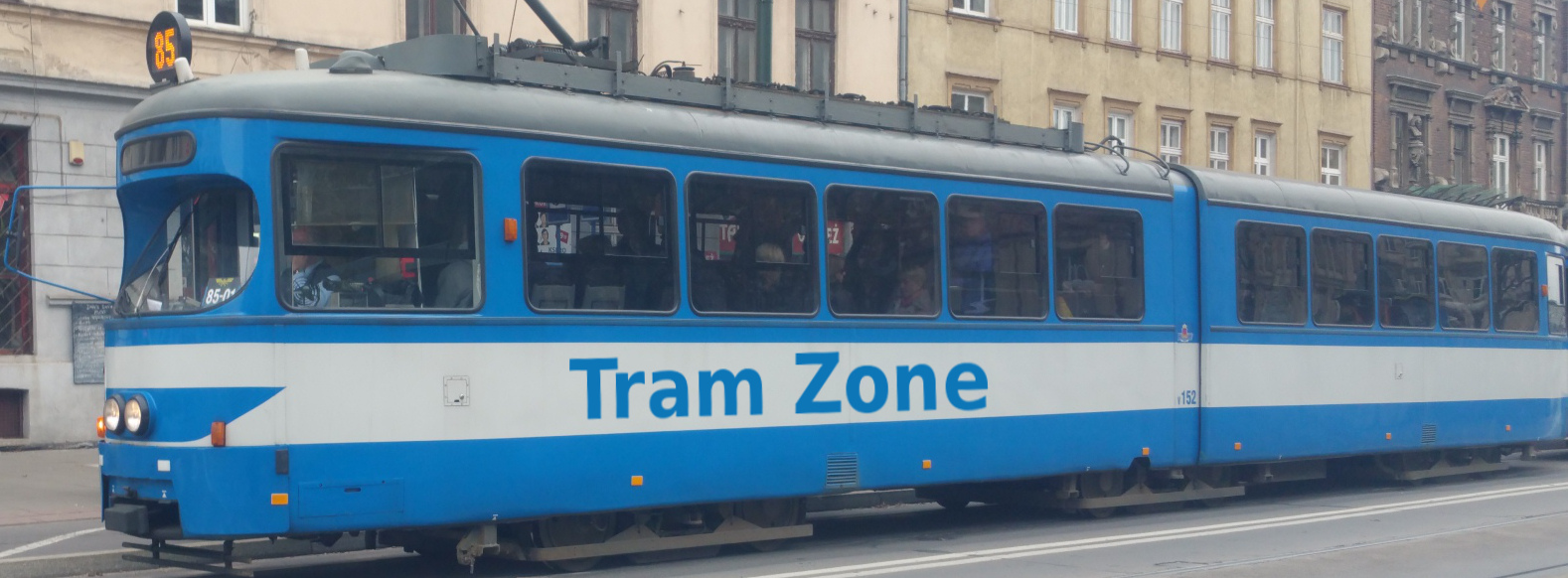
| Eurotram | 33 m or 43 m | Distinctive rounded design with extensive glazing; the remaining vehicles are being progressively replaced. |
| Citadis 1 | 45 m | Strasbourg-specific Citadis 403 design, with additional bogies beneath the cab sections to suit the network’s curves. |
| Citadis 2 | 45 m | Later Citadis generation, including vehicles equipped and approved for cross-border operation into Germany. |
| Citadis 3 | 45 m | Latest generation, introduced in November 2025, with revised interiors, wider connecting passages and improved passenger information. |
A total of 39 Citadis 3 trams has been ordered to increase capacity and replace the remaining Eurotrams, with deliveries planned through 2028. The new vehicles are 2.40 metres wide and accommodate approximately 286 passengers. The first-generation Citadis fleet is also undergoing a programme of major mid-life overhauls.
The tram fleet is accessible to passengers with reduced mobility. Low floors and raised stop platforms provide step-free boarding, while dedicated spaces accommodate wheelchair users. The latest Citadis vehicles incorporate accessible door controls, visual and audible door signals, and designated areas for wheelchairs and pushchairs.
The network is supported by three CTS depots, known as production units: Cronenbourg, Elsau and Kibitzenau. These provide facilities for vehicle storage, servicing and maintenance, supported by teams responsible for the track, electrical equipment and other network infrastructure.
The Eurométropole is developing proposals to improve tram connections between Strasbourg and the northern communes of Schiltigheim and Bischheim. The previous scheme was reconsidered after receiving an unfavourable opinion from the public inquiry commission in December 2024. A citizens’ convention was established in 2025 to examine alternative routes and help shape a revised project.
The convention’s recommendations, presented in October 2025, favoured a route through central Schiltigheim, serving locations including the town hall, the former Heineken brewery site and the Écrivains neighbourhood. A connection to Strasbourg’s existing network via Rue du Faubourg-de-Pierre attracted the strongest support for the southern section, although other options remained open. These recommendations provide a basis for further project development rather than an approved alignment.
A revised scheme would require further consultation and a new public inquiry before construction could proceed. The final route, service arrangements and opening timetable remain to be confirmed.