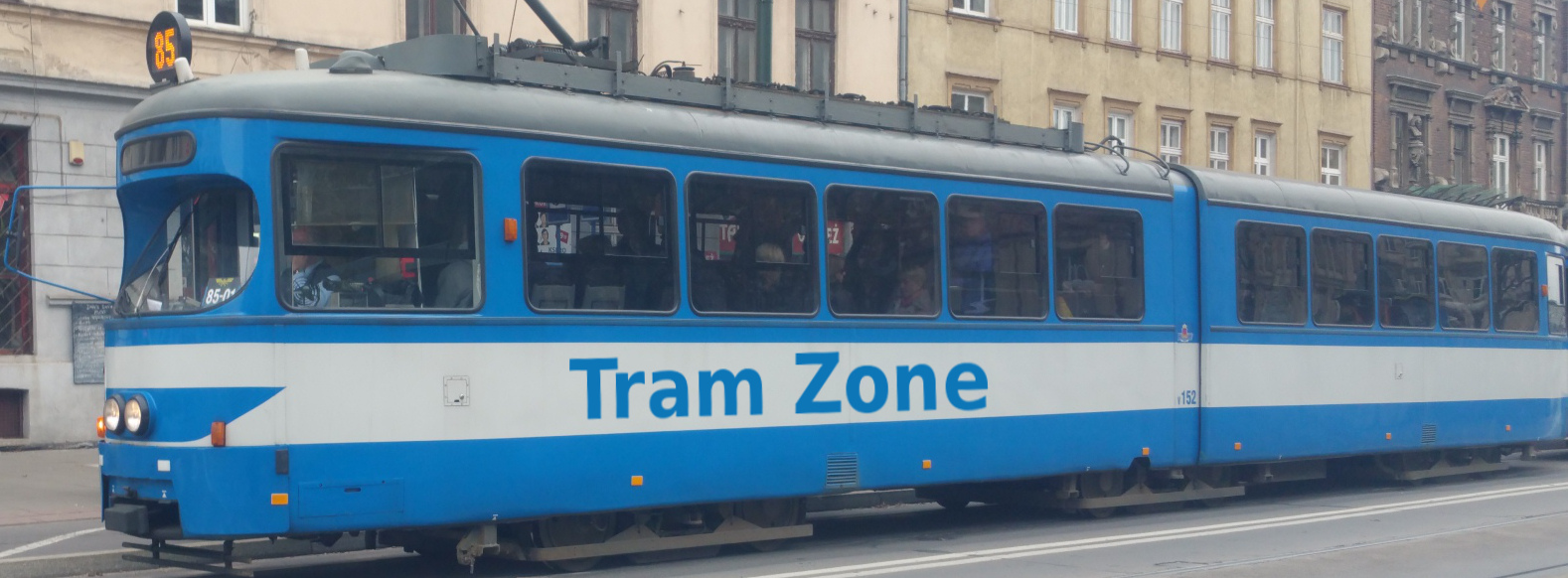
Tram systems in Paris
Paris is the capital of France and the principal city of the Île-de-France region, situated on the River Seine in the north of the country. It is a major centre for government, business, culture and tourism, with landmarks including the Eiffel Tower, Notre-Dame Cathedral and the Louvre. Beyond the compact administrative city, its extensive suburbs and surrounding towns form a much larger metropolitan area.
Public transport throughout Paris and the wider region is coordinated by Île-de-France Mobilités. The Métro provides dense coverage within Paris and connections into the suburbs, while the RER and suburban railway lines link the capital with destinations farther across the region. Trams and an extensive bus network complement these rail services, providing local connections and routes between suburban communities.
The tramways have a particularly important role in journeys around the outskirts of Paris and between suburbs, providing connections with the Métro, RER and suburban railways without requiring passengers to travel through central Paris.
The Paris tram system covered here comprises the whole Île-de-France tram network, including routes operating entirely outside the city itself. There are 15 lines, numbered T1, T2, T3a, T3b and T4-T14. These range from urban tramways around the edge of Paris to suburban routes connecting towns elsewhere in the region.
T3a and T3b follow much of the perimeter of Paris along the Boulevards des Maréchaux, serving numerous gateways into the city and interchanges with other public transport. Other lines serve suburban corridors, with some reaching Paris at their termini and others remaining wholly outside its boundaries.
The network includes conventional tramways, rubber-tyred guided trams and tram-train services. Although presented within a common regional network, the lines do not form a single continuous system: many operate independently, with different infrastructure and vehicles. Together, they serve residential districts, employment centres and town centres across Île-de-France.
Île-de-France Mobilités is the regional transport authority, responsible for organising services and appointing operators. Tram operations are shared between several companies:
- RATP operates T1, T2, T3a, T3b, T5, T6, T7 and T8.
- RATP Cap Île-de-France operates T10 through RATP Cap Bièvre, and T12 and T13 through RATP Cap Arc Sud et Ouest.
- Keolis operates T9 through Keolis Grand Paris Seine Orly.
- Stretto, a joint venture between Keolis and SNCF Voyageurs, operates T4, T11 and T14.
Paris’ tramway history began with an experimental horse-drawn line opened by engineer Alphonse Loubat in 1853, followed by a regular service in 1855. Tramways subsequently spread through the capital and its suburbs, becoming an important part of the growing city’s transport system.
Horse traction was followed by experiments with steam and compressed air, before electric operation became established during the late nineteenth century. Numerous companies developed routes serving both central Paris and surrounding communities.
During the interwar years, tramways increasingly faced competition from the Métro, buses and private cars. They were also criticised for obstructing road traffic, and a programme of replacement by buses removed the network during the 1930s.
The last trams within Paris ran on 14 March 1937. The remaining suburban services followed, with the final route of the main network, between Le Raincy and Montfermeil, closing on 14 August 1938.
The separate Versailles tramway survived longer, remaining in operation until 1957. Its closure left Île-de-France without a tram service for the next 35 years.
Modern trams returned to Île-de-France in 1992, when T1 opened in stages between Bobigny and Saint-Denis. The new line established a suburban connection linking communities and existing rail services outside central Paris.
A second line, T2, followed in 1997, linking La Défense and Issy-Val de Seine. It reused a former railway alignment, demonstrating a different approach to developing the modern network alongside the street-based route of T1.
On 16 December 2006, T3 opened between Pont du Garigliano and Porte d’Ivry, bringing trams back within Paris itself. Its construction included substantial improvements to the Boulevards des Maréchaux.
An extension around eastern Paris opened in December 2012, when the service was divided into T3a and T3b, meeting at Porte de Vincennes. T3b subsequently extended westwards to Porte d’Asnières in 2018 and Porte Dauphine in April 2024.
The network also developed through the conversion of suburban railways. T4 opened in 2006 between Bondy and Aulnay-sous-Bois, replacing railway services on the former Ligne des Coquetiers with tram-train operation. A new branch towards Clichy-sous-Bois and Montfermeil began opening in 2019.
Further urban routes followed: T5 and T7 opened in 2013, with T6 and T8 joining them in 2014. These additions expanded tram coverage through the northern and southern suburbs.
Expansion continued with T11 in 2017, connecting Épinay-sur-Seine and Le Bourget, followed by T9 in 2021 between Paris and Orly, and T13 in 2022 between Saint-Germain-en-Laye and Saint-Cyr-l’École. T10 and T12 opened in 2023, adding further connections in the southern and southwestern suburbs.
The T14 designation was introduced on 22 March 2025 for the existing Esbly-Crécy-la-Chapelle railway service, previously part of Transilien Line P. This was a reclassification of an existing route rather than the opening of a newly constructed tramway, bringing the regional network to its present 15 lines.
Paris currently has 15 tram lines, which are listed below.
| Line | Description |
|---|---|
| T1 | Line T1 runs between Asnières - Quatre Routes and Gare de Noisy-le-Sec via Gare de Saint-Denis, La Courneuve - 8 Mai 1945 and Bobigny - Pablo Picasso. |
| T2 | Line T2 runs between Pont de Bezons and Porte de Versailles via La Défense, Parc de Saint-Cloud and Issy - Val de Seine. |
| T3a | Line T3a runs between Pont du Garigliano and Porte de Vincennes via Porte de Versailles, Porte d’Orléans and Porte de Choisy. |
| T3b | Line T3b runs between Porte de Vincennes and Porte Dauphine via Porte de Pantin, Porte de la Chapelle and Porte de Clichy. |
| T4 | Line T4 runs between Bondy and the 2 branches to Aulnay-sous-Bois and Hôpital de Montfermeil via Les Pavillons-sous-Bois and Gargan. |
| T5 | Line T5 runs between Marché de Saint-Denis and Garges - Sarcelles via Guynemer, Mairie de Pierrefitte and Butte Pinson. |
| T6 | Line T6 runs between Châtillon - Montrouge and Viroflay - Rive Droite via Hôpital Béclère, Vélizy 2 and Viroflay - Rive Gauche. |
| T7 | Line T7 runs between Villejuif - Louis Aragon and Porte de l’Essonne via Porte de Thiais, La Fraternelle and Aéroport d’Orly. |
| T8 | Line T8 runs between Saint-Denis - Porte de Paris and the 2 branches to Orgemont and Villetaneuse - Université via Gare de Saint-Denis and Delaunay - Belleville. |
| T9 | Line T9 runs between Porte de Choisy and Orly - Gaston Viens via Musée MAC VAL, Rouget de Lisle and Les Saules. |
| T10 | Line T10 runs between La Croix de Berny and Jardin Parisien via LaVallée, Malabry and Hôpital Béclère. |
| T11 | Line T11 runs between Épinay-sur-Seine and Le Bourget via Villetaneuse - Université, Pierrefitte - Stains and Dugny - La Courneuve. |
| T12 | Line T12 runs between Massy - Palaiseau and Évry-Courcouronnes via Longjumeau, Épinay-sur-Orge and Morsang-sur-Orge. |
| T13 | Line T13 runs between Saint-Germain-en-Laye and Saint-Cyr via Lisière Pereire, Saint-Nom-la-Bretèche - Forêt de Marly and Noisy-le-Roi. |
| T14 | Line T14 runs between Esbly and Crécy-la-Chapelle via Montry - Condé, Couilly - Saint-Germain - Quincy and Villiers - Montbarbin.. |
The Île-de-France tram network combines conventional steel-wheel tramways, rubber-tyred guided tramways and tram-train routes. Its steel-wheel lines use standard-gauge track (1,435 mm), but differences in vehicle dimensions, power supply and operating systems mean that the lines are not universally compatible.
The conventional urban lines run predominantly on dedicated surface alignments, with road crossings controlled by traffic signals. Track construction varies between paved street sections, grassed reservations and railway-style alignments. T2 makes extensive use of a former railway corridor, while T3a and T3b follow the Boulevards des Maréchaux around much of Paris.
T5 and T6 use the Translohr system. Their vehicles run on rubber tyres and are mechanically guided by a single central rail, rather than running on two conventional railway rails. They remain attached to that guidance system during normal operation and cannot divert around obstacles like a bus. T6 includes a 1.6-kilometre tunnel beneath Viroflay, with gradients reaching 10%.
The tram-train routes use railway-derived infrastructure to varying degrees. T12 and T13 combine railway sections with purpose-built urban tramway sections, allowing the same vehicles to operate in both environments. These require different signalling and operating arrangements according to the section being used.
The conventional urban tramways use 750 V DC, supplied through overhead wires and collected by roof-mounted pantographs. The rubber-tyred Translohr lines also collect power from overhead wires.
The tram-train routes have different electrical arrangements reflecting their railway infrastructure. T13 uses 25 kV AC on its railway section and 750 V DC on its urban sections, with vehicles equipped to change between the two supplies. T12 operates at 1,500 V DC, including on its purpose-built urban section. Consequently, a single voltage cannot describe the whole regional network.
The network uses several vehicle families, selected for the infrastructure and capacity requirements of individual routes. All have driving cabs at both ends, allowing them to reverse at termini without turning loops.
| Vehicle type | Principal lines | Approximate length | Configuration |
|---|---|---|---|
| Alstom Citadis X05 / TW20 | T1 | 33 m | Five-section, fully low-floor steel-wheel tram |
| Alstom Citadis 302 | T2, T7 and T8 | 32 m | Five-section, fully low-floor steel-wheel tram |
| Alstom Citadis 402 | T3a and T3b | 44 m | Seven-section, fully low-floor steel-wheel tram |
| Alstom Citadis 405 / X05 | T9 and T10 | 45 m | Seven-section, fully low-floor steel-wheel tram |
| Translohr STE3 | T5 | 25 m | Three-section, low-floor rubber-tyred guided tram |
| Translohr STE6 | T6 | 46 m | Six-section, low-floor rubber-tyred guided tram |
| Alstom Citadis Dualis | T4, T11, T12, T13 and T14 | 42 m | Four-section, low-floor tram-train |
The conventional fleets comprise several generations of Alstom Citadis, alongside the Translohr vehicles and railway-compatible Citadis Dualis fleets. The lengths shown refer to individual vehicles.
T1’s fleet renewal introduced the new TW20 generation in December 2024, replacing the original Alstom TFS vehicles. The new trams are approximately 33 metres long and 2.40 metres wide, with wider doorways and increased passenger capacity.
Fleet development also includes the adaptation and transfer of selected vehicles between lines. Île-de-France Mobilités has funded the transfer of Citadis vehicles from the T7/T8 fleet to strengthen T2, illustrating that transfers are possible where the necessary technical modifications are made.
Work is under way to extend T1 eastwards through Romainville and Montreuil to Val de Fontenay. The project is being delivered in stages, with the first section to Rue de Rosny in Montreuil expected in mid-2028, followed by completion to Val de Fontenay in mid-2030. The latter will provide interchange with RER A and RER E.
To the west, the extension through Asnières-sur-Seine, Bois-Colombes and Colombes will bring T1 into interchange with T2. Construction and utility works are progressing along the route towards Petit-Colombes.
A further extension from Petit-Colombes through Nanterre to Château de Malmaison in Rueil-Malmaison is also being developed. This approximately 7.5-kilometre route with 15 additional stops was declared of public utility in 2020. Detailed studies and utility diversions are progressing, but it remains at an earlier stage than the adjoining Colombes extension.
T7 is being extended from Athis-Mons to Juvisy-sur-Orge, where it will connect with RER C and RER D. The approximately 3.7-kilometre extension will improve access between the Orly-Rungis area and the major railway interchange at Juvisy. Urban redevelopment and utility works are already under way.
The route includes a tunnel beneath part of Juvisy and an underground stop at Observatoire. Major civil engineering works are scheduled to begin in late 2026, with passenger service provisionally expected around 2032.
The planned southern extension of T8 will link Saint-Denis - Porte de Paris with Rosa Parks station in Paris, passing through Aubervilliers. It will add approximately 5.5 kilometres and ten stops, providing further connections with the Métro, RER and tram network.
The project was declared of public utility in 2025. Detailed studies are scheduled for 2026-2027, followed by construction, with opening currently targeted for 2031.
An extension of T10 from Jardin Parisien to Gare de Clamart is being developed to provide interchange with Transilien Line N and the future Métro Line 15. The selected approach uses a tunnel beneath the forest of Meudon and Clamart, rather than a surface alignment.
Île-de-France Mobilités approved the project’s preliminary scheme and public inquiry dossier in July 2026. The extension remains in the planning and statutory approval process; construction has not yet begun.
Construction is progressing on the T13 extension from Lisière Pereire towards Achères-Ville via Poissy. The project adds approximately ten kilometres and four new stops, extending tram-train coverage farther through the western suburbs and providing additional rail connections.
Infrastructure works are scheduled to continue through 2028, with testing and trial operation also planned that year before opening. These dates remain subject to progress on construction and commissioning.