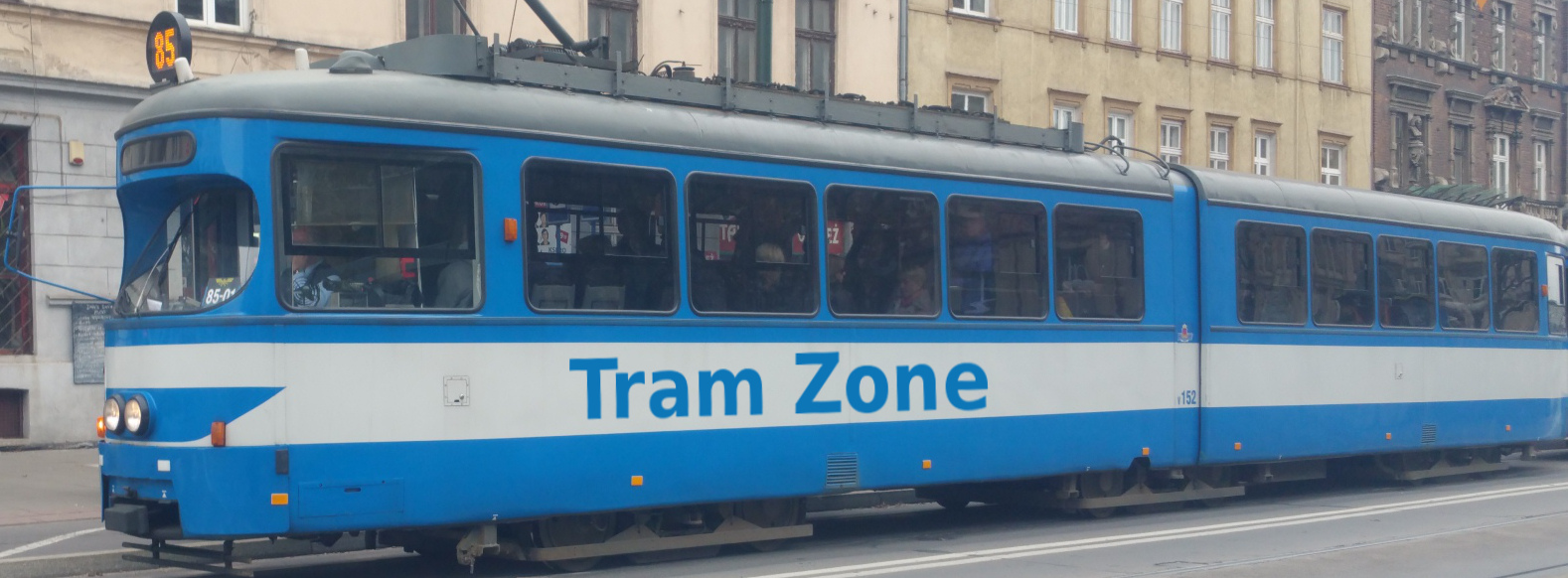
Tram systems in Nantes
Nantes is a city in western France, situated on the River Loire and serving as the capital of the Pays de la Loire region. Historically associated with Brittany, it developed as a major port and shipbuilding centre. Its landmarks include the Château des ducs de Bretagne, the Passage Pommeraye and the Machines de l’île, which occupy part of the former shipyard area on the Île de Nantes.
Public transport in Nantes and the surrounding metropolitan area operates under the Naolib brand, formerly known as Tan. The network combines trams with Busway bus rapid transit services, Chronobus routes, conventional buses and Navibus river services on the Loire and Erdre. Semitan operates the network on behalf of Nantes Métropole, with some services provided by contracted operators.
Nantes railway station provides regional and long-distance rail connections, while separate tram-train services link Nantes with Clisson and Châteaubriant. Nantes Atlantique Airport, south-west of the city, is connected to the urban transport network by bus, including a dedicated airport shuttle.
Nantes was the first French city to reintroduce a modern tramway, opening its first line in 1985. Today, the system comprises three lines and approximately 45 kilometres of network, linking the city centre with residential areas, university campuses and neighbouring communes.
Line 1 forms the main east–west corridor, serving the railway station and branching towards Beaujoire and Babinière in the north-east. Lines 2 and 3 connect northern districts with the city centre before crossing the Loire to serve communities to the south. All three lines meet at Commerce, the principal interchange in the city centre. The extension of Line 1 to Babinière opened in May 2025, adding an interchange with the Nantes–Châteaubriant tram-train.
Semitan — Société d’économie mixte des transports en commun de l’agglomération nantaise
Operates and maintains the tram network on behalf of Nantes Métropole. Passenger information is provided through Naolib.
Nantes’ first tramway opened in 1879, using compressed-air vehicles developed by Louis Mékarski. The initial route linked Doulon with the Gare Maritime, passing through the city centre. Further lines followed, including a route across the Loire to Pirmil in 1888, establishing a network centred on Commerce.
Electrification began in 1913, gradually replacing the compressed-air trams with electric vehicles supplied from overhead wires. The new depot at Morrhonnière opened that November as part of the modernisation programme.
The network suffered extensive damage during the Second World War. Although services were restored, buses increasingly replaced tram routes as the city favoured road transport. The remaining tram services closed on 25 January 1958, bringing the first era of Nantes’ tramways to an end.
By the late 1970s, growing traffic congestion prompted a reconsideration of the city’s transport policy. In 1978, the municipal administration announced plans for a modern tramway running largely on reserved tracks. The proposal attracted considerable political opposition, but construction proceeded in the early 1980s.
Passenger services began on 7 January 1985, making Nantes the first French city to reintroduce a tramway after the widespread closure of older networks. The first section connected Commerce with Haluchère, with the route subsequently completed westwards to Bellevue. Its success established the tram as the foundation for further development of the city’s public transport network.
Line 1 reached Beaujoire in 1989. A second line opened in 1992, linking the city centre with Trocardière south of the Loire, before being extended northwards in stages to Orvault Grand Val by 1994.
In 2000, Line 1 was extended westwards to François Mitterrand and Line 3 opened between Hôtel Dieu and Plaisance. Line 3 reached Sillon de Bretagne in 2004, while the southern end of Line 2 was extended to Neustrie in 2005.
A reorganisation in 2007 transferred the southern route to Neustrie from Line 2 to Line 3, while Line 2 acquired its present terminus at Gare de Pont Rousseau. Line 3 was extended northwards to Marcel Paul in 2009. In 2012, a new branch of Line 1 opened to Ranzay alongside the redevelopment of Haluchère–Batignolles as a transport interchange.
On 23 May 2025, Line 1 was extended from Ranzay across the Erdre to Babinière in La Chapelle-sur-Erdre, providing another interchange with the Nantes–Châteaubriant tram-train. A new tram maintenance and operating centre at Babinière followed in August 2025, supporting the introduction of the longer Citadis vehicles.
The Nantes tramway uses standard-gauge track (1,435 mm). Routes run predominantly on reserved surface alignments, with road crossings and sections integrated into the city’s streets and public spaces. Track finishes include grass, paving and concrete.
The network is largely double-track. A notable exception is the approximately 300-metre single-track section across the Pont de la Jonelière on the Line 1 extension to Babinière, which carries trams over the Erdre.
Trams operate on 750 V DC, supplied through overhead wires and collected by pantograph. Electrical substations distribute power along the routes, while the overhead equipment extends into the tram depots and maintenance centres.
The fleet comprises four generations of articulated electric tram:
| Type | Approximate length | Configuration |
|---|---|---|
| Alstom TFS | 39 metres | Three sections, including a low-floor centre section |
| Adtranz/Bombardier Incentro | 36 metres | Five sections, fully low-floor |
| CAF Urbos | 38 metres | Five sections, fully low-floor |
| Alstom Citadis | 46 metres | Seven sections, fully low-floor |
The original TFS vehicles were introduced for the modern tramway’s opening in 1985 and subsequently fitted with low-floor centre sections. Incentro trams joined the fleet from 2000, followed by CAF Urbos vehicles from 2012.
The newest Citadis trams entered passenger service in April 2024. At approximately 46 metres long and 2.4 metres wide, each can accommodate up to 300 passengers and has eight double doors on each side. They are progressively replacing the TFS fleet and providing additional capacity for network expansion.
All four tram types provide low-floor access, although this is confined to the centre section on the older TFS vehicles. The Incentro, Urbos and Citadis trams have low floors throughout. Stops incorporate accessible platforms and tactile paving along platform edges.
The tramway is supported by maintenance and operating centres at Dalby, Trocardière, Saint-Herblain and Babinière. Dalby provides central workshop facilities, while the other sites support tram storage, servicing and maintenance across the network.
The Babinière centre opened in August 2025 and was designed specifically to accommodate the longer Citadis trams, with capacity for 61 vehicles.
Nantes is expanding its tram network with two new lines linking existing routes north of the Loire with the Île de Nantes and Rezé. Both will serve the new university hospital on the island and share a southern terminus at Hôtel de Ville de Rezé. Construction is underway, with passenger services planned to begin in late 2027.
Line 6 will connect Babinière in La Chapelle-sur-Erdre with Hôtel de Ville de Rezé over approximately 12 kilometres. It will use the eastern part of the existing Line 1 corridor, including Nantes railway station, before taking the new route south across the Loire.
Line 7 will connect François Mitterrand in Saint-Herblain with Hôtel de Ville de Rezé over approximately 9 kilometres. It will use the western tram corridor, with a direct connection between Romanet and Jamet providing a shorter route towards central Nantes, before joining Line 6 on the new southern section.
The project includes approximately three kilometres of new tram infrastructure between the Quai de la Fosse and Hôtel de Ville de Rezé. The route will cross the northern arm of the Loire on the transformed Pont Anne-de-Bretagne, pass through the Île de Nantes and hospital district, then cross the southern arm on the adapted Pont des Trois-Continents. These works will provide additional tram connections between the northern and southern parts of the metropolitan area.