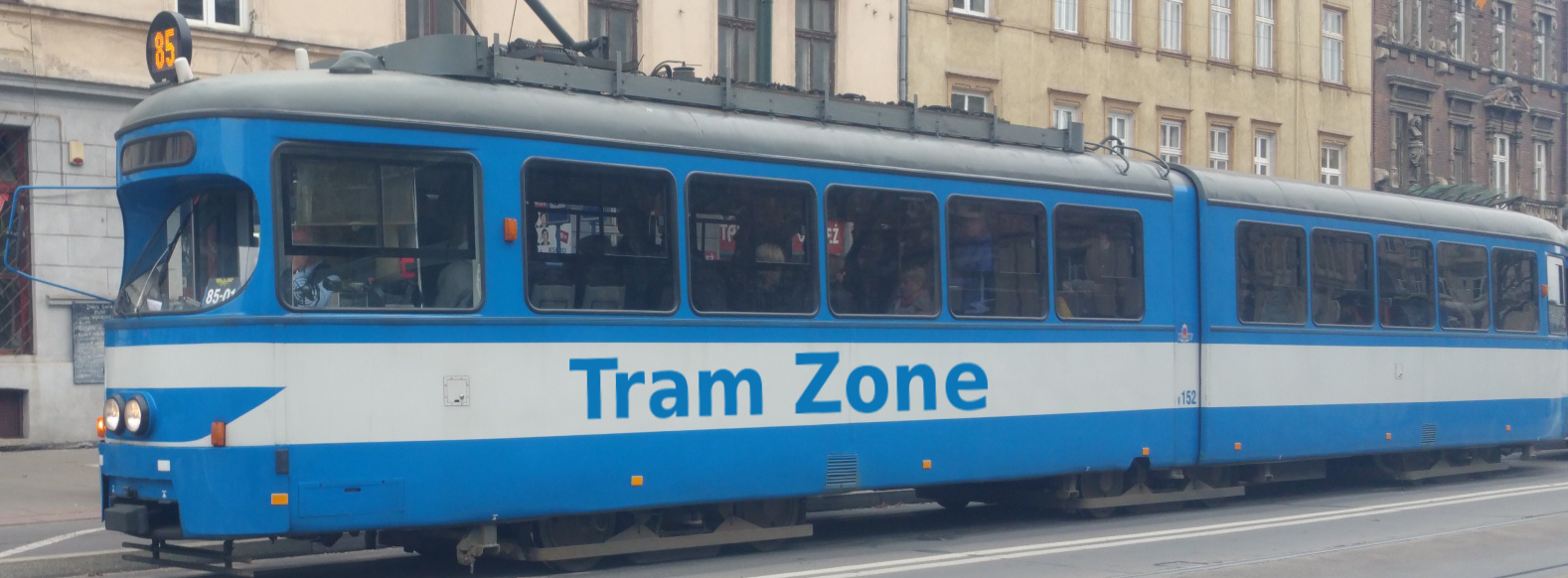
Tram systems in Helsinki
Helsinki is the capital and largest city of Finland. It stands on the northern shore of the Gulf of Finland and forms the centre of a metropolitan region which also includes Espoo, Vantaa and Kauniainen.
The city was founded by King Gustav I of Sweden in 1550 and moved to its present location during the seventeenth century. Helsinki became the capital of the autonomous Grand Duchy of Finland in 1812 and remained the national capital when Finland became independent in 1917.
Central Helsinki is noted for its neoclassical buildings around Senate Square, later National Romantic and functionalist architecture, and its close relationship with the surrounding sea and islands. The city is also an important centre for Finnish government, education, technology, design and culture.
Public transport across the Helsinki region is coordinated by Helsingin seudun liikenne, commonly known as HSL. Its integrated network includes trams, light rail, metro, commuter trains, conventional buses and passenger ferries.
Helsinki Central railway station is the principal hub for long-distance and suburban trains. Commuter rail services connect the city with Espoo, Vantaa and other surrounding municipalities, including Helsinki Airport. The metro runs east and west through Helsinki and continues into neighbouring Espoo.
Trams provide intensive coverage within central Helsinki, while newer light-rail routes extend rail-based public transport farther into the metropolitan area. Most tram operations and infrastructure are managed by Metropolitan Area Transport Ltd.
Helsinki has a metre-gauge electric tram system comprising a traditional urban network and the newer orbital light rail line 15. Both form part of the HSL public transport network.
Eleven urban tram routes, numbered 1 to 10 and 13, serve central Helsinki and districts including Katajanokka, Eira, Töölö, Munkkiniemi, Käpylä, Arabia, Jätkäsaari, Pasila and Kalasatama. The network is predominantly double-track and combines conventional street running with reserved alignments and newer sections designed to light-rail standards.
Line 15 operates for approximately 25 kilometres between Itäkeskus in eastern Helsinki and Keilaniemi in Espoo. Its 34 stops serve districts and interchange points including Oulunkylä, Huopalahti, Leppävaara, Aalto University and Otaniemi. Although presented separately from the central tram routes in passenger information, it uses the same one-metre track gauge and forms part of the wider Helsinki tram system.
The central routes are principally operated by low-floor Škoda Transtech Artic trams, together with modernised articulated vehicles built by Valmet. Longer bidirectional Artic XL trams are used on line 15 and will also serve the Crown Bridges routes.
Helsinki Tram and Omnibus Company was established in 1888. The city's first regular tram services began in June 1891, using horse-drawn cars on two routes connecting the city centre with Töölö, Sörnäinen and Lapinlahti.
The tramway was built to a gauge of one metre. This was narrower than the gauge used by Finland's mainline railways and reduced the space and construction work required within Helsinki's streets.
The original network was approximately 8.5 kilometres long. There were initially no fixed stops, and passengers could board or leave a tram at suitable points along the route.
Electric tram operation began in September 1900, and horse traction was withdrawn during the following year. The early electric routes were largely single-track, but increasing traffic led to progressive reconstruction as a double-track system.
The network expanded rapidly during the early twentieth century as Helsinki's population and built-up area grew. Routes reached districts including Hakaniemi, Kallio, Hermanni and Meilahti, while the central network developed around Senate Square, the railway station and the commercial streets of the growing capital.
The City of Helsinki acquired a controlling interest in the tram company in 1913. Despite disruption caused by the First World War and the Finnish Civil War, the tramway remained the principal form of public transport within the city.
Separate tramways were constructed west and east of the central system. The Munkkiniemi and Haaga routes were developed by Aktiebolaget M. G. Stenius to support new residential districts northwest of Helsinki.
A further tramway connected the city with Kulosaari, then known as Brändö. Its passengers initially crossed the water by ferry before a bridge carrying the tramway opened during the 1910s.
These undertakings were subsequently acquired by the main Helsinki tram company during the 1920s. The Munkkiniemi corridor became a lasting part of the municipal system, while the Kulosaari tramway closed in 1951 and was replaced by buses.
Route numbers and letters were introduced during the 1920s, supplementing the colours previously used to identify services. Numbers were generally assigned to urban lines, while letters were initially used for routes extending into outer districts.
The City of Helsinki acquired the remaining shares in the tram undertaking during 1944. Helsingin kaupungin liikennelaitos, usually abbreviated to HKL, was established as the municipal transport operator in 1945.
Trams carried heavy traffic during the Second World War and the years immediately following it. The system subsequently received large numbers of Finnish-built bogie cars from manufacturers including Karia and Valmet.
Helsinki expanded rapidly after the war, but most new suburban districts were served by buses and commuter trains rather than extensions of the traditional street tramway. Plans were developed for faster suburban rail routes, although these ultimately evolved into the separate Helsinki Metro.
During the 1960s and 1970s, proposals contemplated progressively restricting and eventually closing the tramway as the metro expanded. Several routes and sections were withdrawn, but the dense central network continued to carry substantial numbers of passengers and was ultimately retained.
New articulated trams built by Valmet entered service from 1973, replacing the remaining two-axle cars. A second generation of Valmet articulated vehicles followed during the 1980s. Many of these trams were later modernised and fitted with low-floor centre sections.
The Helsinki Metro opened in 1982, serving a different role from the tramway by providing faster journeys between the city centre and eastern suburbs. Trams remained the principal surface transport mode across much of central Helsinki.
Attitudes towards tram development changed during the closing decades of the twentieth century. Extensions reached areas including Katajanokka, Ruoholahti and Pikku Huopalahti, while sections of existing infrastructure were rebuilt.
A route into the developing Arabianranta district opened in stages during the early 2000s. Tram services reached the former harbour redevelopment area at Jätkäsaari from 2012 and were subsequently extended to serve new residential areas and the West Harbour ferry terminals.
Low-floor Variotram vehicles were introduced around the beginning of the twenty-first century but experienced persistent technical problems on Helsinki's tightly curved network. They were eventually withdrawn.
Locally designed Škoda Transtech Artic trams entered passenger service during the 2010s. Their conventional bogies and low-floor interiors were developed specifically for Helsinki's climate and track geometry, and the type became the principal vehicle on the urban network.
Construction of the orbital Jokeri Light Rail project began in 2019. It replaced the heavily used trunk bus route 550 and was designed to connect residential districts, employment areas, universities and radial rail services without passing through central Helsinki.
Passenger services began on 21 October 2023, approximately ten months earlier than originally planned. The route was designated line 15 and connected Itäkeskus in Helsinki with Keilaniemi in Espoo.
Line 15 represented a significant change in the scale and character of tram operation in the Helsinki region. It uses longer bidirectional vehicles, widely spaced stops and extensive reserved track designed for higher speeds than the traditional inner-city network.
A new tramway was constructed between Nihti, Kalasatama and Pasila to serve rapidly developing residential and commercial districts east and north of the city centre.
Line 13 began operating between Nihti and Länsi-Pasila on 12 August 2024. It provides interchange with the metro at Kalasatama and with national and suburban trains at Pasila.
The route also prepared the network for the Crown Bridges tramway. At Nihti, the line connects with the new tracks towards Korkeasaari and Laajasalo.
The Crown Bridges project is creating a direct tram connection between central Helsinki and the island district of Laajasalo. The route crosses Merihaka, Nihti and Korkeasaari before reaching Kruunuvuorenranta and Yliskylä.
Its principal structure is the approximately 1.2-kilometre Kruunuvuorensilta, the longest bridge in Finland. The bridge is reserved for trams, pedestrians and cyclists, together with emergency vehicles, and does not carry ordinary road traffic.
Passenger services are confirmed to begin on 7 November 2026. New line 11 will operate between Pasila and Kruunuvuorenranta via Kalasatama and the existing line 13 corridor. Line 12 will connect Yliskylä with Railway Square, later terminating at Hakaniemi as central construction arrangements change.
The opening will extend Helsinki's tram network substantially eastward and provide Laajasalo with a direct journey to the city centre for the first time. Further information is available from the City of Helsinki.
Construction of the West Helsinki Light Rail project began during 2026. It combines a new outer light-rail corridor with additional tracks and capacity improvements within the western inner city.
Future line 14 will run from the city centre through Meilahti, Munkkiniemi, Haaga and Lassila to Kannelmäki. It will interchange with line 15 near Haaga and with commuter trains at Valimo and Pohjois-Haaga.
New urban tram tracks are also being constructed through Fredrikinkatu and Topeliuksenkatu. These will provide additional north–south capacity and allow tram services to replace some existing bus journeys through Töölö and the western city centre.
Infrastructure and service changes are expected to be introduced in stages between 2029 and 2031, with line 14 beginning operation in the early 2030s. Further information is available from the City of Helsinki.
The West Harbour Light Rail project is intended to create a stronger tram corridor between Hakaniemi, the city centre, Kamppi, Ruoholahti and Jätkäsaari. It would ultimately allow line 12 from Laajasalo to continue across central Helsinki towards West Harbour.
The project is closely connected with major street reconstruction in Kaivokatu and Kaisaniemenkatu and with the continuing development of Jätkäsaari. Construction is expected to take place in stages, but the complete programme and opening arrangements remain subject to further implementation decisions.
A future light-rail route is being planned from the existing tramway near Kumpula through Viikki and the redeveloped former Malmi Airport area. In Malmi, the route is proposed to divide into branches towards Malmi Hospital and Jakomäki.
The planned line would be approximately eight kilometres long and would connect new residential districts with the university campus, commuter trains at Malmi and the wider tram network.
The scheme remains under development. A project plan is expected to be considered by 2029, and construction and opening dates have not yet been confirmed. Further information on this and other schemes is available from Metropolitan Area Transport.
Helsinki's longer-term transport planning contains several other possible tram and light-rail corridors. These include an extension northwards from Mäkelänkatu towards Pakila and Patola, further development within Laajasalo and connections serving future residential and employment districts.
These projects remain at different stages of planning and should not yet be treated as committed additions to the network.