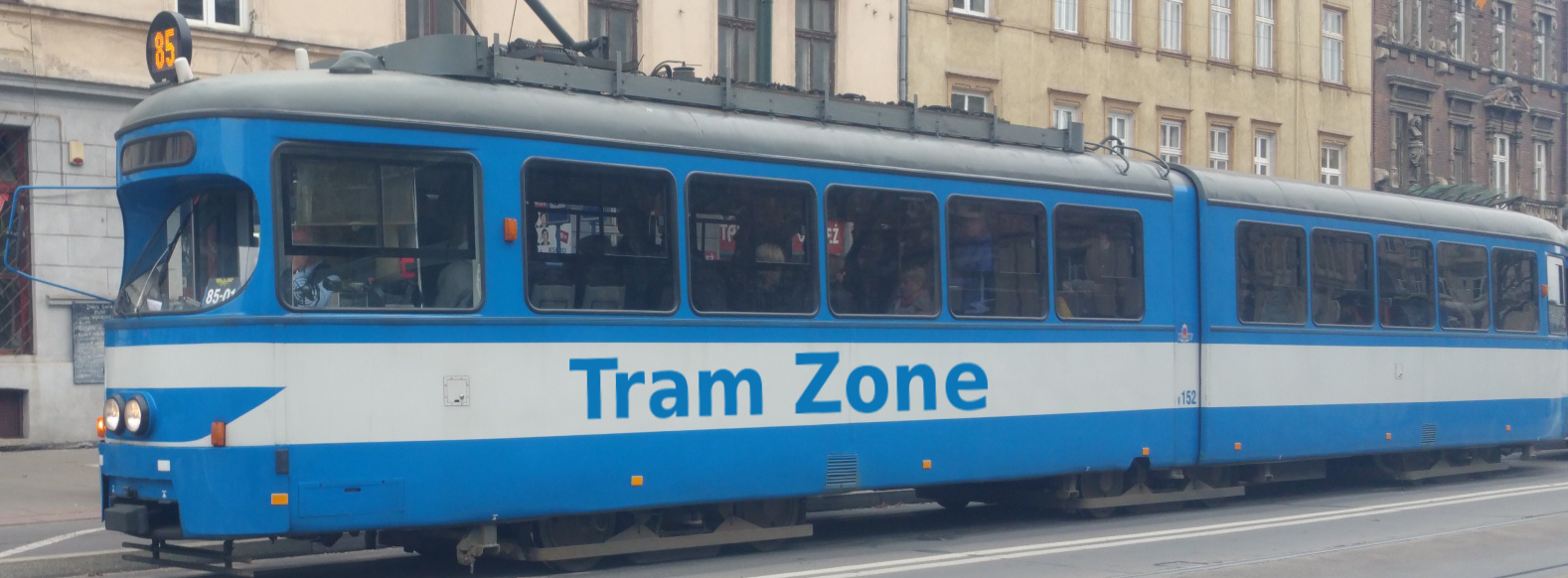
Tram systems in Prague
Prague is the capital and largest city of Czechia. It stands on the River Vltava in the centre of Bohemia and has been an important political, economic and cultural centre of Central Europe for more than a thousand years.
The city was the historic capital of the Kingdom of Bohemia and, at different times, a residence of Holy Roman Emperors. Its extensive historic centre includes Prague Castle, Charles Bridge, the Old Town, the Jewish Quarter and the medieval New Town. Together, these areas form a UNESCO World Heritage Site and make Prague one of Europe's leading visitor destinations.
Public transport in Prague forms part of the Prague Integrated Transport system, commonly known by its Czech abbreviation PID. The city network is principally operated by Dopravní podnik hlavního města Prahy (DPP) and includes metro, tram, trolleybus and conventional bus services. Suburban trains, ferries and other regional services are also integrated into the wider ticketing system.
Prague's principal long-distance railway station is Praha hlavní nádraží, while several other stations provide national, international and suburban services. Václav Havel Airport is linked to the city by buses connecting with the metro and other public transport routes.
Prague has an extensive standard-gauge electric tram network operated by DPP. Approximately 144 kilometres of tramway serve the city centre and a wide area of surrounding residential and commercial districts, making it the largest tram network in Czechia and one of the largest in Europe.
More than 25 daytime routes operate across the network, supplemented by nine night routes numbered 91 to 99. Most daytime routes pass through or around the city centre, while the night routes provide connections across the city when the metro is closed and meet at a coordinated interchange at Lazarská.
The network combines street-running sections in the historic centre with segregated alignments serving outer districts such as Barrandov, Modřany, Řepy and Dědina. The Dvorecký Bridge, opened to tram services in April 2026, created a new connection across the Vltava between Podolí and Zlíchov.
Prague's first horse-drawn tramway opened on 23 September 1875 between Karlín and the National Theatre. It was extended across the Vltava to Smíchov in 1876 and subsequently expanded to serve districts including Vinohrady and Žižkov, which were then separate towns outside Prague.
Electrical engineer František Křižík constructed Prague's first electric tramway for the Jubilee Exhibition of 1891. The experimental route ran between the Letná funicular and the exhibition grounds at Stromovka and demonstrated the potential of electric traction.
Křižík opened a more substantial electric railway from Florenc through Karlín to Libeň and Vysočany in March 1896. Further electric lines followed, including routes between Smíchov and Košíře and between Prague and Královské Vinohrady.
The municipal electric undertaking began acquiring and integrating the separate tramway companies during the late 1890s. It purchased the original horse-tram operator in 1897 and progressively electrified its routes. Horse traction ended in 1905, while the last privately operated electric railway was absorbed into the municipal system in 1907.
Line numbers were introduced as the formerly independent routes became a unified network. Expansion accelerated after surrounding municipalities were incorporated into Greater Prague in 1922, with new tramways connecting the centre to developing districts including Dejvice, Nusle and Žižkov. The network exceeded 100 kilometres during the 1920s.
Right-hand running was introduced in March 1939 following the German occupation of Czechoslovakia. Trams carried exceptionally heavy traffic during the Second World War, although bombing and the Prague uprising interrupted operation during the closing months of the conflict. The network was gradually restored after the war.
Modernisation began in the 1950s with the introduction of locally manufactured Tatra T1 trams. These were followed by the Tatra T3 from 1962. The T3 became closely associated with Prague and was produced in large numbers for the city and for tramways across Central and Eastern Europe.
Work began during the 1960s on what was initially intended to be an underground tramway beneath the city centre. The project was redesigned as a conventional metro, and the first section of Metro line C opened in May 1974.
Development of the metro resulted in the removal of several central tram routes. Tracks through the upper part of Wenceslas Square were closed in 1980, followed by routes through Na Florenci and Na Příkopě during the 1980s. Nevertheless, Prague retained its wider tram network rather than replacing it with buses.
New tramways continued to reach expanding residential areas. The network was extended to Řepy in 1988, a new link between Ohrada and Palmovka opened in 1990, and a largely segregated route from Braník to Modřany followed in 1995.
A major new tramway between Hlubočepy and Sídliště Barrandov opened in November 2003. The route includes extensive segregated track, tunnels and major structures and demonstrated the renewed importance placed on tram development in Prague. Later additions included the extension to Radlická in 2008 and the route to Nádraží Podbaba in 2011.
Expansion accelerated during the 2020s. A short route to Pankrác opened in 2021, followed by the first stage of the Barrandov extension to Holyně in April 2022. The Modřany route reached Libuš in May 2023, while the Barrandov line was completed to Slivenec and the Divoká Šárka route was extended to Dědina later that year.
The Dvorecký Bridge opened to tram traffic on 18 April 2026. It linked the tramways at Dvorce and Zlíchov, creating a direct route between the districts on the eastern and western sides of the Vltava without requiring trams to pass through the central river crossings.
Modernisation has also included the introduction of low-floor Škoda 14T, 15T and 52T trams. A completely rebuilt depot at Hloubětín opened in March 2025, replacing the former depot hall that had closed in 2019.
Tram tracks are being restored through the upper part of Wenceslas Square, reversing one of the most prominent central network closures made during the metro era. The approximately 600-metre route will connect the existing tracks at Vodičkova and Jindřišská with the tramways beside the National Museum.
Tracks around Muzeum were completed and returned to use by existing services in September 2026. Construction through Wenceslas Square is continuing, with through tram operation between the square and Muzeum currently planned to begin at the end of June 2027. The connection will provide an additional route across the city centre and reduce pressure on congested tram junctions around Karlovo náměstí and I. P. Pavlova. Further information is available from Radio Prague International.
Construction of a new tramway between Olšanská and Jarov began at the end of August 2026. The approximately 1.9-kilometre route will pass through the redevelopment area surrounding the former Žižkov freight railway station before continuing through Třebešín, Vackov and Habrová to Jarov.
Six stops are planned, and part of the outer section will be single track. Passenger services are currently expected to begin at the end of August 2027. The line will connect new development in Žižkov with the city centre and provide an alternative to existing bus services. Further information is available from Prague Daily News.
The Počernická project will extend the tramway from Vinohradské hřbitovy through the Hagibor development and along Počernická to Sídliště Malešice. Approximately 2.4 kilometres of new infrastructure and six pairs of stops are being constructed.
Work began in August 2025, with completion and trial operation currently expected towards the end of 2027. The route will bring higher-capacity public transport to the Malešice housing estate and provide connections to Metro line A and the wider tram network. Further information is available from OHLA ŽS.
A new 1.3-kilometre tramway is planned between Malovanka and Stadion Strahov. It will run along Vaníčkova and serve the large student accommodation complex and sporting facilities on Strahov hill.
Three pairs of stops are planned at Malovanka, Koleje Strahov and Stadion Strahov. DPP signed the construction contract in August 2026, with approximately 18 months allowed for the work. The final passenger opening date will depend upon the construction start and progress of the project. Further information is available from the Prague Public Transit Company.
The route which reached Libuš in May 2023 is intended to continue northwards to Nové Dvory. The extension will provide an interchange with the future Metro line D and allow through tram services to reach the developing Nové Dvory district.
The project has received planning approval, but construction has not yet begun. Earlier programmes anticipated completion during 2027 or 2028, although the timetable remains dependent upon procurement, construction and coordination with the Metro D project.
Prague is preparing several additional tram corridors beyond the projects closest to construction. These include a continuation from Dvorce through Jeremenkova to Budějovická and Michle, with an interchange with Metro line D at Olbrachtova.
Other proposals would extend trams northwards from Nádraží Podbaba towards Suchdol and construct a separate route across the Vltava through Troja and a tunnel to Bohnice. A future city-centre connection from Muzeum towards Praha hlavní nádraží is also associated with the planned reconstruction of the main railway station.
These schemes remain at different stages of planning and do not yet have reliable construction or opening dates. Further information on the Dvorce and Bohnice proposals is available from the Prague Public Transit Company.