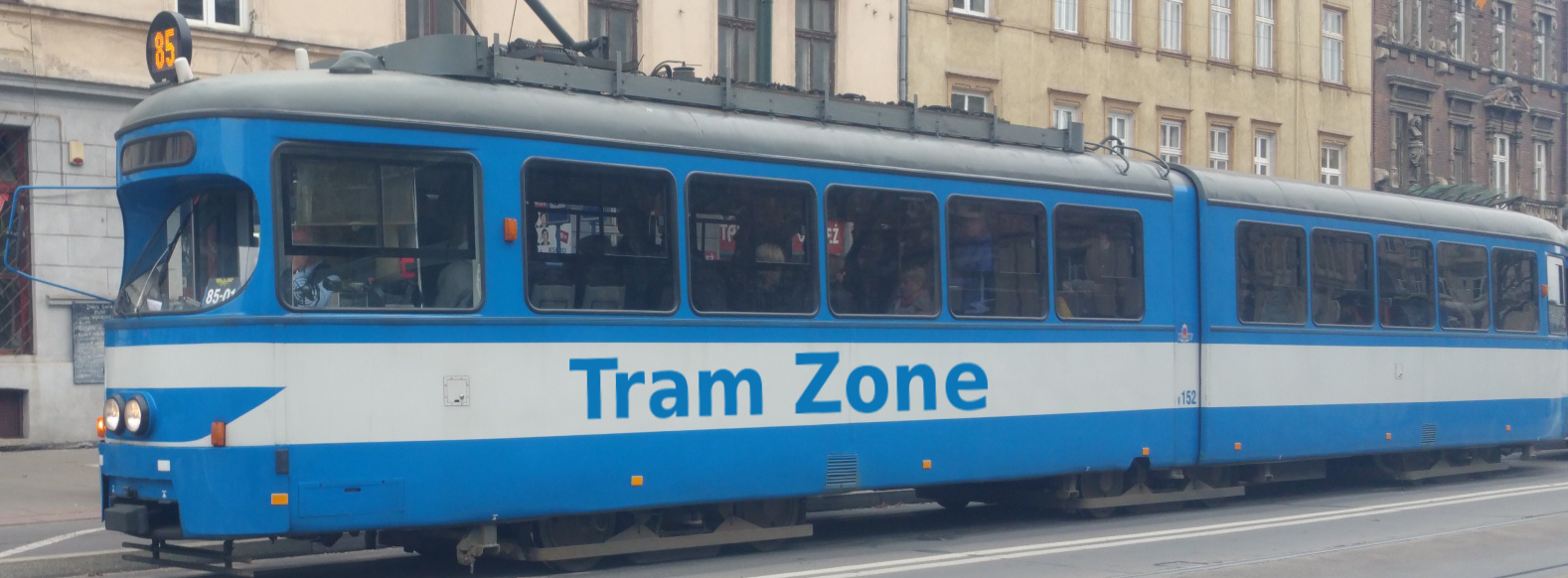
Tram systems in Ostrava
Ostrava is located in northeastern Czechia, close to the Polish border and near the confluence of the Ostravice, Odra, Opava and Lučina rivers. It is the capital and largest city of the Moravian-Silesian Region and the third-most populous city in Czechia.
The city developed rapidly after the discovery of coal during the eighteenth century. Coal mining, iron production and heavy engineering transformed Ostrava into one of the principal industrial centres of the former Czechoslovakia. Mining within the city ended in the 1990s, and former industrial sites such as the mines and ironworks at Dolní Vítkovice have subsequently been adapted for cultural, educational and visitor uses.
Ostrava is an important railway junction on routes connecting Prague and Olomouc with Poland and Slovakia. Ostrava hlavní nádraží and Ostrava-Svinov are the principal stations, while several additional stations and stops provide rail access to other parts of the dispersed urban area.
Urban public transport is operated by Dopravní podnik Ostrava (DPO), whose network includes trams, trolleybuses and conventional buses. Services are integrated into ODIS, the wider public transport system covering the Moravian-Silesian Region. Because Ostrava developed around several formerly separate towns, industrial complexes and residential districts, the tramway performs an important role connecting these different centres.
Ostrava has a standard-gauge tram network operated by DPO. Approximately 63 kilometres of infrastructure support 16 routes serving the city centre, the principal railway stations, the industrial districts of Vítkovice and Nová huť, and extensive residential areas including Poruba, Dubina, Výškovice and Martinov.
Most of the network is double-track and lies within Ostrava. Line 5 is an unusual exception, following a predominantly single-track interurban route from Poruba-Vřesinská through Vřesina, Dolní Lhota and Krásné Pole to Zátiší in the neighbouring municipality of Budišovice.
Ostrava's first tramway opened on 18 August 1894 between the railway station at Přívoz, Moravská Ostrava and Vítkovice. It was a standard-gauge railway operated by steam locomotives and was also used to carry freight between the rapidly developing industrial districts.
A branch to the Imperial Bridge, now the Miloš Sýkora Bridge, opened in 1896, followed by an extension towards Hulváky in 1899. The early network linked the railway, city centre, factories and surrounding settlements at a time when Ostrava was experiencing rapid industrial and population growth.
The first regular electric tram services began on 5 April 1901, although steam locomotives continued to handle freight traffic until 1922. New routes between Hulváky and Svinov and between Mariánské Hory and Vítkovice opened in 1907, while heavily used sections of the original network were progressively doubled.
The original undertaking became the Společnost moravských místních drah in 1920. Its standard-gauge urban system continued to expand alongside the mines, steelworks and residential settlements that were gradually forming the modern city.
The present network did not develop from a single undertaking. The Vítkovice ironworks operated its own tramways for workers and industrial traffic, while other local railways connected settlements to the west of Ostrava.
A separate network of 760-millimetre-gauge tramways developed east of the city. These routes served mining communities and provided connections towards Bohumín, Orlová and Karviná. The narrow-gauge and standard-gauge systems remained technically distinct despite becoming increasingly important to the same industrial conurbation.
The route now used by line 5 originated as the Svinov–Kyjovice local railway. It opened in stages during the 1920s and initially carried steam-hauled passenger and freight trains. Its surviving section between Poruba and Zátiší retains much of the character of an interurban local railway.
Dopravní podnik města Ostravy, the predecessor of the present DPO, was established in 1949 by combining the Moravian local railways, the provincial railways, the Ostrava–Karviná local railway and the Vítkovice works tramways. The new operator inherited a complex mixture of urban, industrial and interurban routes using different gauges.
The standard-gauge network was retained and developed as the foundation of Ostrava's public transport system. The narrow-gauge routes were progressively replaced as mining settlements changed and bus and trolleybus services expanded. The last surviving narrow-gauge section, the local tramway in Bohumín, closed in August 1973.
Ostrava's tramway expanded considerably during the post-war development of the city's industries and housing estates. New routes were constructed towards Poruba and through the southern districts, connecting residential areas with the city centre and major workplaces.
The system increasingly used double-track alignments separated from other traffic and introduced higher-capacity Tatra tramcars. Extensions towards Výškovice, Dubina and the Nová huť steelworks helped establish the extensive cross-city network that exists today.
Low-floor trams began to appear during the late 1990s, followed by successive generations of new and reconstructed vehicles. Infrastructure renewal has included rebuilt track, accessible stops, improved interchanges and the introduction of higher operating speeds on several segregated sections.
The Hranečník public transport interchange opened in 2015, improving connections between trams, trolleybuses and regional buses east of the city centre. Stadler Tango NF2 trams entered service from 2018, followed by Škoda 39T vehicles from 2021. The final Tatra T6A5 trams were withdrawn from regular service in June 2023.
A new tramway is proposed through the seventh and eighth residential districts of Poruba. Provision for a tram connection was considered when these districts were developed during the 1960s, but they have continued to rely principally on buses.
The approximately 3.2-kilometre route would leave the existing line near the junction of Opavská and 17. listopadu. It would continue along 17. listopadu and Průběžná to a new terminus between the Globus shopping centre and the Faculty of Civil Engineering of VŠB–Technical University of Ostrava.
Six stops are proposed at VŠB-TUO, Pustkovec, Duha, Karola Šmidkeho, Ludvíka Podéště and Opavská. The largely segregated line is intended to provide direct journeys between these parts of Poruba and central Ostrava.
The project remains subject to environmental assessment. In August 2026, the regional authority returned the environmental documentation for further amendment, the fourth occasion on which documents have been returned across the current and preceding assessment processes. Revised material must be published and consulted upon before a binding environmental opinion can be issued.
DPO continues to undertake project and engineering work, but its earlier programme of beginning construction in 2027 and completing the line in 2028 can no longer be treated as reliable. Further information is available from Dopravní podnik Ostrava.
A much longer-term proposal would create a fast regional tramway between Ostrava, Orlová and Karviná. The project forms part of plans to regenerate the former coal-mining landscape east of Ostrava and could reuse parts of former colliery railways and other existing or planned transport corridors.
The proposed double-track route would be more than 26 kilometres long and would connect with Ostrava's tram network at Hranečník. Speeds of up to 80 kilometres per hour are envisaged outside built-up areas, with a target journey time of approximately 30 minutes between Ostrava and Karviná.
Feasibility studies have been completed for routes from Karviná through central Orlová to Ostrava-Hranečník and from Orlová-Lutyně to Havířov-Podlesí. The scheme remains at an early planning stage, and no funded construction programme or firm opening date has been established. Further information is available from the POHO 2030 regional transformation programme.