Tram systems in Olomouc
Olomouc lies on the Morava River in eastern Czechia. It is the administrative centre of the Olomouc Region, the sixth-most populous city in the country and one of the principal historical centres of Moravia.
The city has an extensive and well-preserved historic centre. Its Holy Trinity Column, completed during the eighteenth century, was added to the UNESCO World Heritage List in 2000. Other major landmarks include Olomouc Town Hall and its astronomical clock, Saint Wenceslas Cathedral and the former archbishop's palace.
Olomouc is an important ecclesiastical and educational centre. It is the seat of the Roman Catholic Archdiocese of Olomouc and Palacký University, which was founded in 1573 and is the second-oldest university in the Czech lands.
Olomouc hlavní nádraží, east of the historic centre, is served by regional and long-distance trains. It is also one of the principal public transport interchanges in the city, with numerous tram and bus routes serving the station area.
Urban public transport is operated by Dopravní podnik města Olomouce (DPMO) and comprises trams and conventional buses. Services are integrated with the wider Integrated Transport System of the Olomouc Region, known as IDSOK, which also covers regional bus and rail travel.
The tramway forms the backbone of travel between the railway station, historic centre, university and hospital districts, and residential areas including Neředín, Nová Ulice and Nové Sady.
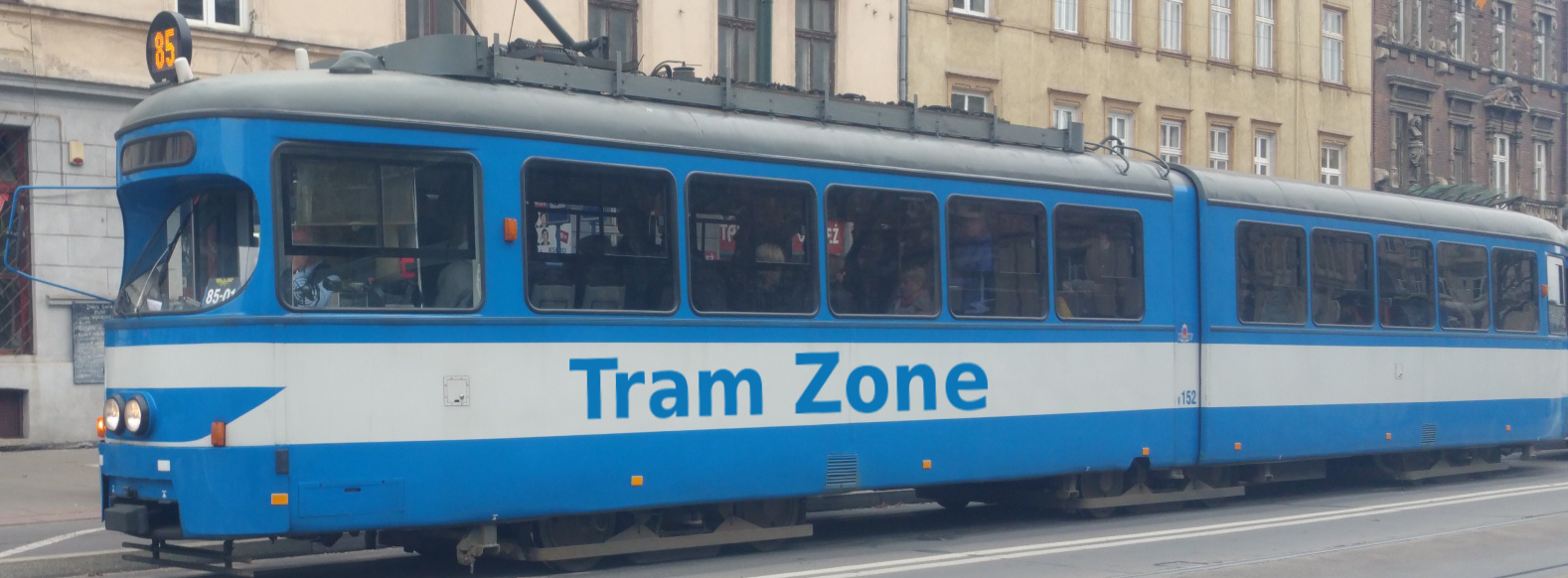
Olomouc has a standard-gauge electric tram network operated by DPMO. Seven regular lines, numbered 1 to 7, operate over approximately 16 kilometres of infrastructure.
Most routes begin or pass through the area around the main railway station. Lines use two corridors between the station and the city centre: one through Masarykova and the historic centre and another through Kosmonautů and Tržnice.
The network extends west to Neředín, southwest to Nová Ulice and south through Nové Sady to U Kapličky. The eastern branch serves Pavlovičky, while Fibichova, immediately south of the railway station, is used as the terminus of several routes.
The Nové Sady branch currently ends at a stub terminus without a turning loop. It is therefore operated by trams capable of reversing direction, including pairs of single-ended cars coupled back-to-back.
Horse-drawn omnibuses began connecting Olomouc with its railway station in 1845. The municipal authorities initially considered constructing a steam-powered urban railway, but plans subsequently developed for an electric tramway.
Construction began in 1897 and the first regular services operated on 1 April 1899. Unlike many early tramways in the region, the Olomouc system was built to standard gauge from the outset.
The original predominantly single-track route connected the railway station with Horní náměstí in the city centre. From there, branches continued west towards the road to Neředín and southwest towards the hospital at Nová Ulice. Nine passenger motor cars and four freight vehicles were available when the system opened.
The city took direct control of the tramway in 1904. The western route was extended to the cemetery at Neředín in October 1914, shortly after the beginning of the First World War.
Route numbers were introduced in 1923. During the 1930s the Neředín line was extended to the military airfield, becoming the only tram route in Czechoslovakia to serve an airport. The Nová Ulice branch was extended farther into the district in 1934.
Increasing passenger numbers led to the progressive doubling of the original single-track network. Work began between the railway station and the Morava river crossing during the Second World War and continued despite wartime restrictions.
The eastern route was extended to Hodolany in 1947 and Bělidla in 1948. Further sections of the network were converted to double track between 1949 and 1952.
The airfield branch closed in 1953, with a turning loop constructed at Neředín. A major reconstruction during 1954 and 1955 removed trams from Horní náměstí and established the present route through Pekařská, 8. května, Náměstí Národních hrdinů and the city market.
The eastern line reached Pavlovičky in 1957. This period also saw the arrival of the first Tatra T1 trams, followed by Tatra T2 and T3 vehicles that progressively replaced the original and second-hand cars.
Proposals were made during the post-war decades to replace the relatively small tram system with buses, as happened in several other Czechoslovak cities. Olomouc instead retained and progressively modernised its network.
The route towards Nová Ulice was substantially altered in 1981. Tracks in I. P. Pavlova were abandoned and replaced by a new alignment through Brněnská to a double-track turning loop at Hraniční.
A new route through Kosmonautů opened in 1997, creating a second tram connection between the main railway station and Tržnice. This provided an alternative to the traditional route through the historic centre and enabled the introduction of additional cross-city services.
Olomouc introduced its first partly low-floor Škoda 03T trams in 1998 and subsequently acquired Inekon 01 Trio, VarioLF and EVO vehicles. Much of the older Tatra fleet was also comprehensively modernised.
Central tracks in Denisova and Pekařská were reconstructed in 2007, including measures intended to reduce noise and vibration. Further renewals have progressively improved other parts of the system.
The city formally confirmed the tramway's role as the backbone of public transport through its planning policies, providing the basis for the first major expansion of the network for several decades.
Construction of the first stage of the tramway to Nové Sady began in June 2012. The approximately 1.4-kilometre line branched from the existing network near Tržnice and crossed the Morava before continuing past Šantovka to a temporary terminus at Trnkova.
The new route opened on 29 November 2013 with stops at Šantovka, V Kotlině and Trnkova. Because the terminus did not have a turning loop, DPMO acquired specially configured trams that could operate as reversible back-to-back pairs.
Construction of the second stage began in March 2021. This extended the tramway approximately 1.2 kilometres through Zikova and Schweitzerova, adding the stops Zikova, Rožňavská and U Kapličky. Passenger services began on 1 November 2022, bringing trams into the centre of the Nové Sady and Povel residential area.
A third stage is being prepared to complete the southern tram corridor. The project will extend the double-track line approximately 250 metres from the present U Kapličky terminus along Schweitzerova towards Jižní in Slavonín.
A new terminal stop and turning facility are planned near Jižní. The turning facility would remove the operational restriction created by the existing stub terminus and allow conventional single-ended trams to serve the completed route.
By August 2026, the city had acquired the required land and submitted the project for development approval. Construction could begin during 2027 if permission and funding are secured, but a confirmed opening date has not yet been announced. Further information is available from Hanácká Drbna.
Olomouc's principal tram depot at Koželužská occupies a constrained site close to the historic centre. An additional stabling hall opened beside the railway station in Jeremenkova during 2023, but it does not provide a complete long-term replacement for the existing depot.
The city and DPMO are planning a new tram and bus depot on the site of the former military barracks near the airfield at Neředín. The project would require an extension from the existing Neředín tram terminus to connect the new facility with the network.
DPMO had acquired approximately half of the required land by the beginning of 2026. Further property acquisition, changes to the planning framework, design work and funding arrangements remain necessary, and construction is not expected in the immediate future. Further information is available from DPMO.
Olomouc's 2026 Sustainable Urban Mobility Plan identifies several possible longer-term additions to the tram network. These include restoring tram tracks through I. P. Pavlova to improve access to the university hospital and constructing a route from třída Míru through Pražská towards the Globus commercial area.
The plan also includes a possible connecting line through Zámečnická between 8. května and Sokolská. This would create an additional link within the central network and would be accompanied by reconstruction of the existing track in Sokolská.
These schemes remain strategic proposals without confirmed construction or opening dates. Further information is available in the 2026 update to the Olomouc Sustainable Urban Mobility Plan.