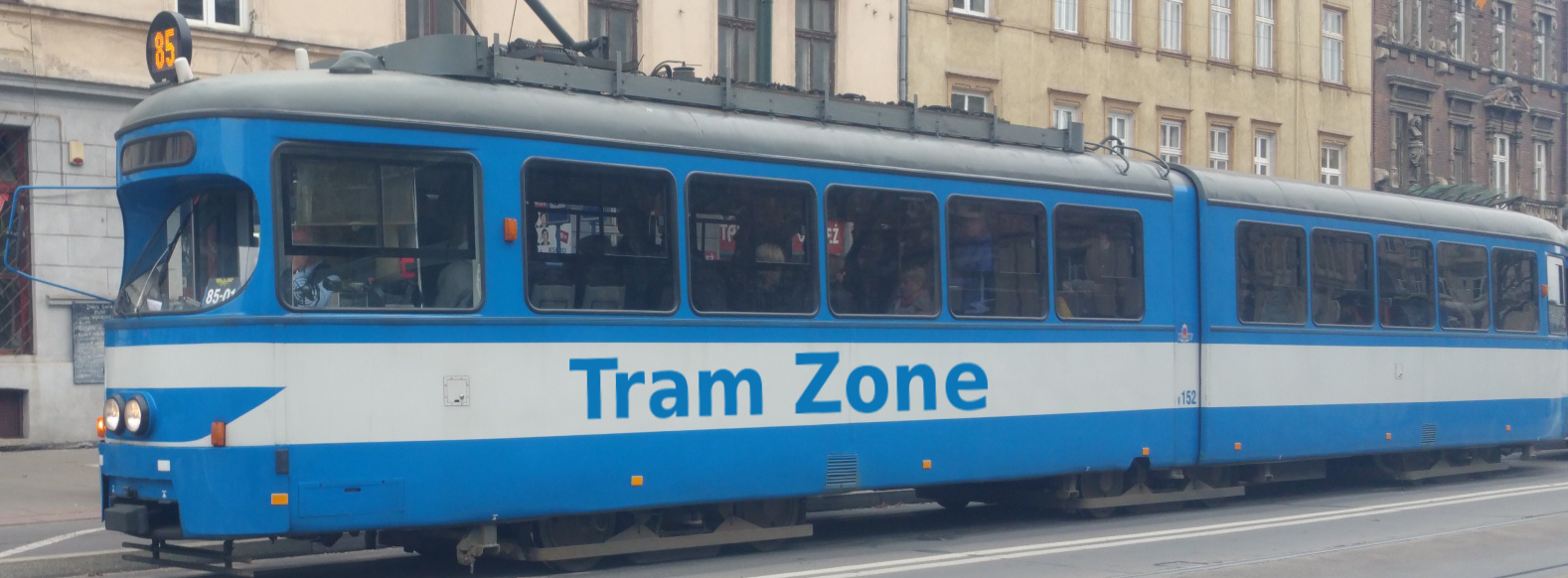
Tram systems in Brno
Brno lies at the confluence of the Svitava and Svratka rivers in the southeastern part of Czechia. It is the capital of the South Moravian Region, the historical centre of Moravia and the second-most populous city in the country.
The city is an important centre for education, research and technology and is home to several universities, including Masaryk University and Brno University of Technology. Its principal landmarks include Špilberk Castle, the Cathedral of St Peter and Paul and Villa Tugendhat, one of the best-known examples of modernist architecture in Europe.
Brno hlavní nádraží is the city's principal railway station and is served by regional, national and international trains. Rail services are integrated with the wider South Moravian public transport network, which extends from Brno into surrounding towns and rural areas.
Most urban public transport is operated by Dopravní podnik města Brna (DPMB), whose network includes trams, trolleybuses and conventional buses. DPMB also operates seasonal electric passenger boats on the Brno Reservoir. Services within the city and across the surrounding region form part of the Integrated Transport System of the South Moravian Region, known as IDS JMK.
Brno has an extensive standard-gauge tram network operated by DPMB. Eleven regular lines, numbered 1 to 10 and 12, serve the city, with line 2 continuing beyond the municipal boundary to the neighbouring town of Modřice.
The tramway is the backbone of public transport in Brno and is the second-largest tram system in Czechia after Prague. Routes operate through the historic city centre and along a mixture of street-running, reserved and completely segregated sections to residential districts across the city. In the local Brno dialect, trams are commonly known as šaliny.
Public transport in Brno began on 17 August 1869, when the first horse-drawn tramway in the Czech lands opened between Moravské náměstí and Královo Pole. Brno was the third city in the Austro-Hungarian Empire to introduce a horse tramway, following Vienna and Budapest.
The network initially expanded to four lines, served by 52 passenger cars and a freight siding. Operation was interrupted between 1875 and 1876, but subsequently resumed and continued until 1881, when the horse tramway was abandoned because it was unprofitable.
Steam operation began on 24 May 1884 between Pisárky and Královo Pole. A second route to Ústřední hřbitov opened later that year, and a fleet of 15 locomotives and 31 trailers was eventually assembled. Steam traction continued on freight workings after the passenger network was electrified, with the final steam locomotive remaining in industrial use until 1926.
Construction of the electric tramway began in 1900, and electric services started on 21 June that year. By the end of 1903, five colour-coded lines were operating. Numerical route designations were introduced in 1913.
The First World War left much of the system in poor condition, leading to an extensive programme of renewal after 1918. The 1920s and 1930s brought rapid expansion into Brno's developing suburbs. Trams reached Řečkovice in 1925 and Juliánov in 1926, while a new depot opened at Husovice to accommodate the growing fleet.
The tramway suffered extensive damage during the Second World War. Vehicles, tracks and other facilities were damaged or destroyed, while approximately 60% of the overhead wiring was lost. Reconstruction continued throughout 1945, with the complete electric network restored by the end of that year.
Brno introduced trolleybuses in 1949, creating the mixed tram, trolleybus and bus network that continues to serve the city. Although tramway expansion was limited during the 1950s and 1960s, tracks, power supplies and rolling stock were modernised. By 1964, the system had 17 regular tram lines.
Expansion resumed as large housing estates were constructed around the edge of the city. From the 1970s, new tramways were generally built on reserved alignments separated from road traffic, providing high-capacity links between the city centre and developing residential districts.
Brno reorganised its public transport network in 1995 to make greater use of tram and trolleybus services and reduce parallel bus routes. The tram fleet and infrastructure were progressively modernised, including the introduction of low-floor vehicles and the reconstruction of major corridors, junctions and stops.
A new alignment through Plotní and the Zvonařka bus station area opened on 1 July 2021, replacing the former route along Dornych. On 11 December 2022, line 8 was extended approximately 900 metres from Osová to Nemocnice Bohunice. The extension includes the Západní brána stop and a tunnel beneath the surrounding district, providing a direct tram connection to University Hospital Brno and the Bohunice university campus.
These projects marked the beginning of a new period of network development after several decades in which investment had concentrated largely on renewing the existing system.
Construction is under way on a 1.4-kilometre extension from the existing Ečerova terminus to the Kamechy residential district. The new line will include stops at Rudá, Říčanská and Kamechy, together with a 320-metre tunnel and a new turning loop.
Construction began in February 2025, and passenger services are expected to start in December 2027. Line 1 is planned to continue to Kamechy, accompanied by approximately half of the services on line 3, while the remaining line 3 journeys will continue to terminate at Rakovecká. Further information is available from the Brno Metropolitan Area.
Brno plans to restore tram services beyond Stránská skála towards the former terminus at Líšeň. The corridor was originally part of a local railway that was incorporated into the city tramway but later closed to regular passenger services.
The revised proposal would rebuild the route as a single-track tramway, allowing a cycle path to be constructed alongside it. The first stage would extend approximately 1.8 kilometres along Drčkova, followed by a further section to Holzova and the transport museum's historic vehicle collection. The project forms part of the city's tram development strategy, but a construction or opening date has not yet been confirmed.
In April 2026, the City of Brno approved a strategy proposing more than nine kilometres of additional tramway by 2035. The first phase, intended for development by 2030, includes almost four kilometres of new infrastructure, including an extension towards Bosonohy and a connecting route through the Medlánky depot.
A second phase envisages more than five kilometres of tramway by 2035. Proposed projects include links between Cejl and Křenová and between Křenová and Plotní, completion of the route to Bosonohy and tram infrastructure serving the planned new Brno main railway station.
The strategy provides a framework for project preparation and investment rather than a confirmed opening programme. The alignments and delivery dates of individual routes may therefore change as planning progresses. Further information is available from the City of Brno.