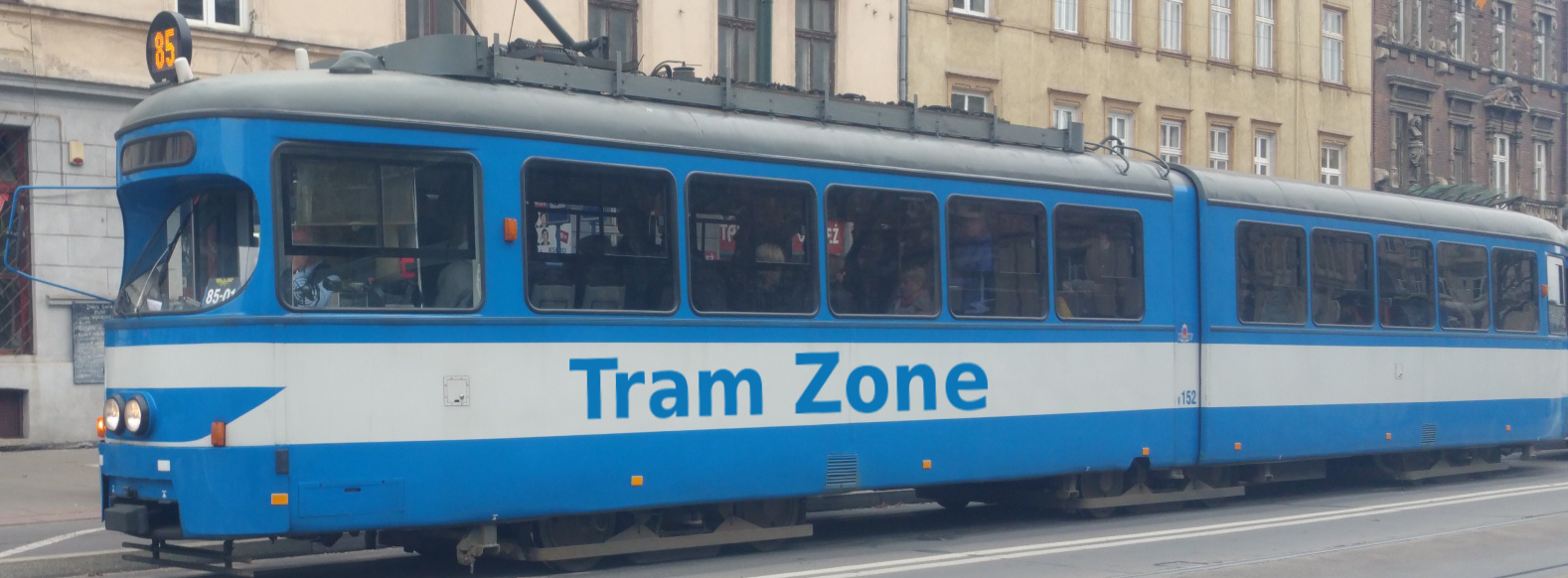
Tram systems in Osijek
Osijek stands on the River Drava in eastern Croatia, close to the borders with Hungary and Serbia. It is the administrative centre of Osijek-Baranja County, the largest city in the historical region of Slavonia and an important economic, educational and cultural centre for eastern Croatia.
The city developed from several historically separate settlements along the Drava. These include Gornji grad, or Upper Town, which contains the principal commercial centre; Donji grad, or Lower Town; and Tvrđa, the preserved Baroque fortress district between them. This elongated urban form helped create the need for public transport connecting the different parts of the city.
Urban public transport is operated by Gradski prijevoz putnika Osijek, generally known as GPP Osijek. Its network comprises trams and buses serving Osijek and several surrounding settlements.
Osijek railway station is served by regional and intercity trains, although journey times towards Zagreb remain relatively long. The city also has a central bus station and Osijek Airport, situated southeast of the urban area. Within Osijek, the tramway forms the principal east-west public transport corridor, supplemented by bus routes covering districts and neighbouring communities that are not reached by tram.
Osijek has a metre-gauge tram network operated by GPP. It is Croatia's only operating tramway outside Zagreb and is served by two principal daytime routes.
Line T1 crosses the city from Višnjevac in the west through the central area to Zeleno polje in the east. Line T2 connects Trg Ante Starčevića in the city centre with the residential district of Jug II and the Bikara terminus. Parts of the Bikara route are single track.
A major reconstruction programme completed in June 2026 renewed 9.5 kilometres of track and overhead wiring, rebuilt the electrical supply system and provided 23 accessible stops. The network is now served by modern low-floor KONČAR TMK 2500 trams alongside older vehicles. Further information about the completed works is available from the City of Osijek.
Osijek's first tramway opened on 10 September 1884, making it the first tram system in what is now Croatia and one of the earliest in this part of Europe. The line was built to connect the different districts of what was already a long and dispersed city.
The original system was a 4.5-kilometre single-track horse tramway. It connected the railway station and central parts of Osijek and was subsequently accompanied by branches and sidings. In addition to passenger cars, the tramway operated freight and postal vehicles, allowing goods to be carried between the railway and the city's river port.
Horse-drawn operation continued for 42 years. Proposals to electrify the system had been developed before the First World War, but the conflict and difficulties surrounding the wider electrification of Osijek delayed their implementation.
Electric trams began operating on 12 December 1926. The reconstructed metre-gauge system extended for more than nine kilometres and established the principal route between Gornji grad and Donji grad that remains at the heart of the network.
The new alignment no longer passed through the narrow streets of Tvrđa. Six electric cars initially provided the service between the western part of the city and Zeleno polje, together with a branch serving the former Gornjodravska railway station.
Services became irregular during the Second World War because of electricity shortages and a lack of staff, but normal operation was gradually restored after the conflict. The network was renewed and extended during the 1960s and 1970s, including construction of the route westwards to Višnjevac. The first ČKD Tatra T3 trams entered service in 1968 and became the characteristic vehicle of the Osijek system for several decades.
The tramway continued operating during the Croatian War of Independence despite heavy fighting in and around Osijek. Tram infrastructure and vehicles were damaged, five Tatra trams were destroyed and two tram drivers were killed while undertaking their duties.
The network and fleet were repaired after the war. Used Düwag articulated trams were subsequently acquired from Mannheim, while the surviving Tatra fleet was extensively modernised during the 2000s.
Expansion resumed in 2006 when the southern route was extended from Vinkovačka cesta to Mačkamama. A further extension reached Bikara in 2009, improving tram access to the Jug II district.
On 30 November 2014, line 1 was extended approximately 1.6 kilometres farther west through Višnjevac. The extension added five stops and moved the terminus deeper into the suburban settlement.
A short city-centre service connecting Trg Ante Starčevića with the railway station, commonly known as the Kolodvorac, was restored in 2018. It was withdrawn again in April 2019 because of low use and difficulties coordinating it with the other services.
Work on the largest modernisation of the system for several decades began in 2022. The programme involved rebuilding 9.5 kilometres of track and overhead wiring, reconstructing two rectifier substations, building a third and replacing parts of the underground electrical network. Twenty-three stops were reconstructed to accommodate low-floor trams and passengers with reduced mobility.
Tram operation was suspended across much of the network between August 2023 and December 2024, with buses providing replacement services. Trams returned first to line T2 and part of line T1, while sections were progressively reopened as the remaining works were completed. Through tram operation to the western terminus in Višnjevac was restored in September 2025.
Osijek received its first KONČAR TMK 2500 low-floor tram in March 2025, the city's first completely new tram for 43 years. Ten of the Croatian-built vehicles had been delivered by January 2026. The infrastructure project was formally completed in June 2026 at a final value of almost €48 million.
GPP ordered a second batch of ten KONČAR TMK 2500 low-floor trams in July 2025. Their arrival will increase the fleet to 20 new vehicles, sufficient to cover the 18 trams required during the busiest operating periods while retaining two vehicles as reserves.
Delivery of the second batch is expected to be completed by the end of July 2027. The older Tatra and Düwag vehicles can then be withdrawn from regular service, giving Osijek a completely renewed operational tram fleet. Further information is available from Hrvatska radiotelevizija.
Further reconstruction is planned along Strossmayerova Street, which carries line T1 towards Višnjevac. The project is intended to renew the complete street corridor, including its tram infrastructure, roads, pedestrian and cycle facilities and landscaping.
The work is expected to be undertaken with Hrvatske ceste. A firm construction programme and details of any disruption to tram services have not yet been announced.
The existing GPP depot is outdated and unsuitable as a permanent maintenance base for an entirely modern low-floor fleet. Osijek therefore plans to construct a new tram depot on the eastern side of the city.
Design options are being developed and possible funding sources are under consideration. The project remains at an earlier stage than the fleet and infrastructure programmes, and no reliable completion date is currently available.
The city's longer-term plans include a new tram connection between Jug II and Donji grad. This would link the southern Bikara branch directly with the eastern section of the network, creating new journey opportunities without requiring passengers to travel through the central square.
The connection and new depot have been presented together as a major future investment valued at more than €100 million. They are expected to depend upon funding during a future European Union financial period, so the route, construction programme and opening date remain subject to further development. Further information is available from the City of Osijek.