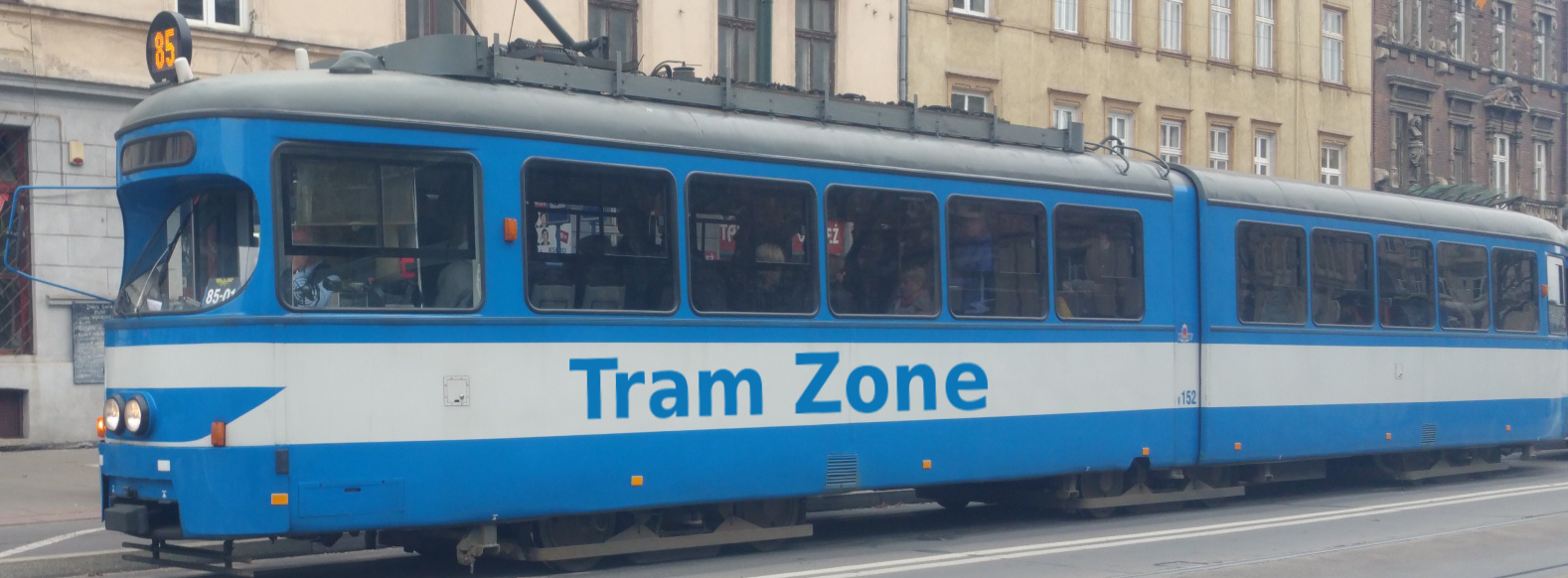
Tram systems in Brussels
Brussels is the capital of Belgium and the administrative centre of the Brussels-Capital Region. The region comprises 19 municipalities, of which the City of Brussels contains the historic centre and several areas extending beyond it. French and Dutch are both official languages, and streets, stations and public services generally carry names in both languages.
The city is also one of the principal institutional centres of the European Union. The European Commission, Council of the European Union and significant parts of the European Parliament are based in Brussels, alongside NATO and numerous other international organisations.
Important landmarks include the Grand-Place, the medieval Town Hall, the Royal Palace, the Atomium and the buildings of the European Quarter. Brussels is also associated with Art Nouveau architecture, Belgian comics, chocolate and a long tradition of brewing.
Brussels is the centre of Belgium's national railway network. The principal north-south railway tunnel connects Bruxelles-Midi/Brussel-Zuid, Bruxelles-Central/Brussel-Centraal and Bruxelles-Nord/Brussel-Noord, while numerous additional stations are served by suburban S-trains and other domestic services. Bruxelles-Midi is also served by international trains to France, the Netherlands, Germany and the United Kingdom.
Most urban public transport is operated by the Société des Transports Intercommunaux de Bruxelles/Maatschappij voor het Intercommunaal Vervoer te Brussel, normally abbreviated to STIB or MIVB. Its network includes conventional metro lines, trams and buses. Regional services operated by De Lijn and TEC connect Brussels with surrounding parts of Flanders and Wallonia.
The Brupass and Brupass XL ticketing areas allow journeys to be made using services operated by STIB/MIVB, SNCB/NMBS, De Lijn and TEC. The tram network described below forms one of the principal elements of this wider public transport system.
Brussels has an extensive standard-gauge electric tram network operated by STIB/MIVB. It serves most parts of the Brussels-Capital Region and extends into neighbouring areas of Flemish Brabant, including Tervuren, Groot-Bijgaarden, Drogenbos and Wezembeek-Oppem.
There are 19 regular tram routes, numbered 4, 7, 8, 9, 10, 18, 19, 25, 35, 39, 44, 51, 55, 62, 81, 82, 92, 93 and 97. Their character varies from conventional street-running routes to high-capacity services using reserved tracks and tunnels.
Routes 4 and 10 use the North-South premetro beneath the city centre, while routes 7 and 25 use the eastern premetro beneath the Greater Ring. Other short tunnels and underpasses remove trams from congested junctions elsewhere on the network. The premetro infrastructure was constructed to metro standards but continues to be used by conventional trams.
The fleet includes PCC trams dating from the second half of the twentieth century, T2000 low-floor vehicles, Bombardier T3000 and T4000 Flexity Outlook trams and the latest Tram New Generation vehicles. The T3000 and T4000 fleets operate many of the busiest routes, while the newer vehicles are progressively replacing the remaining high-floor PCC cars.
Major engineering work is temporarily affecting the network. Since 27 April 2026, the tram tunnel beneath Place Bara between Gare du Midi and Porte de Hal has been closed for reconstruction. Routes 4, 10, 51 and 81 are consequently shortened, divided or partly replaced by buses. The closure is expected to continue until the end of April 2027.
Brussels' first horse-drawn tramway opened on 1 May 1869. It ran between Porte de Namur and the Bois de la Cambre along Avenue Louise, which had recently been developed as a prestigious boulevard connecting the city with the forest to the southeast.
The route was initially intended principally for more affluent residents and visitors travelling to the Bois de la Cambre, but it demonstrated the potential of urban tram transport. Further horse tramways opened rapidly as Brussels expanded beyond the former city walls.
Several companies developed separate routes. The most important was Les Tramways Bruxellois, formed in December 1874 through the merger of two earlier undertakings. Other operators included the Chemins de Fer Économiques, whose vehicles became popularly known as the chocolate trams because of their brown livery.
Experiments were also undertaken with steam and battery-powered trams. Steam locomotives proved poorly suited to the gradients and densely developed streets of Brussels, while the batteries available during the nineteenth century provided insufficient range and reliability.
The first successful electric tram service opened in 1894 between Place Stéphanie and Uccle. Electric traction was faster and more economical than maintaining large numbers of horses, and the remaining principal routes were progressively converted.
Les Tramways Bruxellois received a long-term concession in 1899 on condition that it electrified its network. Tracks were reconstructed, more powerful vehicles were introduced and the overhead electrical system spread throughout the city.
Line numbers were introduced in 1906, making the increasingly complicated network easier for passengers to understand. Destination boards and route colours continued to supplement the numbers.
The smaller undertakings were progressively absorbed or brought under common control. The Chemins de Fer Économiques network was incorporated into Les Tramways Bruxellois in 1928, creating a largely unified urban tram system.
The tramway expanded alongside the rapid growth of Brussels and its surrounding municipalities. Routes radiated from the historic centre into developing residential and industrial districts, while cross-city services reduced the need for passengers to change in the centre.
Separate metre-gauge vicinal tramways operated by the national SNCV/NMVB connected Brussels with towns and villages outside the urban area. Because these used a different track gauge, they remained operationally separate from the standard-gauge city network.
Services and infrastructure were disrupted during both world wars. Vehicles and materials were requisitioned, maintenance became increasingly difficult and parts of the system suffered damage. Nevertheless, the tram remained essential when fuel and other forms of transport were severely restricted.
The network was restored after the Second World War and reached one of its greatest extents during the immediate post-war period. By the time STIB/MIVB was established, approximately 60 tram routes were operating as part of a 246-kilometre public transport network.
STIB/MIVB was created on 1 January 1954 as a partnership involving the Belgian state, the province of Brabant, the Brussels municipalities and Les Tramways Bruxellois. It assumed responsibility for coordinating and modernising public transport throughout the growing urban area.
The first PCC tram entered service in Brussels in 1952, shortly before the creation of STIB/MIVB. Further generations followed, including single-ended and double-ended vehicles. The PCC fleet replaced older motor cars and trailers and became the characteristic Brussels tram for the remainder of the twentieth century.
The 1958 Brussels World's Fair produced major investment in public transport. New tracks, reserved alignments and large terminal loops were constructed around the Heysel exhibition site, allowing trams from different parts of the city to carry visitors directly to Expo 58.
The period also brought the first significant tram tunnels and underpasses. These demonstrated how busy routes could be separated from road traffic and helped establish the principles later used for the premetro.
Planning during the 1960s envisaged placing the busiest tram routes underground before eventually converting the principal tunnels into conventional metro lines. Construction of the first premetro began in 1965.
The initial section between De Brouckère and Schuman opened on 17 December 1969. Trams used underground stations and segregated tunnels through the city centre before continuing over surface routes at either end.
Additional premetro infrastructure opened beneath the Greater Ring, with Diamant station entering service in 1972 and the tunnel extending towards Montgomery and Boileau in 1975. This corridor remains in tram operation and is now principally used by routes 7 and 25.
The first east-west premetro was converted into Brussels' inaugural conventional metro route on 20 September 1976. Tram services were removed from the converted section and reorganised around the new metro.
The North-South premetro opened between Gare du Nord and Lemonnier during the same period. It was subsequently extended through Gare du Midi, Porte de Hal, Parvis de Saint-Gilles and Horta to Albert in December 1993. Unlike the east-west route, it continued to be operated by trams.
The development of the metro coincided with a substantial contraction of the surface tram network. Approximately 40 kilometres of tram track disappeared between 1960 and 1979, with additional reductions during the 1980s as routes were replaced by buses or metro services.
STIB/MIVB became fully publicly owned in 1978. Responsibility for urban transport subsequently passed to the Brussels-Capital Region following Belgium's institutional reforms at the end of the 1980s.
Investment in the tramway began to increase again during the 1990s. Tracks and passenger facilities were modernised, frequencies were improved and the first T2000 low-floor trams entered service in 1994.
The T2000 introduced level-access boarding and a modern articulated design, although its relatively limited fleet size meant that high-floor PCC vehicles continued to work much of the network.
A much larger fleet-renewal programme began with the introduction of the five-section T3000 in 2005 and the longer seven-section T4000 in 2006. These high-capacity low-floor trams enabled STIB/MIVB to improve its busiest services and introduce the high-frequency Chrono network.
The route structure was reorganised during 2007 and 2008. Routes 3 and 4 became the principal services through the North-South premetro, while route 25 created a new connection between the northern city centre and Boondael. Routes 23 and 24 were combined in March 2011 to form route 7 around the eastern side of Brussels.
Network expansion resumed in 2018. Route 9 opened between Simonis and Arbre Ballon in September, while the former route 94 was extended to Roodebeek and renumbered 8 the following month. Route 9 was subsequently extended to Roi Baudouin in December 2021.
Route 10 opened on 23 September 2024, using new infrastructure through Neder-Over-Heembeek to Hôpital Militaire before continuing through the North-South premetro to Churchill. It replaced most of route 3, which was withdrawn on the same day. Route 35 was introduced to retain a service between Esplanade and the northern part of the network and was later extended to Schaerbeek railway station.
The first Tram New Generation vehicles entered service in 2023. The programme provides 90 additional low-floor trams in shorter T3200 and longer T4200 versions, increasing capacity and allowing the oldest PCC vehicles to be progressively withdrawn.
The tram tunnel beneath Place Bara carries routes through the Gare du Midi complex on two levels. Water infiltration damaged the approximately 40-year-old concrete slab separating the tracks, including its steel reinforcement.
The affected section between Gare du Midi and Porte de Hal closed on 27 April 2026 so that the slab could be replaced. Routes 4 and 10 cannot operate through the closure, route 51 terminates at Lemonnier and route 81 is partly replaced by buses. Route 4 operates as separated northern and southern services, while route 10 is confined to its northern section.
The work is expected to continue until the end of April 2027. Completion should allow the affected tram routes to return to their normal paths through the North-South premetro, although reinstatement will depend upon the progress of the reconstruction. Further information is available from STIB/MIVB.
A new tram route numbered 15 is planned between Belgica metro station and Gare du Nord. The approximately two-kilometre first section will serve the developing Tour & Taxis district and cross the Brussels Canal over the Suzan Daniel Bridge, which was designed to accommodate tram tracks.
The project includes comprehensive reconstruction of Rue Picard, Rue Vanderstichelen and adjoining public spaces. New pedestrian and cycle facilities, landscaping and drainage improvements will be delivered alongside the tram infrastructure.
A later section is intended to continue from Gare du Nord to Gare Centrale, providing Tour & Taxis with direct access to the historic city centre. Longer-term planning has suggested extending the route farther south towards Ixelles.
The Belgica–Gare du Nord section has progressed through design, consultation and the planning process, and the regional government formed in 2026 has retained it as a priority. Earlier timetables suggested opening during 2029, but a dependable construction and opening programme has not yet been confirmed. Further information is available from the Brussels-Capital Region.
The Brussels Airport Tram will extend the tram corridor along Boulevard Léopold III beyond the present network through the business districts of Machelen and Zaventem to Brussels Airport.
The complete service is expected to run for approximately 12 kilometres between Gare du Nord and the airport, using existing tram infrastructure within Brussels and about five kilometres of new line in Flanders. The journey between Gare du Nord and the airport is expected to take approximately 30 minutes.
Construction of the first phase began on 30 March 2026. Initial work includes a tram and cycle bridge over the railway and a viaduct carrying the route across the Brussels Ring. Further packages include a new public transport tunnel beneath the A201 and an intermodal terminus at the airport.
Construction is expected to continue until 2031, with passenger service currently planned to begin during 2031 or 2032. The final route designation and detailed operating arrangements will be confirmed closer to opening. Further information is available from Brussels Airport.
Metro 3 was originally intended to convert the existing North-South premetro between Albert and Gare du Nord into a conventional metro and extend it north through Schaerbeek and Evere to Bordet. Construction began on several elements of the southern section, including the reconstruction of Albert and the new Toots Thielemans station near Gare du Midi.
The project encountered serious technical difficulties, delays and rapidly increasing costs. Tunnelling problems around the Palais du Midi prevented the planned connection near Gare du Midi from being completed as originally scheduled.
The Brussels regional government formed in February 2026 decided not to proceed with the complete Albert–Bordet scheme in its existing form. The proposed northern metro between Gare du Nord and Bordet has been suspended, while a surface tram alternative serving northern Brussels is to be developed.
The future of the partly constructed southern section and the proposed conversion of the existing premetro remains under review. There is consequently no reliable date for the replacement of tram routes 4 and 10 by a conventional metro service. The North-South tunnel should therefore be regarded as remaining part of the tram network for the foreseeable future.
A tram development plan approved before the change of regional government identified 13 potential projects and approximately 40 kilometres of additional track by 2035. In addition to Tram 15 and the Airport Tram, proposals included extensions of route 8 from Roodebeek to Bordet and from Herrmann-Debroux towards the ADEPS sports centre and Rouge-Cloître.
Other proposals included a tram serving the Mediapark development, a western orbital route and new links intended to replace heavily used bus corridors. Connections between the existing routes around the Heysel plateau have also been considered.
These projects remain at different stages of development, and several have been postponed or require new studies and funding decisions. Tram 15, the Airport Tram and development of a tram alternative to the northern section of Metro 3 currently have greater political or construction momentum than the remainder of the programme.