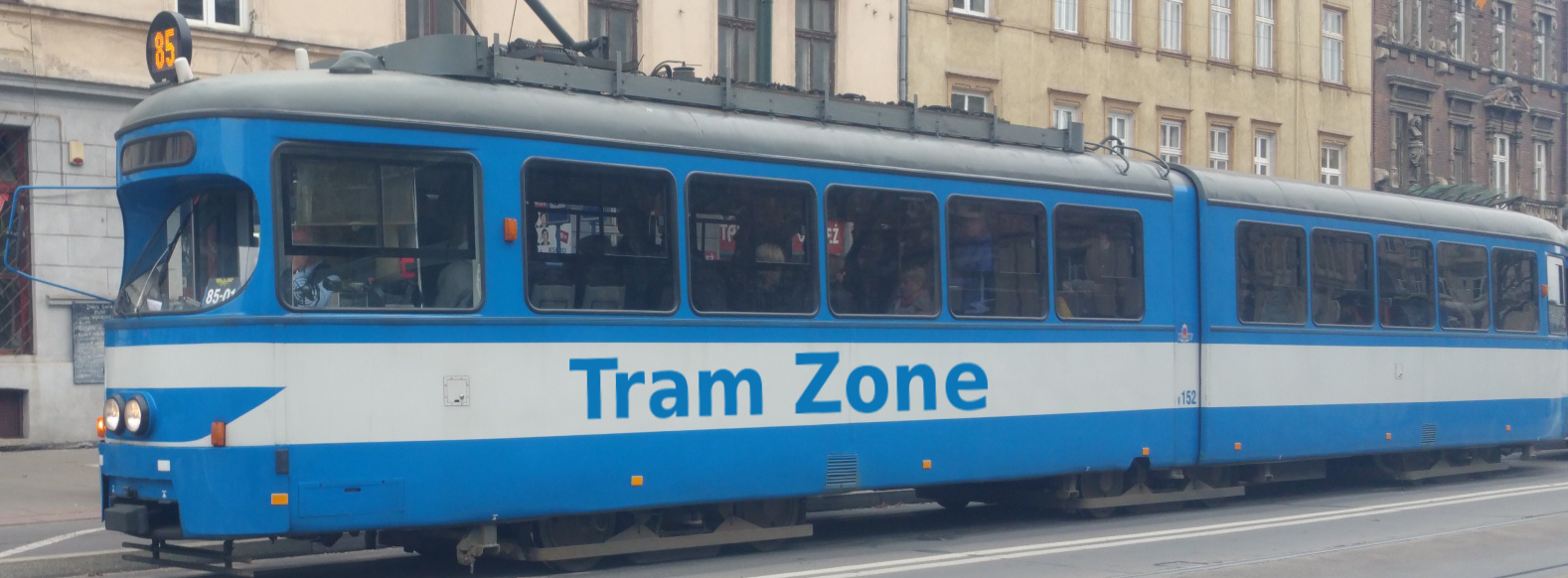
Tram systems in Vienna
Vienna is the capital and largest city of Austria and one of the country's nine federal states. It lies on the River Danube in the northeast of the country, close to the borders with Slovakia, Hungary and the Czech Republic.
The city was the principal residence of the Habsburg monarchy and later the capital of the Austrian Empire and Austria-Hungary. Its historic centre contains buildings from the medieval, baroque and imperial periods, including St Stephen's Cathedral, the Hofburg and the buildings lining the Ringstrasse.
Vienna remains an important political, cultural and economic centre. It is particularly associated with classical music and is also home to the United Nations Office at Vienna and several other international organisations.
Wien Hauptbahnhof is the city's principal railway station and is served by domestic and international trains to destinations across Austria and neighbouring countries. Wien Meidling, Wien Westbahnhof and several other stations provide additional long-distance, regional and suburban connections.
Most urban public transport is operated by Wiener Linien and includes the U-Bahn, trams and buses. The S-Bahn and other regional rail services are principally operated by ÖBB, while integrated fares across the city and surrounding region are provided through the Verkehrsverbund Ost-Region.
Vienna International Airport lies southeast of the city and is connected with central Vienna by S-Bahn, regional, Railjet and City Airport Train services. Night buses and selected overnight rail services provide public transport after the regular daytime network has closed.
Vienna has an extensive standard-gauge electric tram network operated by Wiener Linien. It is one of the largest tram systems in the world and is formed by radial routes from the outer districts together with cross-city and orbital services, including several routes using sections of the Ringstrasse around the historic centre.
The network has 29 routes identified by numbers or letters. The fleet includes low-floor ULF and Flexity trams together with a declining number of older high-floor E2 vehicles and their trailers.
Line 18 was extended on 5 September 2026 from Schlachthausgasse through the Prater to Stadion. The 3.1-kilometre extension added seven stops and created a direct tram connection between the U3 at Schlachthausgasse and the U2 at Stadion. Line 18 now operates between Burggasse-Stadthalle and Stadion.
Vienna's first horse-drawn tramway opened on 4 October 1865 between Schottentor and Hernals. It was operated by the Schienengesellschaft and was extended as the rapidly growing city created demand for public transport beyond the historic centre.
The Wiener Tramway-Gesellschaft was established in 1868 and developed an increasingly extensive network of horse tramways. A competing undertaking, the Neue Wiener Tramway-Gesellschaft, began operating during the 1870s and constructed routes in other parts of the city.
Steam traction was also used on routes serving more distant suburbs. The Dampftramway-Gesellschaft vormals Krauss & Comp. opened its first line from Hietzing to Perchtoldsdorf in 1883 and subsequently developed a wider group of steam tramways around Vienna.
The first electric tramway in Vienna began operating in January 1897 between the present-day areas of Vorgartenstraße and Wallensteinstraße. Conversion of the horse-tram network then proceeded rapidly as electric traction demonstrated its greater speed and capacity.
The city began taking the tramways into municipal ownership around the turn of the twentieth century. The principal private electric network was acquired in 1902, and the last horse-drawn tram operated in 1903. The former steam tramways were subsequently absorbed and electrified, with Vienna's final regular steam-tram service ending in 1922.
The familiar system of route identifiers developed during this period. Numbered lines generally served radial or cross-city routes, while letters were used for services associated with the Ringstrasse and combinations of letters and numbers once described how routes approached and left the central area.
The network continued to expand during the early twentieth century as Vienna incorporated surrounding communities and new housing districts developed beyond the former city boundaries. By the end of the 1920s, the tramway had reached its greatest extent, with routes spreading throughout most of the urban area.
The tramway carried particularly heavy traffic during both world wars but suffered from shortages of staff, vehicles and maintenance materials. Bombing during the final years of the Second World War damaged tracks, power supplies, depots and rolling stock, and services ceased completely during the fighting in April 1945.
Limited operation resumed later that month, and most of the network was progressively restored. The post-war years also brought large programmes of track renewal and vehicle rebuilding as Vienna replaced infrastructure and rolling stock damaged or worn out during the war.
Increasing car ownership and changing transport policy led to the closure of a number of tram routes from the late 1950s. Some services were replaced by buses, while streets were redesigned to provide more space for private traffic.
The opening of the Vienna U-Bahn from the late 1970s brought further changes. Several tram routes were shortened or withdrawn where they paralleled new underground lines. The former underground tramway beneath the Zweierlinie was converted for U-Bahn operation and became part of line U2 in 1980.
Despite these closures, Vienna retained a much larger tram network than many comparable European cities. Modern articulated E1 trams entered service during the 1960s, followed by the larger E2 class from 1978. Reserved tracks and upgraded interchanges allowed the surviving system to remain an important part of the city's transport network.
Vienna introduced its first Ultra Low Floor prototype in 1995, followed by production ULF trams from 1997. Their exceptionally low entrances provided step-free access from ordinary street-level stops, and deliveries of short and long versions continued for almost two decades.
Network expansion resumed as new housing and employment areas developed. Line 26 gained a major new section through the northern districts in 2013, while line D was extended to Absberggasse in 2019. The first Flexity Wien trams entered passenger service in December 2018 and are progressively replacing the remaining high-floor vehicles.
Line O reached Bruno-Marek-Allee in the Nordbahnviertel in October 2020. A new line 12 began operating between Josefstädter Straße and Hillerstraße on 1 September 2025, using approximately 2.2 kilometres of new tramway through the Nordbahnviertel.
Line 27 opened on 6 October 2025 between Strebersdorf and Aspern Nord. Its 13.5-kilometre route includes 2.4 kilometres of new track and six new stops through the Berresgasse and Heidjöchl development areas.
Construction began in June 2025 on an extension of line 18 from its former terminus at Schlachthausgasse through the Prater to Stadion. The project created approximately 3.1 kilometres of new tramway and seven new stops at a cost of around €88 million, including infrastructure and vehicles.
The extension crosses Stadionbrücke and follows Stadionallee and Meiereistraße, serving destinations including Stadionbad, the Ernst-Happel-Stadion and Sport Arena Wien. It also provides an interchange with line U2 at Stadion.
Passenger service began on 5 September 2026. The opening created a new orbital public-transport connection between the second and third districts and linked the eastern end of line 18 directly with the Prater and Stadion area. Further information is available from the City of Vienna.
The first stage of line 12 opened in September 2025 and currently uses existing tracks through Höchstädtplatz to avoid the Nordwestbahnhof development area.
A second stage will create a more direct route between Rauscherstraße and Traisengasse through the new district being developed on the former railway site. The new alignment will improve access to the development and provide a direct connection with S-Bahn services at Traisengasse.
Construction depends on the progress of the wider Nordwestbahnhof development, and a firm opening date has not yet been announced. Further information is available from the City of Vienna.
A new line 15 is planned between Bahnhof Meidling and the U1 station at Altes Landgut. The route will provide a new orbital connection across the southern districts and interchange with S-Bahn and line U6 at Meidling.
Line O is also planned to use new tracks in Troststraße, connecting it with the future U2 station at Gußriegelstraße. Both tram projects are linked with the southern extension of the U2 towards Wienerberg and are intended to improve connections across Favoriten and Meidling.
Detailed construction and opening dates remain dependent on the U2 programme. Further information is available from the City of Vienna.
Several new sections are planned for line 25 in the northeastern districts. The route is intended to be extended from its present terminus at Oberdorfstraße to Aspern Nord, where it will share the interchange and turning loop already used by line 27.
Further new tracks are planned through the future Donaufeld development and in Donaustadtstraße. The Donaufeld route will provide public transport as the new district is constructed, while the Donaustadtstraße section will shorten journeys between Floridsdorf and Donaustadt.
The timing of the different sections depends on the progress of the associated development areas, and firm opening dates are not currently available. Further information is available from the City of Vienna.
A new line 29 is planned between Schwedenplatz and Friedrich-Engels-Platz. Most of the route will use existing tracks, but a new connection is proposed in Obere Augartenstraße between the corridors currently used by lines 2 and 31.
The link will create a direct service from the twentieth district to the U2 at Taborstraße and provide additional connections through the inner northern districts. A construction or opening timetable has not yet been announced. Further information is available from the City of Vienna.
The proposed line 72 will run from Simmering railway and U-Bahn station past the Zentralfriedhof and across Vienna's boundary to Schwechat in Lower Austria.
The project would restore a direct tram connection between Vienna and Schwechat and improve public transport along the corridor southeast of the city. It requires coordination between Vienna and Lower Austria, and a reliable construction or opening date is not currently available. Further information is available from the City of Vienna.
Line 10 is planned to gain an interchange with the future U5 station at Hernals through an altered terminal-loop arrangement.
The change forms part of the wider programme accompanying construction of the U5. Its implementation and timing will depend on progress with the new U-Bahn line. Further information is available from the City of Vienna.