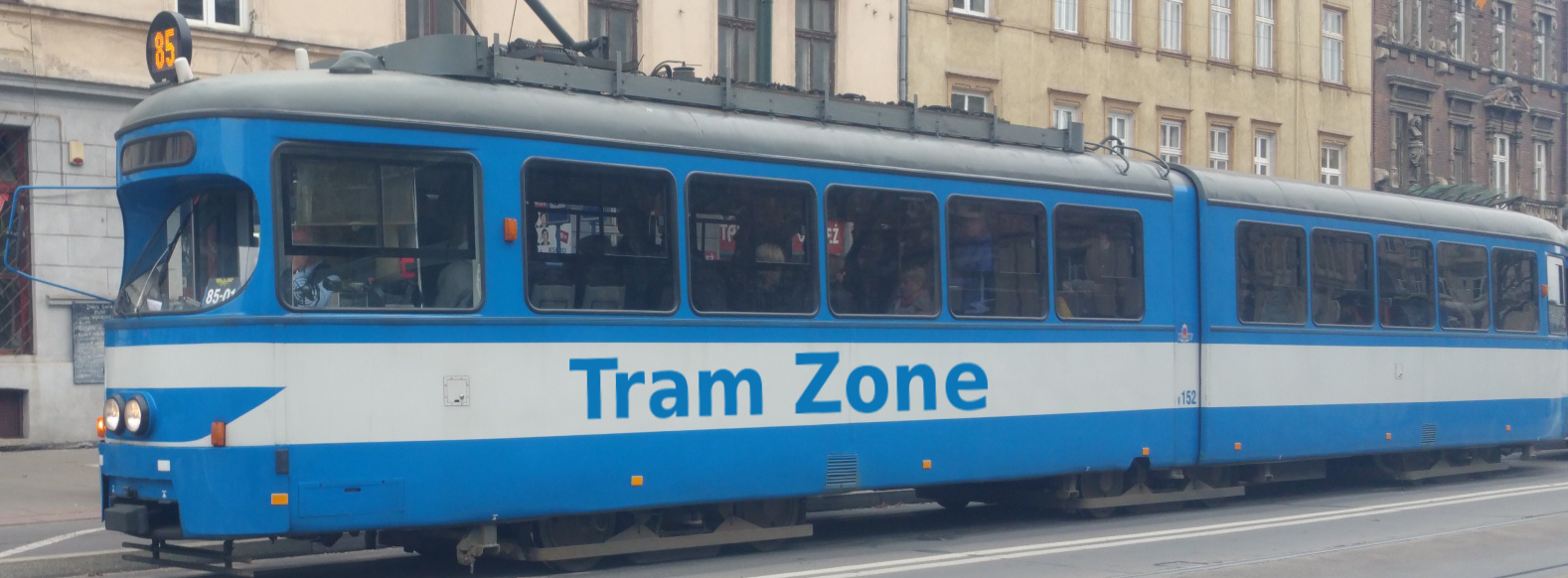
Tram systems in Linz
Linz stands on both banks of the River Danube in northern Austria. It is the capital and largest city of Upper Austria and, after Vienna and Graz, the third-most populous city in the country.
The city is one of Austria's principal industrial and economic centres, with industries including steel production, engineering and chemicals. Voestalpine operates a major steelworks in the east of Linz, while the city has also developed an international reputation for digital technology and contemporary culture. Linz was a European Capital of Culture in 2009 and is a UNESCO City of Media Arts. Its cultural institutions include the Ars Electronica Center, Lentos Art Museum and Brucknerhaus concert hall.
Linz Hauptbahnhof is the city's principal railway station and an important junction on the main route between Vienna and Salzburg. It is also served by trains towards Graz, Passau and České Budějovice, regional services, the Upper Austria S-Bahn and the Linzer Lokalbahn towards Eferding and Neumarkt-Kallham.
Most urban public transport is operated by LINZ AG LINIEN, whose network includes trams, trolleybuses and conventional buses. Regional rail and bus services are integrated through the Oberösterreichischer Verkehrsverbund. Linz Airport is situated near Hörsching, southwest of the city, and can be reached by bus or through a shuttle connection from Hörsching railway station.
Linz has a 900-millimetre-gauge tram network operated by LINZ AG LINIEN. This unusual gauge is narrower than the metre-gauge and standard-gauge systems used by most European tramways. Much of the network consists of a north–south trunk route through the city centre, with branches at its northern and southern ends.
Lines 1 and 2 run between the Johannes Kepler University and Auwiesen or solarCity respectively. Lines 3 and 4 operate from Landgutstraße through the city centre and Hauptbahnhof, continuing beyond the Linz city boundary through Leonding and Pasching to Trauner Kreuzung and Schloss Traun.
The Pöstlingbergbahn is operated as line 50 between Hauptplatz and Pöstlingberg. Its steep, largely single-track mountain route was formerly a separate metre-gauge railway but has been integrated with the Linz tram system since 2009.
Linz's first tramway opened on 18 July 1880. The 2.6-kilometre horse-drawn line ran from the city's principal railway station, then known as the Westbahnhof, through the centre and across the Danube to Urfahr. It was constructed to the unusual gauge of 900 millimetres that remains in use on the city's tram network.
The horse tramway was extended northwards to the Mühlkreisbahnhof in 1895. The Tramway- und Elektrizitätsgesellschaft Linz-Urfahr was subsequently established to take over and electrify the route, and electric services began on 31 July 1897.
The independently operated Pöstlingbergbahn opened in 1898 between Urfahr and the summit of the Pöstlingberg. Unlike the urban tramway, it was constructed to metre gauge, preventing through running between the two systems.
A new route from Blumauerplatz towards Kleinmünchen opened in 1902. It initially terminated on the northern side of the River Traun because the existing wooden bridge was unable to carry the tramcars. The extension established the long north–south corridor that would remain the backbone of the Linz network.
A cross-city route, later known as line M, opened between Waldeggstraße and Weißenwolffstraße shortly before the First World War. It was extended eastwards to Garnisonstraße in 1919 and westwards into Handel-Mazzetti-Straße in 1932. Lettered route designations were introduced in 1919, including line B to the railway station, line E towards Ebelsberg and line M across the city.
Construction of a new bridge over the Traun allowed line E to reach Ebelsberg in 1929. At Fadingerplatz it connected with the Florianerbahn to Sankt Florian, and through coaches were operated for a time between Urfahr and the Florianerbahn.
The tramway was expanded and sections of the principal route were doubled as Linz grew during the 1930s and 1940s. The network suffered damage during the Second World War and took approximately four months to restore fully after the end of the conflict.
The Danube also formed the boundary between the American and Soviet occupation zones. Passengers had to leave their trams and pass through separate controls at each end of the Nibelungenbrücke, while empty tramcars crossed the bridge between the two halves of the network.
Line M closed in 1968, removing the principal east–west tram route. However, the same period brought investment in modern articulated tramcars and the construction of turning loops required for their operation. The tramway to Ebelsberg was disconnected in 1973 when a replacement bridge over the Traun was constructed without tracks, and services were shortened to Spinnereistraße.
In 1974, the lettered tram routes were replaced by a numerical system. The principal north–south service became line 1, while the former railway-station route became line 3.
A major change in direction came in 1977 with the opening of a route from Sonnensteinstraße to the Johannes Kepler University. The extension was more than five kilometres long and was constructed largely on a segregated alignment. It established the university as the northern terminus of line 1 and provided a model for later expansion of the network.
The southern branch from Kleinmünchen to Auwiesen opened in 1985. This extension also ran principally on its own reserved alignment and established the route still used by line 1.
Trams returned to Ebelsberg on 2 April 2002, almost 29 years after the earlier route had been disconnected. The rebuilt railway crossed the Traun using the bridge constructed during the 1970s and continued beyond the former terminus at Fadingerplatz to Hillerstraße. The new service was designated line 2 and shared the route between the university and Simonystraße with line 1.
Line 2 was extended by a further 2.3 kilometres from Hillerstraße to the newly developed solarCity district on 2 September 2005.
Linz Hauptbahnhof was reconstructed as a major public transport interchange during the early 2000s. As part of the project, approximately 1.5 kilometres of the principal tram route was diverted into a tunnel serving Hauptbahnhof and Unionkreuzung, with Herz-Jesu-Kirche situated in an open cutting. The tunnel opened in August 2004 and brought lines 1 and 2 directly beneath the railway station.
The Pöstlingbergbahn closed for reconstruction in 2008. Its track was converted from metre gauge to the 900-millimetre gauge of the urban tramway, while new low-floor vehicles and upgraded infrastructure were introduced.
The rebuilt railway opened on 29 May 2009 and was connected to the urban tracks at Landgutstraße. The present line 50 consequently runs directly between Hauptplatz in the city centre and Pöstlingberg, removing the former requirement for passengers to change in Urfahr.
Construction of a new southwestern branch began in 2009. The first stage diverged from the existing Hauptbahnhof tunnel and continued through an additional underground section to Untergaumberg before reaching the surface in Leonding. It opened to Doblerholz on 13 August 2011 and was served by an extended line 3.
Responsibility for the subsequent stages passed to Schiene Oberösterreich. Line 3 was extended from Doblerholz through Pasching to Trauner Kreuzung on 25 February 2016, serving the PlusCity shopping centre and adjoining areas.
The final section from Trauner Kreuzung through central Traun to Schloss Traun opened on 10 September 2016. The new section became part of line 4, while line 3 continued to terminate at Trauner Kreuzung.
The Regional-Stadtbahn Linz project will create a new standard-gauge tram-train route through the city. It will be separate from the existing 900-millimetre tram network but will provide connections with LINZ AG LINIEN services at several locations.
The central section will run from Linz Hauptbahnhof to Europaplatz and Universitätskliniken in a new tunnel. It will then return to the surface near Derfflingerstraße, continue in an elevated position through Hafenstraße and cross the Danube using the new railway bridge.
A major interchange will be constructed at Urfahr-Ost, where the Regional-Stadtbahn will connect with the existing tram and trolleybus networks. The tram-train tracks will remain at surface level, while the present urban tram route will be placed on a lower level. Line S6 will continue westwards from the interchange through Wildbergstraße to the Mühlkreisbahnhof and connect with the existing Mühlkreisbahn.
The concession for the route between Hauptbahnhof and Mühlkreisbahnhof was awarded in July 2025. Preparatory utility work is planned to begin in 2028, followed by principal construction in 2029. Passenger operation on the central section is currently planned for 2032. Further information is available from the Regional-Stadtbahn Linz project.
A second branch of the Regional-Stadtbahn will diverge from line S6 at Urfahr-Ost and continue eastwards as line S7. It will run along the flood-protection embankment and serve new stops at Freistädter Straße and Auhof, providing a direct connection to the Johannes Kepler University and its surrounding research and education district.
Services from Auhof are intended to continue through central Linz and connect at Hauptbahnhof with line S5 over the Linzer Lokalbahn towards Eferding. The completed system is expected to provide a journey time of approximately 15 minutes between Hauptbahnhof and the university.
Construction of the Auhof branch is expected to begin around the end of the 2020s or beginning of the 2030s, subject to completion of the planning and environmental approval processes. Opening is presently expected during the 2030s.
The Auhof branch is intended to form the first stage of a longer Regional-Stadtbahn route into the eastern Mühlviertel. A later extension of line S7 is planned from the university area towards Gallneukirchen and Pregarten.
Preliminary planning for this section began in 2025 and includes determining the detailed alignment, undertaking ground investigations and protecting the land required for the railway. No precise construction or opening date has been confirmed, although the project programme places its implementation within the 2030s.
The complete Regional-Stadtbahn is designed to carry as many as 40,000 passengers per day. New Stadler tram-train vehicles will be able to operate as urban light rail vehicles in Linz and at speeds of up to 100 kilometres per hour on regional railway sections. Further information is available from Schiene Oberösterreich.
Line 2 is planned to be extended southwards from its present solarCity terminus to Pichling and the western side of the Pichlinger See. The reserved route has been protected from development, and provision for the extension was incorporated into the solarCity turning loop.
The project is expected to be constructed in two stages. The first would extend the tramway to the Südpark employment area and include an intermediate turning facility. A second stage would continue to Pichlinger See and Pichling railway station, creating an interchange with S-Bahn services.
Opening is currently envisaged around 2033 or 2034. The timing is being coordinated with improvements to the mainline railway through southern Linz and the development of Pichling station as a public transport interchange. Further information is available from the City of Linz.
A further extension of the StadtRegioTram has been proposed from the present line 4 terminus at Schloss Traun towards Haid and Ansfelden. The route would pass through Haid town centre and serve a new interchange at Kremsdorf on the Pyhrn railway.
The proposed Kremsdorf interchange would combine tram and S-Bahn services with a large park-and-ride facility. Earlier plans also envisaged continuing the tramway to the Haid Center shopping centre.
Preliminary route planning has taken place, including coordination with ÖBB, ASFINAG and the affected municipalities. However, the project does not currently have a confirmed construction programme or reliable opening date. Further information is available from the Province of Upper Austria.